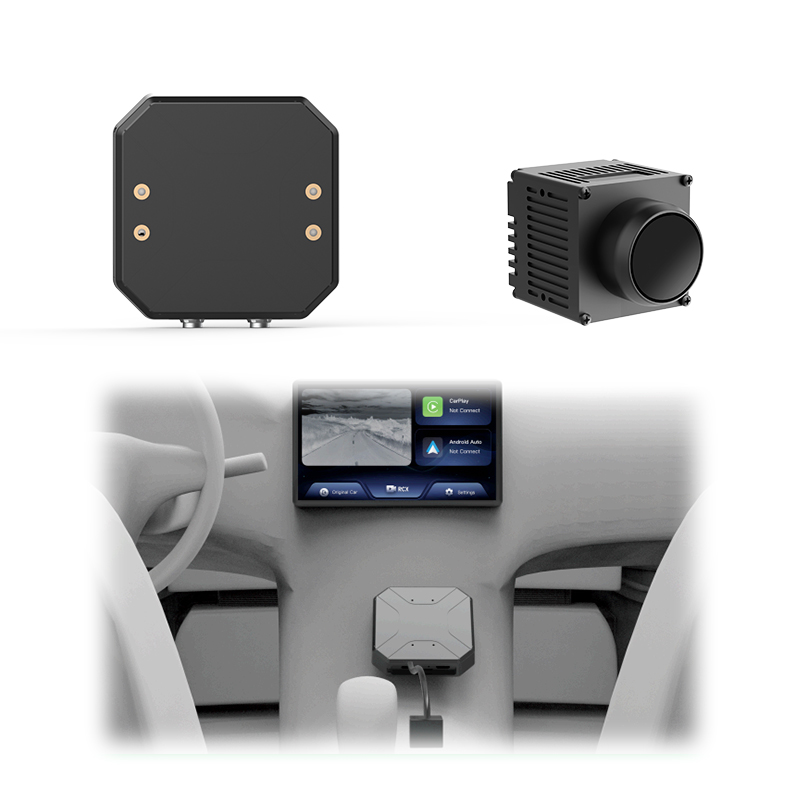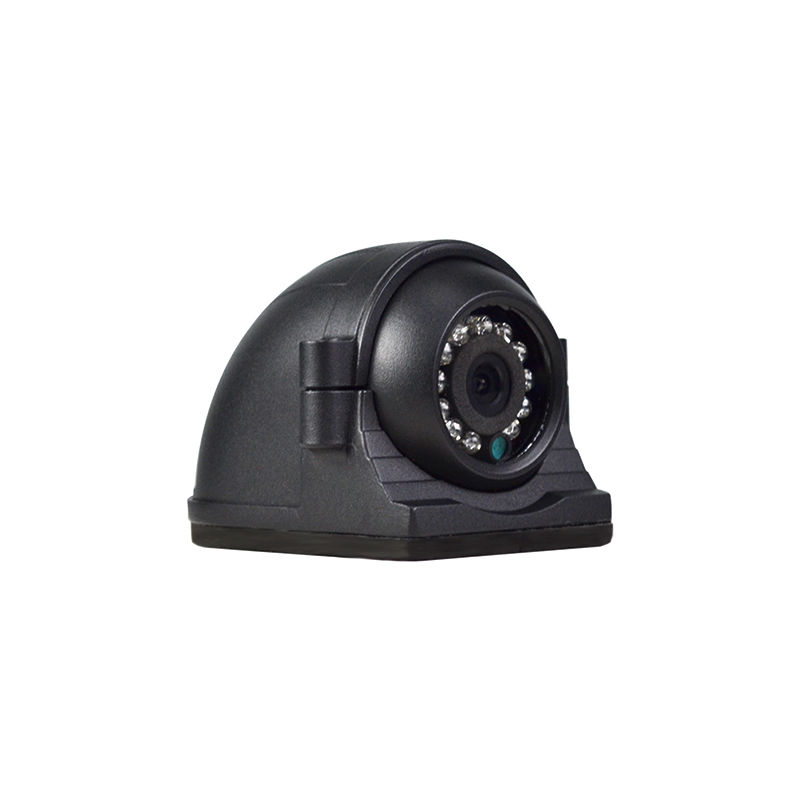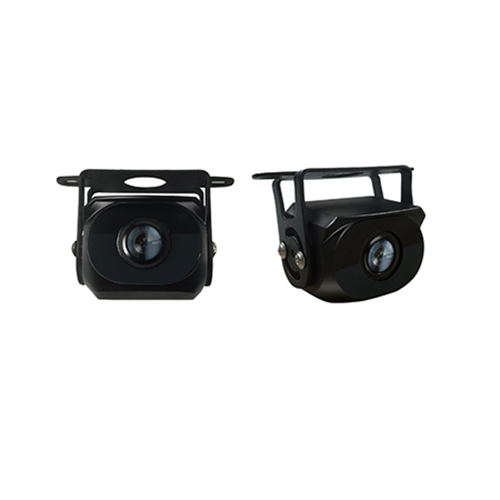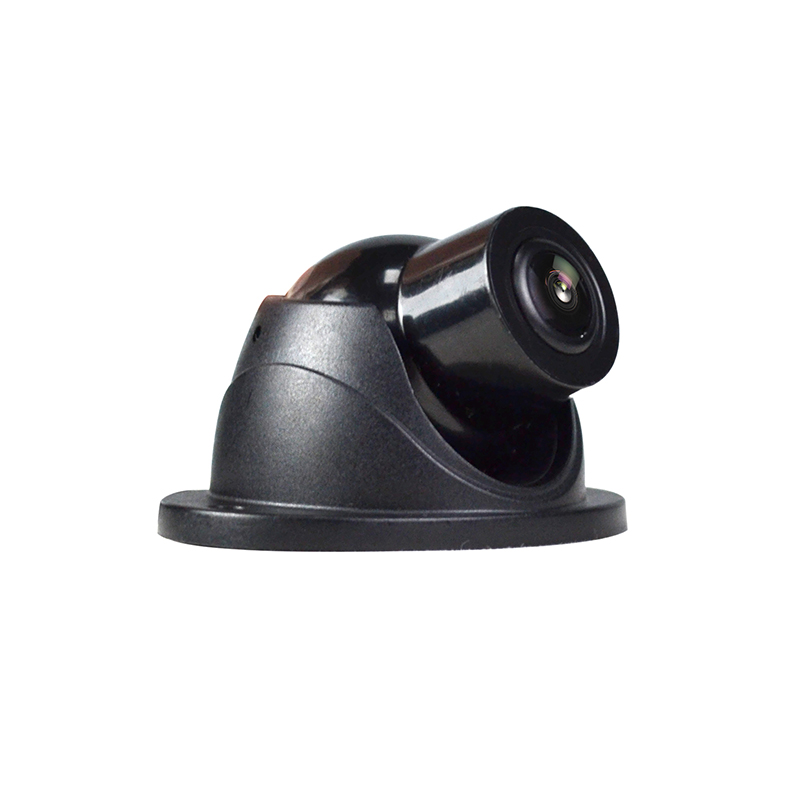


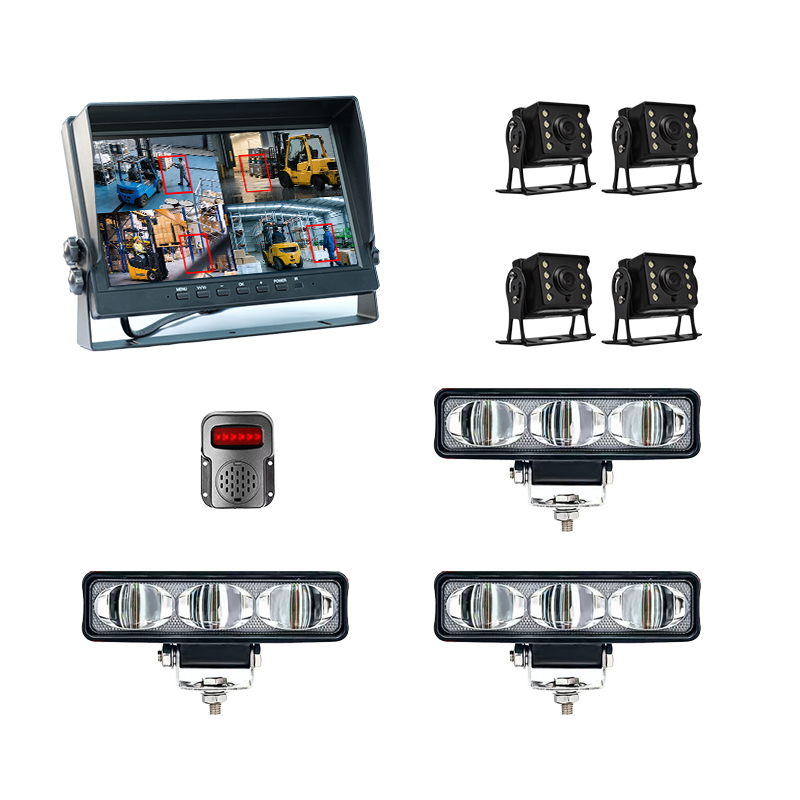
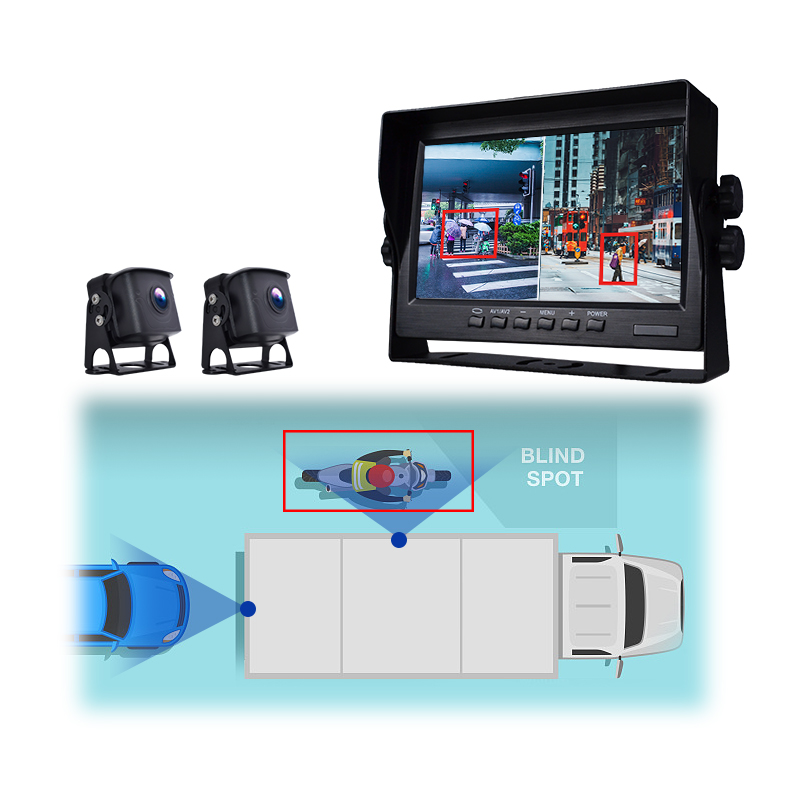
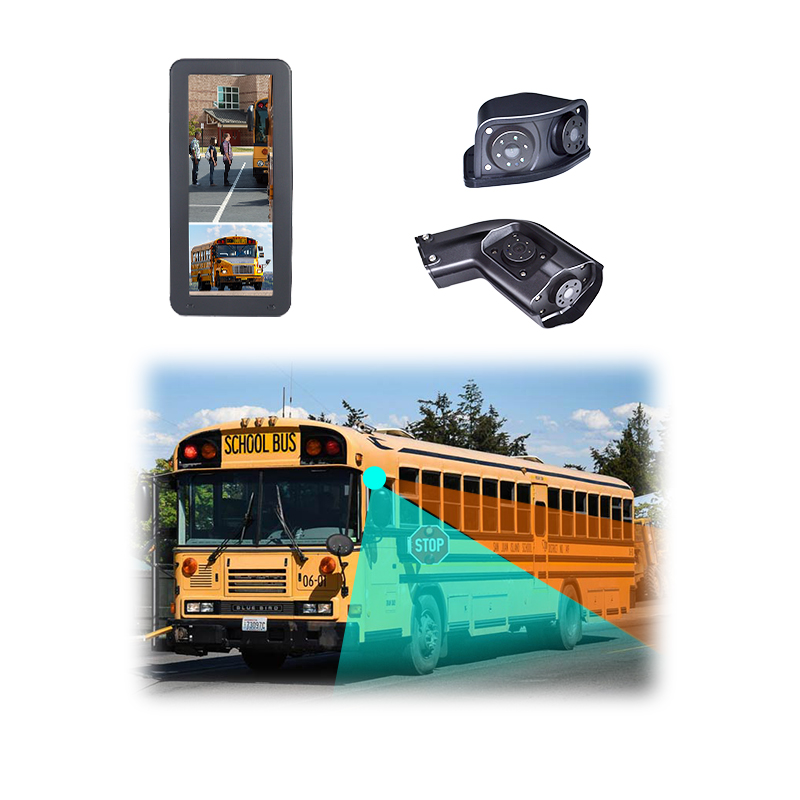
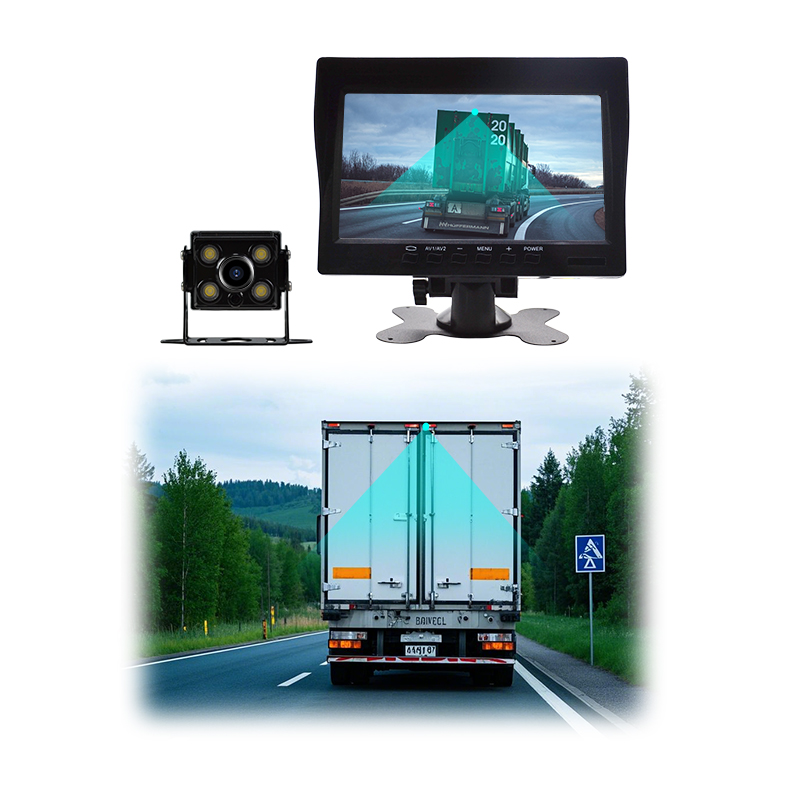
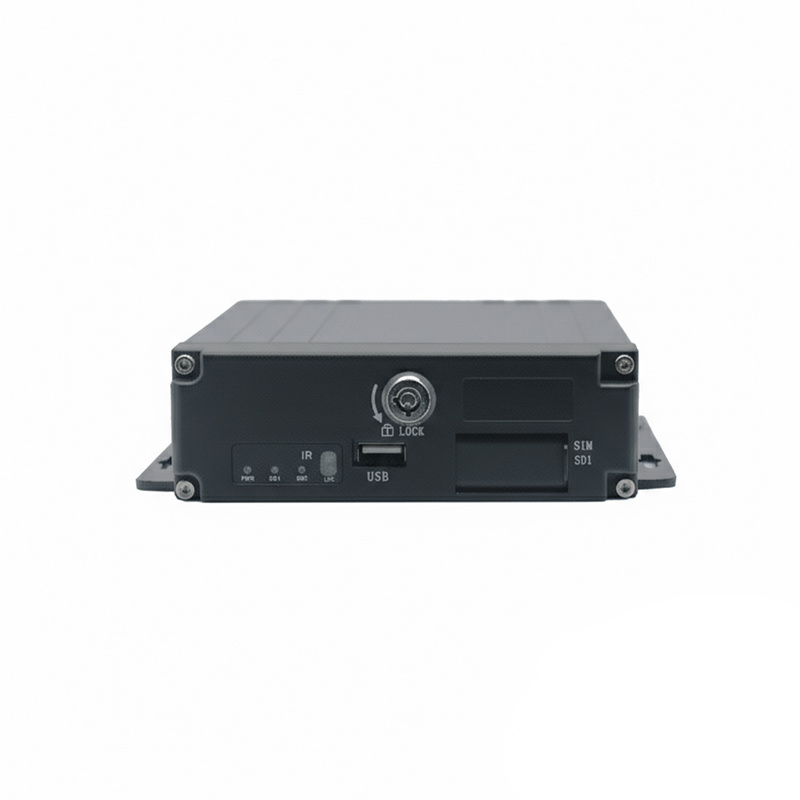
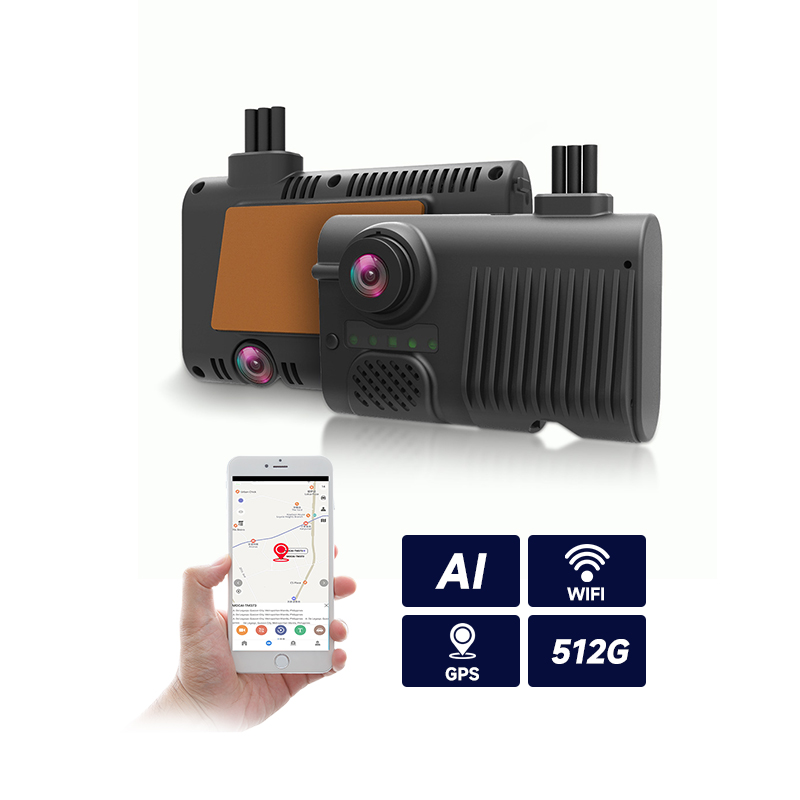
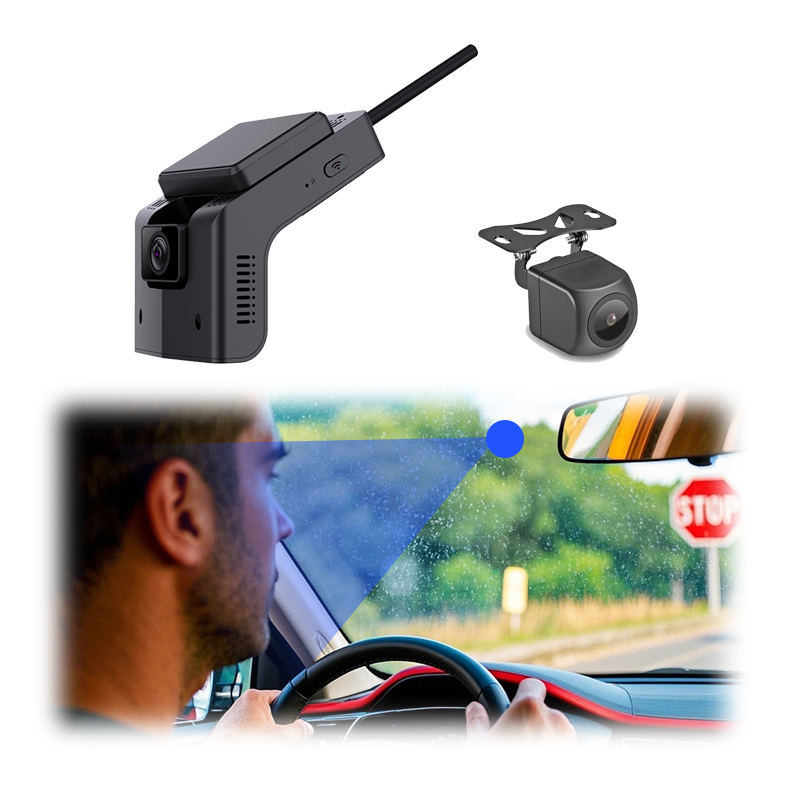
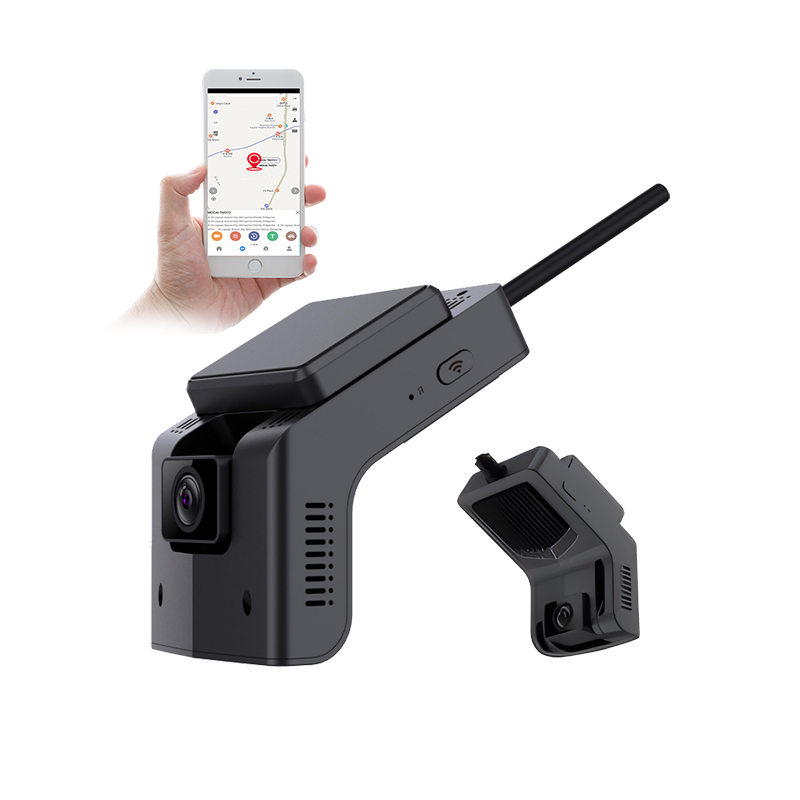
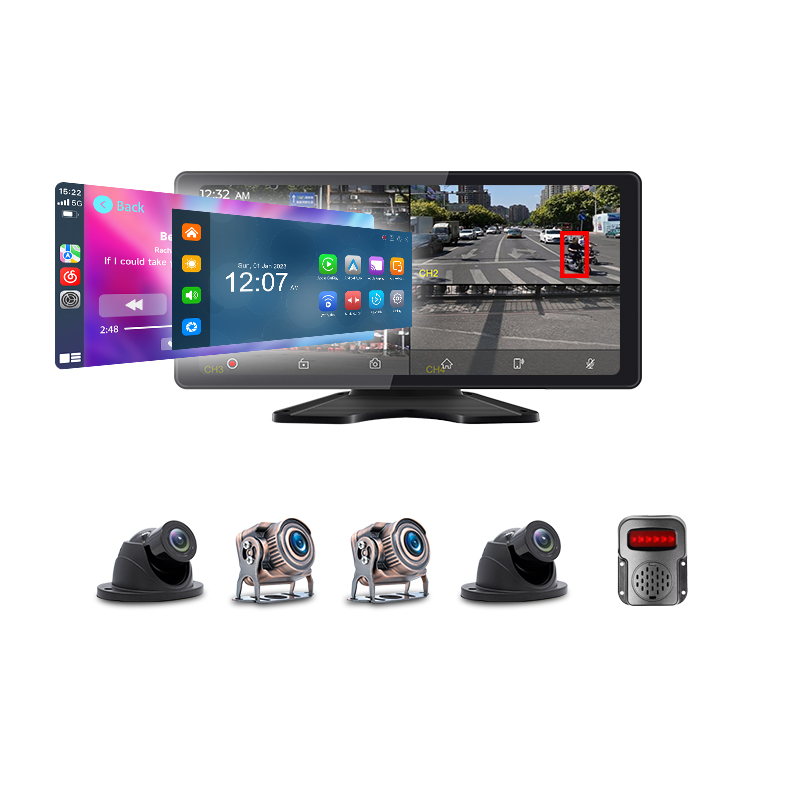

On a commercial vehicle the camera and radar look much like a car’s. What differs is when the warning has to fire. That belongs to the weight and the brakes behind the cab.
ADAS on a commercial vehicle is a forward camera, usually backed by a millimeter-wave radar. It warns the driver when the gap ahead is closing too fast, or when the truck is sliding out of its lane. The sensors sit close to what a modern car already carries. Several of the detection models behind them began life on cars. What has to change for a heavy vehicle is the timing of the alert. That is set less by clever perception than by how long the load behind the cab needs to stop.
A laden tractor-trailer at highway speed needs several times the stopping distance of the hatchback the camera models were first tuned against. Give that truck a car’s time-to-collision threshold. The warning then lands after the point where braking could still have changed the outcome. The correction is an earlier alarm, scaled to the vehicle. Judging how much earlier is where the design work goes.
The rest of what makes these systems hard on a fleet follows from that mismatch. There is also the ordinary trouble of reading a road in failing light, or telling a stopped truck from the steel of an overpass. The sections below run from what the unit watches, through why its thresholds belong to the vehicle, down to the places it goes blind.
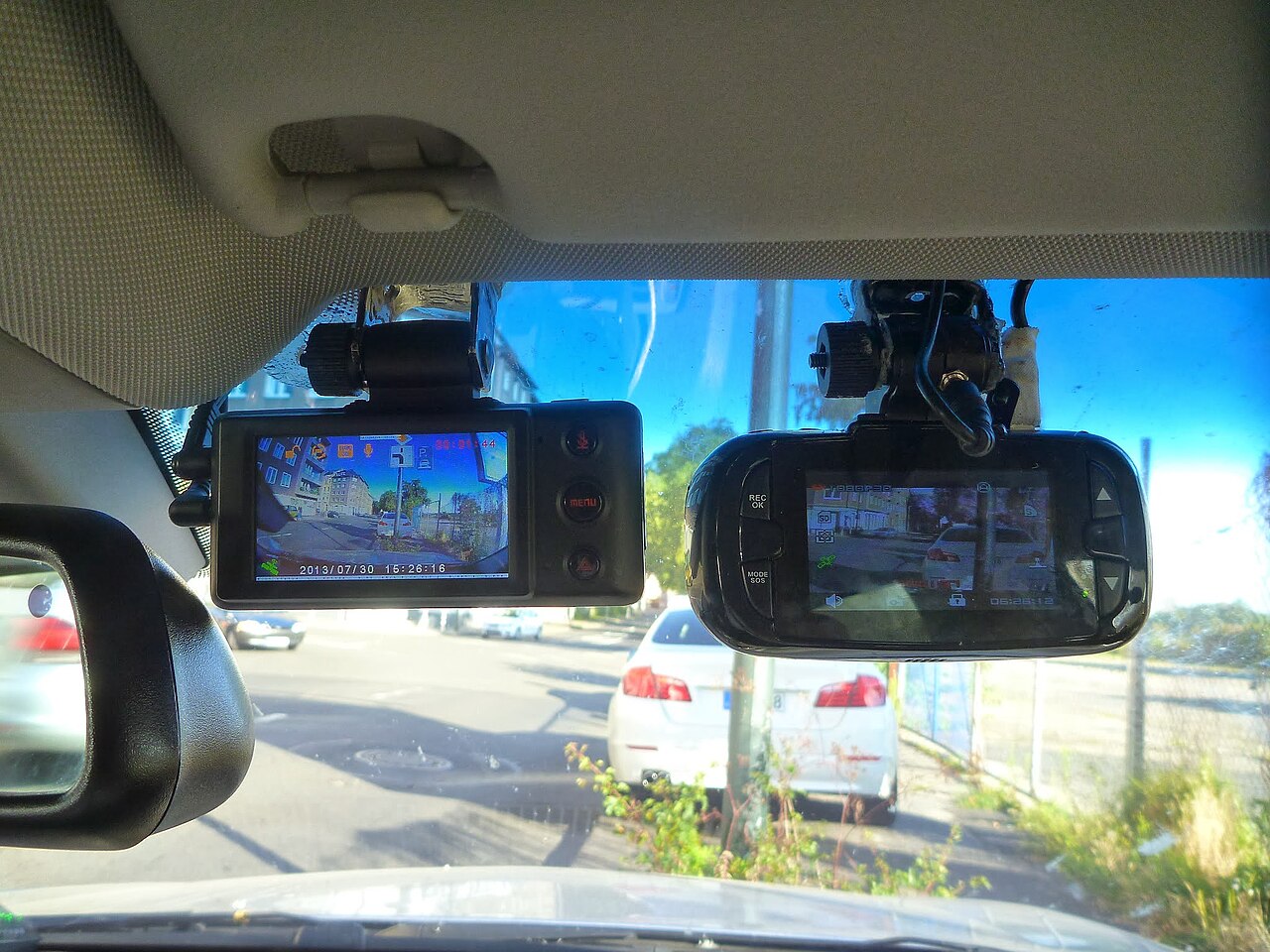
A single ADAS box runs several judgements off one forward view. One tracks the closing speed on whatever sits in the lane ahead. It decides when that gap is shrinking into a hit. A second follows the truck between the painted lines. It catches a drift out of lane before the wheels touch it. They share the camera. Each keeps its own trigger logic, and its own catalogue of things that fool it.
Vision carries the heavier load. Lane colour, vehicle type, a human shape: those separate cleanly only in an image. Radar fills in range and closing speed, and holds up after the light goes. A competent unit fuses the two streams inside one controller. A target both sensors confirm outweighs one the camera alone believes in. No single feed gets to raise an alarm by itself.
Where a commercial fit pulls away from a car is the geometry. The camera sits high, on the upper windscreen or over the roofline of a bus. It looks down the lane at a shallow angle, not straight along a low bonnet. Mounting height, the long nose ahead of the driver, the swept path of a trailer: each one moves what the software sees, and where its blind regions fall. A model that assumed a car’s low hood reads distance and lane offset off by a margin once it is bolted two metres up on a cab. That is part of why the calibration question further down matters as much as it does.
Not every alert is about an imminent hit. One measures the time gap to the vehicle in front. It flags a following distance it treats as too short. On a heavy vehicle that gap has to sit further out than a car’s, for the reason the collision warning fires earlier: the truck needs more room to shed speed. Leave the unit on its car default and it nags in normal traffic, or it lets the spacing fall below what the brakes can honour.
The hardest of these rides on city buses. There the system has to manage pedestrian warning in the clutter at the kerb. People step off the platform, cross the front, pass close along the flank at walking pace. Behind them sit poles, shelters, parked cars that all read a little like more people. A miss is someone under the bumper. An alert on every passing shopper gets the system switched off inside a week. Holding both edges at once is what makes the kerbside case the hardest of the slower warnings to tune.
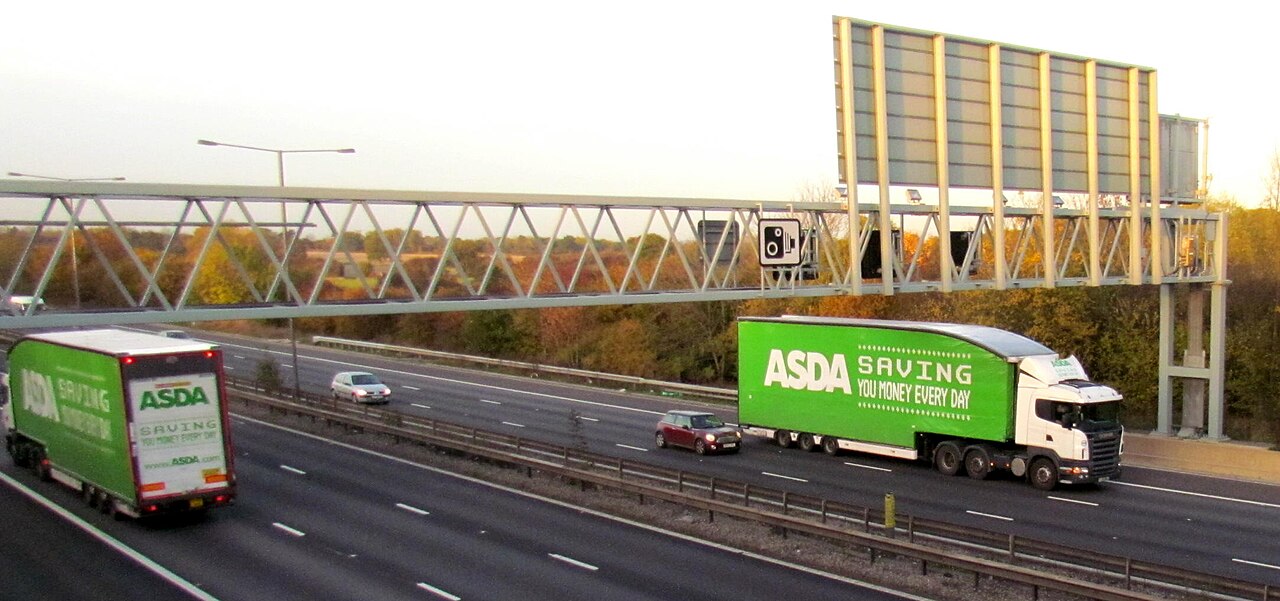
The yardstick for any forward warning is braking distance. On a heavy vehicle that distance refuses to hold still. It moves with the load in the box. It moves again with the grade of the road, and with the heat already in the brakes. A factor of two inside one shift is normal. A threshold that is right for an empty rigid at noon is wrong for the same truck loaded on a wet descent that evening.
Begin from the assumption the car models carry in. A passenger car of around one and a half tonnes, on dry tarmac with hydraulic discs, reaches close to its tyre-grip deceleration limit almost as soon as the pedal goes down. A time-to-collision alarm a couple of seconds out leaves usable room. A fully freighted articulated combination can run near forty tonnes. Empty-to-laden mass on it commonly reaches one to three, so the same plate covers two different braking problems depending on what is in the trailer. Heavy trucks brake for the larger part on compressed air. The air takes time to build pressure from the pedal through to the chambers at each axle, a lag often quoted on the order of a few tenths of a second. Through that lag the combination keeps rolling at close to full speed. Laden deceleration on good tarmac then sits well under a car’s, nearer four or five metres per second squared where a car finds eight or nine. Distance grows with the square of speed over twice the deceleration, so halving the braking roughly doubles the distance, before the dead travel during the lag is even counted. Older trucks meter that air through a mechanical load-sensing valve at the axle. Modern ones leave it to an electronic braking system that apportions effort axle by axle from the measured load. Spread across a tractor and a loaded trailer, the same delay still has to settle the slack adjusters and the trailer’s valves before every axle pulls its share. A long combination seldom brakes as one clean unit. Point it downhill and gravity cancels part of the braking effort, while a long descent heats the drums until fade pulls the force down further. Put it in distance: a fully laden combination from highway speed can need something like half as far again to stop as a car would, more on a wet or descending road. A loaded truck at a car’s speed needs its forward warning meaningfully earlier. A good system reads vehicle-mass estimates, axle load and road speed off the J1939 bus, sometimes a gradient signal too, and walks the threshold forward as those values move. A fixed threshold has no setting that works everywhere. Pitch it for the laden case and it cries all day when the truck runs empty. Pitch it for empty and it speaks too late when the truck is full.
That dynamic gap is the larger reason bolting a car-grade unit straight onto a truck behaves so badly. The optics can be identical. The lane detection can even look sharper on a test bench. The one number that decides whether the alert helps, the time it allows before impact, was set against a vehicle that stops in half the distance. Reading the same scene through the same lens, the unit gets no signal that its distance budget has collapsed.
Feeding the threshold the truth about the vehicle is its own difficulty. The inputs never arrive exact. Mass comes from air-suspension bag pressure or a chassis message, as an estimate. Gradient comes from a sensor or a map, trailing the real slope. Brake condition is barely visible to the safety controller at all. A careful tuning leaves margin against all of it. It treats the threshold as an informed approximation.
The engineering in this layer is not in the lens. It is in wiring how fast this vehicle can stop, right now, into the moment the warning fires.
Pressure does not reach the brakes the instant the pedal goes down. That delay is the part of the chain a retrofit cannot touch. Air travels from the pedal through the valves and lines to the chambers at every axle before any real retardation starts. Through those tenths of a second the combination is still doing its entry speed. An electronically controlled braking system shortens the delay, commanding the axles over a data link ahead of what the pneumatics alone would manage. On a tractor and trailer the signal also has to carry back to the trailer’s brakes. A plain pneumatic trailer can lag the tractor for that reason. A trailer with its own electronic control comes in closer to step. The difference is one reason automatic braking on a heavy vehicle is engineered apart from the car version.
The better systems use that link the other way too. Wired into the braking controller, the ADAS box can pre-charge the brakes the instant a risk crosses a first threshold, taking up the slack in the linkage before the driver has moved a foot. A windscreen camera spliced to a buzzer has none of that reach. Its one output is the warning itself. The braking stays with the driver.
A forward unit works far better once it can read the rest of the vehicle. How much it reads depends on how it was fitted. Road speed sharpens every distance and timing judgement. A steering-angle feed lets it throw out a parked car that a bend has swung into view. The turn-signal line earns its place in the same way: it tells the lane warning to keep quiet through a deliberate lane change, so the driver is not scolded for one. A factory fit has the whole J1939 bus to draw on. A retrofit often gets a speed pulse and a couple of indicator wires. It trades away some accuracy for the gap between the two.
Pulling those signals is fitting work in its own right. Bus protocols and pin assignments differ between makes. An installer either looks the vehicle up or adds a decoder. A signal taken off the wrong wire feeds the logic a quiet untruth, surfacing later as a phantom alert or a warning that never comes. The care in that wiring decides as much about how the system behaves as the algorithm inside the box.
Mass reaches the controller as an estimate, never an exact figure. It may come from air-bag pressure on a suspended axle, or from a weight message the chassis already publishes. Some units refine a value of their own as the truck pulls away. The bag-pressure reading in particular lags a load that has shifted in transit, or settled unevenly over the axles. So the threshold logic works across a band. It keeps a margin underneath, sized to how stale that figure could be.
Grade counts for nearly as much, and is read nearly as poorly. On a descent the road does part of the accelerating, so the same gap closes faster while the brakes have less authority to recover it. A controller with map or barometric gradient data can lean the threshold out before the slope is even visible to the camera. That is the kind of foresight a flat-road bench never tests. A sustained grade then loads the brakes with heat. Heat brings the fade that no static datasheet figure shows.
Road friction is the third moving part. No production unit measures it directly. A wet or polished surface stretches the real stopping distance with no clean signal back to the controller. An honest design assumes less grip than the dry-road number, and pays for the assumption in slightly earlier alerts. Once those three move together, the correct threshold stops being a value. It becomes a range the system rides inside.
A camera and a millimeter-wave radar fail in opposite places. That is why the argument over where a camera earns its keep and where radar covers for it never ends. A camera reads lane colour. It tells a truck from a motorcycle. It can pick out a person on foot where a radar sees only a return. The same camera loses contrast against a low sun, surrenders range after dark, goes close to blank in the second a truck dives into a tunnel.
A radar does little of that classifying well. Its angular resolution is coarse. It carries the awkward habit of seeing stationary metal, a manhole cover or a bridge over the road, then having to choose whether to ignore it. Filter those static returns too hard and it drops a genuinely stopped truck. Filter them too gently and it brakes for the overpass. What it gives back is direct range and closing speed, through weather and darkness that shut a camera down. Doppler shift is its real strength here. A moving target stands out from the roadside clutter by its closing speed alone. That is how a radar holds a lead vehicle the camera might lose against a busy background.
So the mainstream answer on a heavy vehicle is to fuse the two, and to lean on the targets both sensors confirm. A classifier that knows what a thing is, backed by a ranger that knows how fast it approaches, is far stronger evidence than either alone. That agreement is what holds the false-alarm rate down without going deaf to a real hazard.
Fusion is not free. It adds a second sensor to mount and aim. It adds a synchronisation problem between two data rates, and more work for the processor. Those costs are why the cheapest units stay camera-only, living with the night and weather gaps that come with the choice. A mid-range unit often pairs a good camera with a modest radar that does little more than confirm range on a target the camera has already found.
The shift on heavier vehicles is toward radar that resolves height as well as range, bearing and speed. The elevation that a 4D radar adds is what tells a truck stopped across the lane from a gantry sign hanging above it. That is the single case behind older radar’s worst false stops. For a tall vehicle threading under low bridges all day, the extra axis removes the old choice between braking for the bridge and learning to ignore the lane. It costs more. It pours out far more data to sift than the three-dimension parts it stands in for. So it shows up first on the trucks where a phantom emergency stop carries the greatest danger, then works down the price list as the silicon gets cheaper.
How the alert reaches the cab decides whether any of the perception matters. A heavy truck cab is a loud place. A thin chime gets lost under engine and road noise. The warning has to break through without startling a driver into a reflex swerve. Systems usually stage it. A quiet visual cue comes first. A sharper audible tone follows as the risk firms up. The loudest stage waits for the moment braking has to begin now. A directional element helps: a tone or an icon that points to the side the threat sits on.
The trap is a cab with too many of these talking at once. A forward warning fighting a lane buzzer and a couple of nuisance chimes in the same dashboard trains the driver to mute the lot. The discipline in a working install is to rank the alerts. The one that needs a foot on the brake should never have to fight a reminder that a door is open. Each one has to stay rare enough that the driver still believes it.
What kills a commercial ADAS deployment is rarely a detection metric. It is the driver’s trust, and false alarms spend it fast. A unit that cries on gentle curves and on the car one lane over teaches the driver to reach for the volume inside a week. A fair share of the nuisance comes straight from the timing problem above, a threshold set for a load the truck is not carrying. The rest is geometry. A bend swings a parked car into the forward cone. A wide lane lets the next vehicle over read as the one ahead.
A warning a driver has learned to ignore is the same as no warning at all.
So the answer is never a single setting. It is the running job of tuning the false-alarm rate down across a fleet’s life. Thresholds scale to vehicle type and load. Map and gradient data kill the predictable ghosts. The alert is staged, a soft cue before the loud one. Skip that work and even an accurate detector gets muted within a few weeks of a driver losing patience with it.
A forward camera measures distance and lane position correctly only while the system knows exactly where it points. That aim is never permanent. The factory fixes it against a known target pattern. From there it wanders. A replaced windscreen moves it. A kerb strike moves it. A heavy, unevenly stowed load tilts the whole forward view by changing the body’s pitch. A few degrees of error walks the collision-warning range estimate and the lane judgement off the truth. The factory step is the straightforward half. The hard half is that a fleet has to keep a recalibration cycle running over years. A yard of a hundred trucks with no reminder is exactly where that step lapses, on the vehicle that has earned for two seasons with nobody checking its aim.
A recorded clip played back in an office tells you whether the detector finds a target. It tells you almost nothing about whether the warning fires at the right moment. Detection rate and false-positive rate fall out of a video set easily enough. The timing the whole system stands on shows up only on the road, in a loaded truck, on the grades and surfaces it runs in service. A proper sign-off drives the same route loaded then empty, checking the warning came early enough in the worse of the two.
Passing a type approval and being useful in service are two different milestones. A compliance run proves the device meets a written spec under defined conditions. It says nothing about whether the threshold was set for this operator’s loads and routes. That is the work that keeps the alert honest after the certificate is filed and the truck goes back to earning.
Every camera-based system has conditions where physics, not software, ends its usefulness. After dark it sees only as far as the headlights throw, so the reach shrinks to the lit cone. How much it gives up there decides whether a forward warning means anything at night, a question taken up in what it loses once the only light is its own beams. Past a certain intensity, rain beats the wiper’s clearing rate and a film on the lens scatters the picture. That is where heavy weather crosses from degraded into unusable. A tunnel mouth is a trap of its own: a jump between bright daylight and a dark bore that outruns the sensor’s dynamic range, leaving a few blind seconds at the portal.
What marks out a sound system is that it does not pretend otherwise. A unit that recognises its own degradation, and tells the driver it is limited for a stretch, is safer than one that keeps reporting confident detections it cannot support. The detail of each failure mode belongs to the conditions that cause it. The point at this level is plainer: the envelope is real, and a fleet plans its routes around it.
A commercial ADAS unit does not only warn the cab. It keeps evidence. Each alarm event is recorded, stamped with time and position, held for the operator and the regulator. The device sits inside a compliance regime as much as a safety one. The JT 883 active-safety specification sets out what it has to do and what it has to report. The steps an operator works through to meet it run from device approval through installation to the platform link. The alarm records follow a prescribed format for the push to the provincial platform, over the same cellular link the cab’s video already uses. The upload has to land for the event to count in an audit. A device that detects well but reports unreliably still fails the half of the job the regulator can see.
Seen end to end, a commercial forward-warning system binds three things that have to hold at once: perception that survives a real road, thresholds tied to the vehicle’s own braking, a record that satisfies a regulator. The camera is the part everyone notices. It is the smallest of the three.
Yes. Stopping distance grows with weight and gradient, so a loaded truck needs the forward warning earlier than a car at the same speed. Passenger-car thresholds tend to warn too late when the vehicle is laden, too often when it runs empty. Heavy-vehicle systems scale the threshold to the current load instead of fixing it once.
A camera classifies lane lines, vehicles and pedestrians, but it struggles against low sun, darkness, heavy rain and tunnel transitions. A radar measures range and closing speed through weather, though it resolves angles coarsely and can confuse stationary metal with an obstacle. Commercial systems generally fuse both. Some now add a height-resolving 4D radar.
A basic retrofit only warns. A system tied into an electronically controlled braking system can pre-charge the brakes and intervene. Full automatic emergency braking on a heavy vehicle is engineered separately from the car version, because of the air-system lag and the load-dependent stopping distance.
A large share of nuisance alerts come from thresholds that do not match the load the truck is carrying. Curves, slopes and adjacent-lane traffic read as the vehicle ahead add the rest. The rate comes down through ongoing tuning across a fleet, not a single setting. Staged alerts help keep the driver from tuning the unit out.
Beyond the factory setup, calibration drifts with windscreen changes, knocks and load posture. A careful fleet keeps a periodic recalibration cycle instead of treating aim as permanent. The interval depends on the operation. The real failure mode is forgetting it entirely on a long-serving vehicle.
It degrades. A camera sees only as far as the headlights reach, and loses contrast in heavy rain. A tunnel mouth can blind it for a moment. The better systems flag themselves as limited in those conditions instead of reporting detections they cannot support.