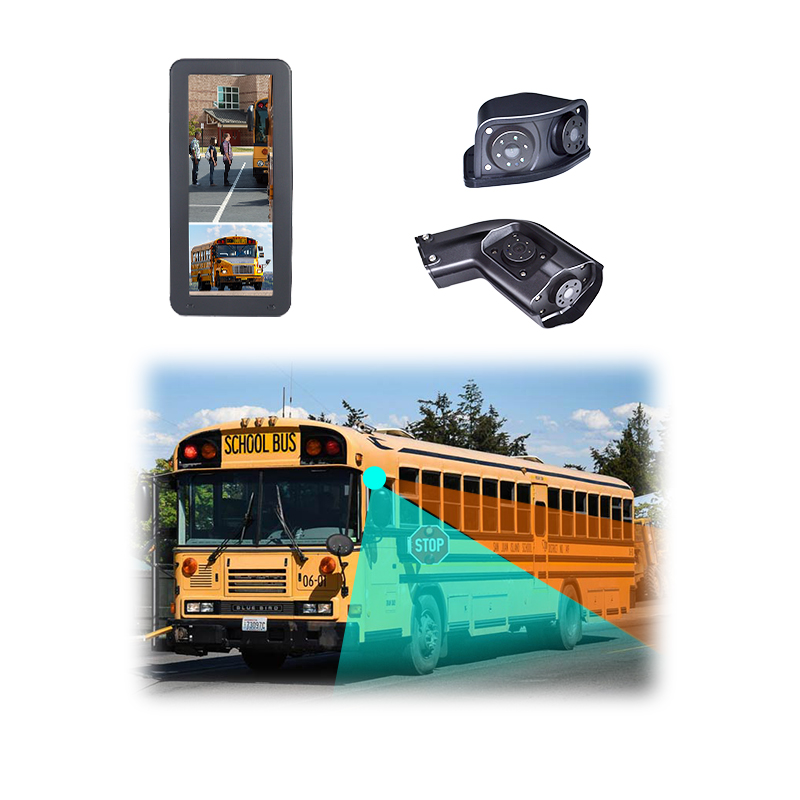
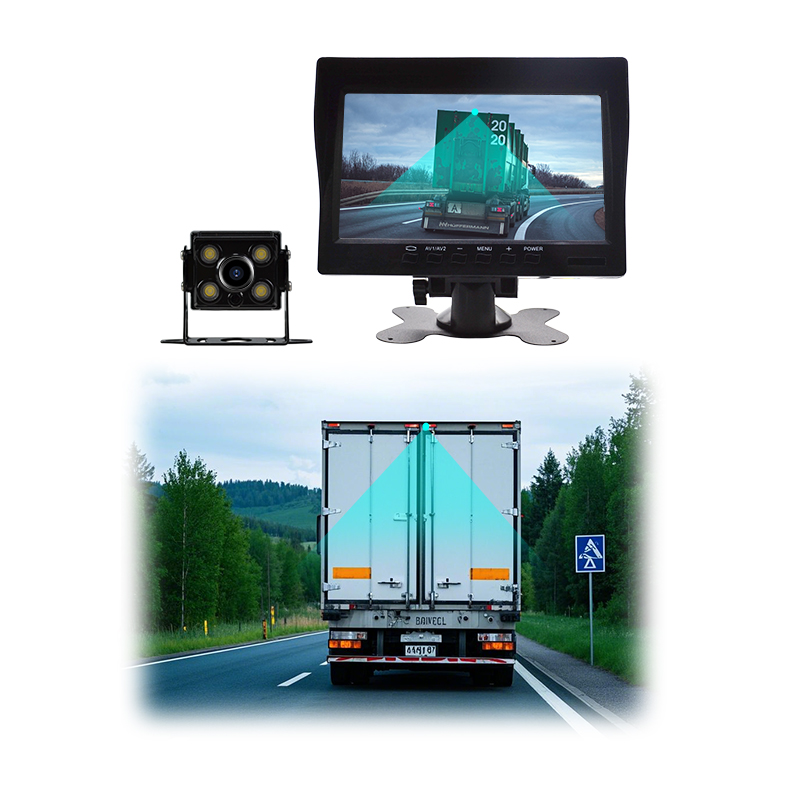
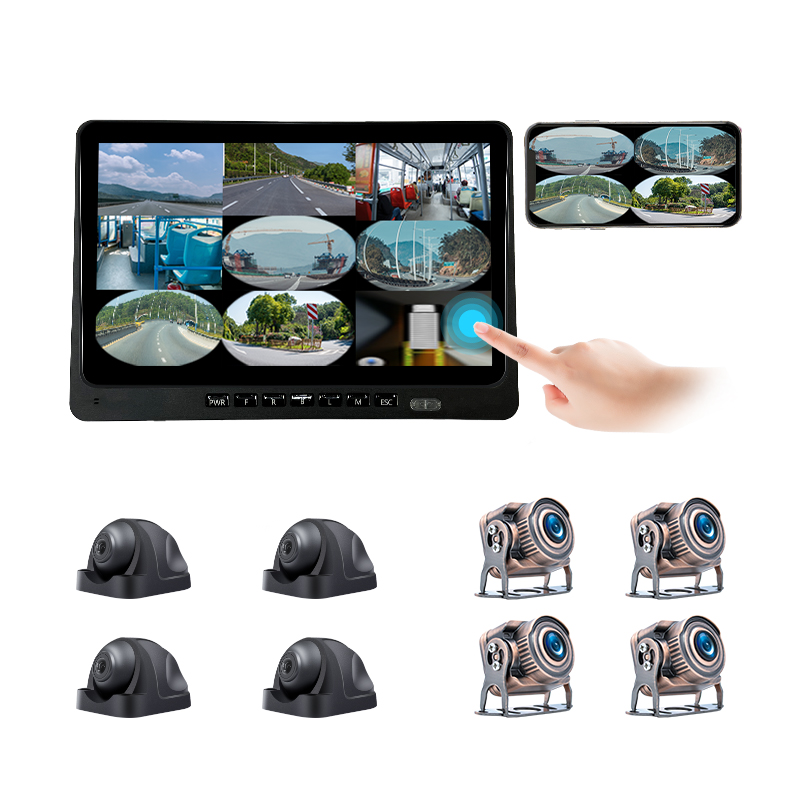
The question of which sensor an advanced driver-assistance system should trust, the camera or the radar, is already the wrong question. The two do not rank against each other. They measure different things. A camera reads what an object is, a car, a person, a painted line, in fine detail and color. A radar reads how far an object is and how fast it closes, straight off the physics, in the dark and the rain. Neither can do the other’s work. The real question a designer faces is what each one gives, where each one fails, how to put them together so that one covers the other’s blind spots.
This is the trade-off behind almost every ADAS sensor choice. A vehicle does not pick the single best sensor and stop. It carries a camera and a radar because each is strong exactly where the other is weak. Using their disagreement to cut false alarms is taken up where false-alarm rates are tuned. The matter here is simpler and deeper. It is what the two sensors are in their own physics, the reason their weaknesses fall in opposite places.
On a commercial vehicle the stakes ride on getting this pairing right. A truck or bus runs in every condition, bright noon and black night, dry road and driving rain. It cannot afford a sensor suite that sees in only half of them. The camera and the radar between them have to cover the conditions neither covers alone.
Neither sensor is better than the other. Each is blind exactly where the other sees.
The two sensors work on different physics. That difference decides everything that follows. A camera is passive. It collects the light already in the scene, forms an image, leaves software to read meaning out of the picture, the shapes and edges and colors that mark one thing from another. Being passive, the camera needs light it did not bring. In the dark it has little to work with. A radar is active. It sends out radio waves of its own and listens for the echo, reading distance from how long the echo takes to return and speed from the shift in its frequency. Being active, the radar carries its own illumination and cares nothing for the sun.
So they answer different questions about the same scene. The camera answers what. What is that object ahead, a truck, a pedestrian, a cyclist, a lane marking, a road sign. The radar answers where and how fast. How far off is that object, is the gap to it closing or opening, how quickly.
Each is weak at the other’s question. A single camera has no direct grip on distance. It infers range from how large a known object looks and how that size changes frame to frame, a guess that is rough and grows rougher far away. What the camera does hold precisely is angle, where in the frame a thing sits side to side. The radar’s sense of angle is its weakest reading. A radar has no grip on identity. A strong echo is a strong echo, off the back of a truck or a steel gantry alike, with nothing in the signal to say which.
This division is not a quirk of today’s hardware. It sits in the physics. Light carries fine spatial detail to a lens, with no clock on the distance it traveled. A radio echo carries its own travel time and frequency shift, the raw stuff of range and speed, spreading too coarsely to draw a sharp picture. A camera will always read meaning better than range. A radar will always read range better than meaning. Every trade-off that follows grows from that root.
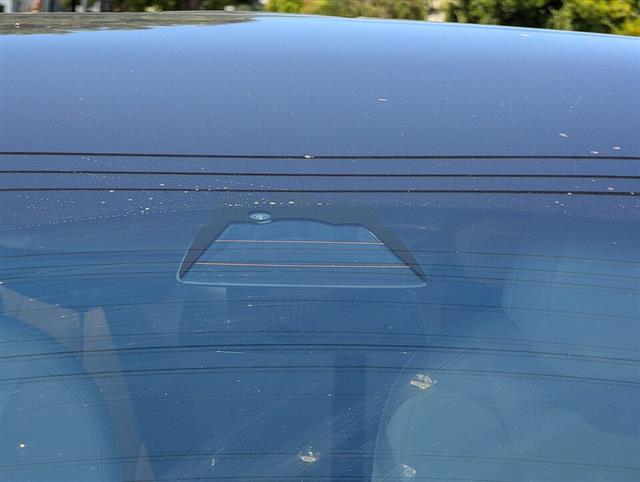
The camera’s gift is meaning. It is the one sensor that can say what a thing is. From the detail packed into an image, the outline of a body, the wheels of a car, the lettering on a sign, software trained on millions of examples can name the object the way a person glancing at the road would. It tells a pedestrian from a cyclist, a parked van from a moving one, a sign from the truck beside it. No other sensor on the vehicle comes close at this. This is a learned skill. The naming comes from a model trained on vast labeled data, only as good as the examples it met, leaving the rare shape able to trip it.
Vision reads what only vision can. Color carries meaning of its own: the red of a brake light, the amber of a turn signal, the red or green of a traffic light. Text does too, the number on a speed-limit sign, the words on a gantry. Lane markings are paint on tarmac, visible to a camera, the reason lane departure leans on the camera entirely. The whole grammar of the road, written in paint and light and signage, is legible to the camera and to nothing else aboard.
The camera is sharp and quick and cheap. Its angular detail is fine, placing a thing precisely left to right in the scene and tracing the exact edge of a lane or a bumper. The fine resolution lets it catch small or distant things too, a sign far up the road, a child at the curb, that a coarse sensor would smear into the background. It runs many frames a second, smooth enough to follow fast movement. It costs a fraction of a radar or a laser scanner, letting a vehicle carry several, one forward, others to the sides and rear, for coverage all around without a large bill.
These strengths decide which jobs fall to the camera. Anything that turns on knowing what a thing is belongs to it: reading lane lines, recognizing a speed-limit sign, telling a pedestrian apart from a lamp post, classing the vehicle ahead. Where the task is understanding the scene over ranging it, the camera leads. The price of all this meaning is that it rests on seeing the picture clearly.
All of the camera’s meaning rests on a clear view, a view easily spoiled. The first enemy is darkness. A passive sensor with little light to gather sees little. At night the camera leans on the vehicle’s own headlights, which reach only so far and leave everything past their beam in the dark. A pedestrian in dark clothing beyond the headlight throw can be invisible to the camera until far too close. Night is the hour a vehicle can least afford a blind sensor, when the unlit pedestrian and the unlit obstacle are hardest to make out by any eye, human or machine.
Weather is the second. Rain beads on the lens and blurs the frame. Fog and heavy snow draw a gray veil over the scene. Spray thrown up by traffic does the same. A low sun straight into the lens floods the image with glare, the same glare bouncing off a wet road to wash the picture flat. These are not rare conditions a truck meets once a year. They are the ordinary working weather of a vehicle that runs in all of it. Through every one of them the camera’s meaning thins or fails.
Even in clear daylight the camera is poor at the radar’s question. A single camera judges distance from how large a known object appears. An object of unfamiliar size throws the estimate off, an oversized load read as nearer than it is, a small vehicle as farther. Closing speed it can only infer from how fast the image swells, frame to frame, a noisier read than a radar’s direct measure. The camera can tell you there is a truck ahead with confidence. How far and how fast is the part it least trusts. This is why a function that must act on distance, braking before a collision, holding a safe gap, never leans on the camera’s numbers alone.
A camera sees a flat world. It works from a two-dimensional picture. A picture within that picture can fool it, a vehicle printed on the back of a trailer, a car on a billboard, a reflection in a shop window read for a moment as the real thing. Its meaning carries, too, the long tail of everything its training underweighted, the odd vehicle, the unusual posture, the scene it met rarely. The camera reads the road better than anything else aboard, until the light, the weather, or the trick of a flat image takes that reading away.
The radar’s gift is measurement. It sends a wave and times the echo. The delay gives the distance to the object directly, no inference from apparent size, no guess that decays with range. The same return carries more. The frequency of the echo shifts with the object’s motion toward or away, the Doppler effect. From that shift the radar reads how fast the gap is closing in the same instant it reads how far. The radar reads closing speed in a single return. That instant read is the radar’s sharpest edge. The whole judgment of an imminent collision turns on it, delivered without waiting.
It holds up in weather that blinds a camera. Radio waves at the wavelengths a vehicle radar uses are far less troubled by rain, fog, snow or spray than light is. They carry no dependence on light at all. Wavelength is much of the reason. A fog or cloud droplet is tiny next to the radio wave, which passes it by. The same fog barely touches a radar. Rain is the harder case, because a raindrop is about the size of the wave itself. Heavy rain scatters the signal and shortens a radar’s usable range. The worst downpours cut it well down. The radar still reads range and speed through that same rain. Black night and bright noon look identical to it. For a truck or a bus that runs in every hour and every kind of weather, a radar that fades only in the heaviest rain is the one the system falls back to when the light or the weather turns.
The radar reaches far. A forward automotive radar tracks vehicles well over a hundred meters ahead, far enough to give a fast-moving truck time to react. It hands the collision and headway functions exactly the numbers they run on, the range to the vehicle ahead and the rate the gap is changing, measured outright. Where the question is how far and how fast, the radar answers with an authority the camera cannot match.
Radar is rugged and proven. It has been on cars for decades, in a small sealed unit that sits behind the bumper or the grille badge, needing no clear window onto the world. Dirt that would blind a lens barely troubles it. It is cheap enough to fit widely, for the forward beam and for the corners that watch the blind spots. The radar is the steady rangefinder of the vehicle, working in the dark and the filth and the storm, asking only that it not be told what it is looking at.
The radar’s blindness is identity. It can measure a thing to the centimeter and the kilometer an hour and still have no idea what the thing is. A return tells the radar that something solid sits at a range, closing at a speed. It does not tell the radar whether that something is a truck, a road sign, a guardrail, or a bridge. The radar holds the numbers and misses the meaning.
Its sense of angle is coarse. A radar beam has width. Two objects close together in angle blur into a single return, the more so the farther off they are, because the beam spreads with distance. Worse, a conventional automotive radar reads side-to-side angle far better than up-and-down. It can place a return left or right with some confidence. High from low, it can barely tell. So an overhead sign hanging above the lane and a car sitting in it can look, to such a radar, like the same thing in the same place. Adding a height dimension to the radar is how that gap is closed, a step taken up where four-dimensional radar is covered.
The world it sees is full of metal that is not a threat. Signs, barriers, parked cars, manhole covers, the steel in the road all throw returns. Reflections bounce off large flat surfaces to create ghosts, targets that read as solid where nothing is. A radar that reported every return would alarm without pause. So it filters hard, leaning on motion and persistence and rough position to keep only what might matter. Some real returns get thrown out with the clutter.
The hardest case of that filtering is the stopped object. A radar cannot tell a stopped car in the lane from a sign or a bridge over the road. It classifies none of them. All of them sit still. To avoid braking under every gantry, many radars discard or discount stationary returns. The stopped car, being stationary, gets discarded with them. This is the notorious blind spot of radar-led braking, the stationary vehicle the system drives toward without alarm. It traces straight back to the radar’s one weakness, that it cannot say what it sees.
It places something solid forty meters ahead, closing at fifty. Whether that something is a truck to brake for or an overpass to pass under, it cannot say. It has the numbers without the name, the part the camera supplies.
Lined up by their failures, the two sensors show the pattern that matters. The camera fails on darkness, on weather, on glare, on the flat trick of a 2D image, on the distance and speed it can only guess. The radar fails on identity, on fine angle, on the clutter of metal that is not a threat, on the stopped object it cannot classify. Side by side, the two lists share almost nothing. The camera’s worst conditions, night and fog and glare, are exactly where the radar is untroubled. The radar’s worst failure, the inability to name what a thing is, is exactly what the camera does best. Their weaknesses do not overlap. They fall in opposite directions. This is the fact the whole sensor choice turns on. It changes the question entirely. The right question was never which sensor is better, because better is meaningless across two devices that measure different things. The right question is whether a pair can be assembled whose blind spots do not coincide, each sensor seeing where the other is lost. A camera and a radar are that pair. With either sensor gone from a scene, a hole opens that the other was quietly filling. In the dark the radar carries the ranging the blind camera cannot. In the clutter the camera names the target the confused radar cannot. On the open road, in clear light, both agree and the system is doubly sure. Fusion beats either sensor alone for one reason above all, that the two fail independently. Two sensors that failed on the same things would add little to each other, a second view of the same blind spot. Two that fail on opposite things cover each other, the combination seeing in conditions that would defeat either one. Safety engineers prize this independence by name. A function that must not fail quietly is built on sensors that fail for unrelated reasons. No single cause, a dark night, a dirty lens, a field of metal clutter, can take them both down at once. This is why a single excellent sensor is the weaker design. One camera still goes blind in fog. One radar still cannot read a sign. A merely adequate camera paired with a merely adequate radar beats either alone, because the pairing has no shared blind spot to fall into. The value of carrying both shows up in the conditions where one of them is useless, the moments of fog or clutter or darkness when a single-sensor system would be flying blind. The trade-off between camera and radar, read correctly, is a division of labor to be arranged, the camera given the questions of meaning, the radar the questions of measurement, each covering the other where it fails.
The pair is the norm. The balance within it shifts with the job. A function that turns on meaning sits with the camera. Lane departure reads paint, traffic-sign recognition reads text, pedestrian classification tells a person from a post, all work only a camera can do. A function that turns on range and closing speed leans on the radar. Forward collision and headway monitoring live on the distance and the rate the radar measures, the numbers a camera only guesses. Blind-spot and turning functions split the same way, the camera placing and naming what is there, the radar catching what closes from behind.
Many of the functions that matter want both at once. Forward collision warning is the clearest case. The radar finds something closing fast and fixes the range and the rate. The camera says whether that something is a vehicle in the lane or a sign above it. The warning fires when both agree, the reason a radar-only system can brake at a gantry and a camera-only one can misjudge the gap. Pedestrian braking is the same story, the camera naming the person, the radar ranging them, neither enough alone.
Cost and packaging pull on the choice. A camera is cheap, which puts the lowest-tier systems on camera alone, doing lane and sign work well. Adding a radar costs more and buys the all-weather ranging the camera lacks. A buyer specifying a fleet weighs the functions wanted against the budget. The honest reading of the trade-off is that a camera-only system is a different system with a narrower set of things it can do. The cheaper choice can be right for a low-speed urban van that rarely needs long-range warning. It is the wrong choice for a coach running fast motorway miles in all weather.
The deepest reason to carry both is what happens when one fails. Because their failures do not coincide, the loss of one leaves the other still working. When fog blinds the camera, the radar still ranges the traffic ahead. When a blocked or dazzled lens goes dark, the radar holds the gap. When clutter confuses the radar, the camera still reads the scene. The system does not fall off a cliff when conditions turn. It degrades gracefully, dropping to what the surviving sensor can still do. For a vehicle that has to keep some protection in every condition it meets, that graceful fallback is the real argument for the pair, beyond any single function it enables.
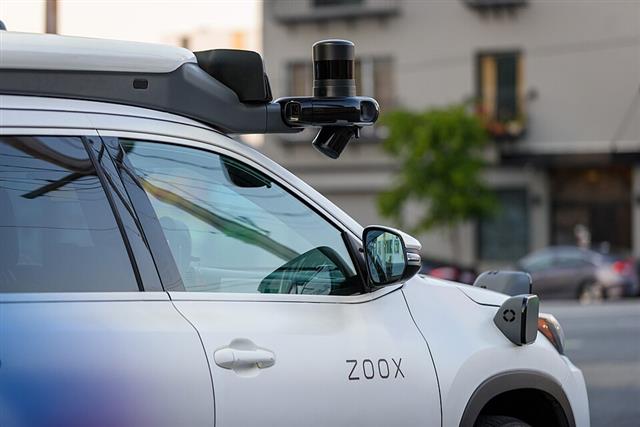
The line between the two is not fixed. Each sensor keeps gaining ground on the other’s territory. Radar is the clearest case. Giving it a height dimension, the four-dimensional radar now reaching the market, lets it tell an overhead sign from a car in the lane, the same confusion that hobbled it before. That advance eats into the camera’s old monopoly on placing things in three dimensions, a step taken up where four-dimensional radar is covered. The change matters because it narrows the case for the camera. The more the radar can place things in height, the less the camera stays the only sensor able to keep an overhead structure out of the warning.
Cameras gain too. Better image sensors and sharper models lift their low-light performance and their guess at distance. Some now infer depth from a single frame far better than the old size-based trick allowed. A third sensor has entered alongside both. A laser scanner, or lidar, sweeps the scene with pulses of light and builds a precise three-dimensional map of range and shape, strong exactly where a flat camera and a coarse radar both struggle. Where it is fitted, on robotaxis and the costliest systems, it adds a third independent reading, neither guessing range like the camera nor blind to shape like the radar. It carries its own costs, a high price and a sensitivity to heavy rain and fog, which keep it off the great majority of vehicles for now.
So the suite grows and the fusion grows cleverer, the old lines blurring as each sensor reaches into the others’ ground. The principle underneath does not move. A safe system still wants sensors that fail for different reasons. Adding a third does not retire the first two. Lidar joins camera and radar as another independent way of being wrong, another blind spot that does not line up with theirs. Each new sensor is judged the same way, by what it sees that the others miss and where it fails that the others hold.
Neither the camera nor the radar is the answer, because neither was ever a whole eye on its own. Each is half of a seeing-machine whose two halves go blind in different places. To ask which sensor is better is to ask the wrong thing, the way asking whether the eyes or the ears are the better sense misses how an animal uses both. The camera brings meaning. The radar brings measurement. A system with only one of them is missing half of what it needs to act safely. The trade-off that matters is how to divide the seeing between them so that no condition leaves the vehicle blind.
The answer is the pair, chosen so their blind spots never overlap.
Neither is better, because they do different jobs. A camera reads what an object is, a car, a person, a lane line, in detail and color. A radar measures how far an object is and how fast the gap is closing, directly and in any weather. A camera cannot measure range or speed well. A radar cannot tell what it has detected. Asking which one is better is like asking whether eyes or ears are the better sense. The point is that a safe system uses both.
Because their weaknesses fall in opposite places. The camera goes blind in darkness, fog and glare. The radar reads on untroubled through all three. The radar cannot classify a target or tell an overhead sign from a car. The camera does that at a glance. Fusing the two gives a system that sees in conditions defeating either alone, one that keeps working when one sensor is lost, the radar ranging through fog the camera cannot see in, the camera naming targets the radar cannot. The pair fails far less often than either part.
A camera reads meaning. It can tell a pedestrian from a cyclist from a parked van, read the color of a traffic light, read the text on a speed-limit sign, follow the painted lane markings on the road. None of that reaches a radar. A radar sees a return and cannot know what threw it. This is why lane departure, sign recognition, pedestrian classification all rest on the camera. Anything that turns on knowing what a thing is belongs to vision.
A radar measures distance and speed directly. It times its own echo for range and reads the frequency shift for closing speed, both in a single return. A radar works in the dark and through rain, fog and snow. This is why forward collision warning, headway monitoring, emergency braking lean on the radar for the numbers they act on.
It can, for the jobs that depend on vision. A camera-only system can do lane departure, traffic-sign recognition, basic forward warning in good conditions. What it does poorly is measure range and speed. It loses much of its ability in darkness, rain, glare. A camera-only system is a narrower one, with a smaller set of functions and weaker performance in bad weather. Whether that is enough depends on the vehicle and the routes.
Four-dimensional radar adds a height reading to the usual distance, speed, side-to-side angle. Ordinary automotive radar tells left from right. It barely tells high from low, able to confuse an overhead sign with a car in the lane. By resolving height, 4D radar separates the two, a flat object above the road from a vehicle on it. It narrows one of radar’s oldest weaknesses and the camera’s old advantage in placing things in three dimensions. The detail of it belongs to its own discussion.