A truck’s forward ADAS camera has a specific problem at tunnels. The light level changes faster than its automatic exposure can follow. At each end of the tunnel the light jumps within a truck length or two. The exposure lags behind that jump. For that short time the camera sees little of use. What matters is the speed of the change.
A tunnel mouth is also a hard place for the driver. Lanes merge or split. The speed limit changes. Signs are clustered together. Traffic slows. The forward camera spends a few seconds at its worst right here. Engineers list tunnel entrances and exits among the worst scenes for image recognition. The camera meets its hardest task at the wrong moment. It has lost its view a second earlier.
The blindness takes two forms. One happens going in. One happens coming out. On the way in, the camera carries its bright-daylight settings into the dark bore. It sees almost nothing until the exposure opens up. On the way out, it carries its dim-tunnel settings into bright sun. It washes out until the exposure stops down. Both are failures of speed. The camera could handle the bright scene on its own. It could handle the dark scene on its own. A tunnel gives it both within a second or two. That is the whole difficulty. The dim interior, the flicker and the radar ghosts are smaller problems behind it.
A tunnel has more difficulties than its two mouths. Inside, the light is low and uneven. The lane lines are often worn. The walls give the camera nothing to track. Radar ignores the darkness. It picks up its own problems from the close concrete walls. The useful fixes are faster sensors and early detection of the tunnel ahead. Tunnels are common on freight routes. Mountain motorways, river crossings and city bypasses hold them in series. A truck on such a route meets this problem many times an hour. Each pass is a short window of poor performance. That window falls right where the hazards are. A tunnel mouth has merging lanes and stopped queues. A blind second there is dangerous.
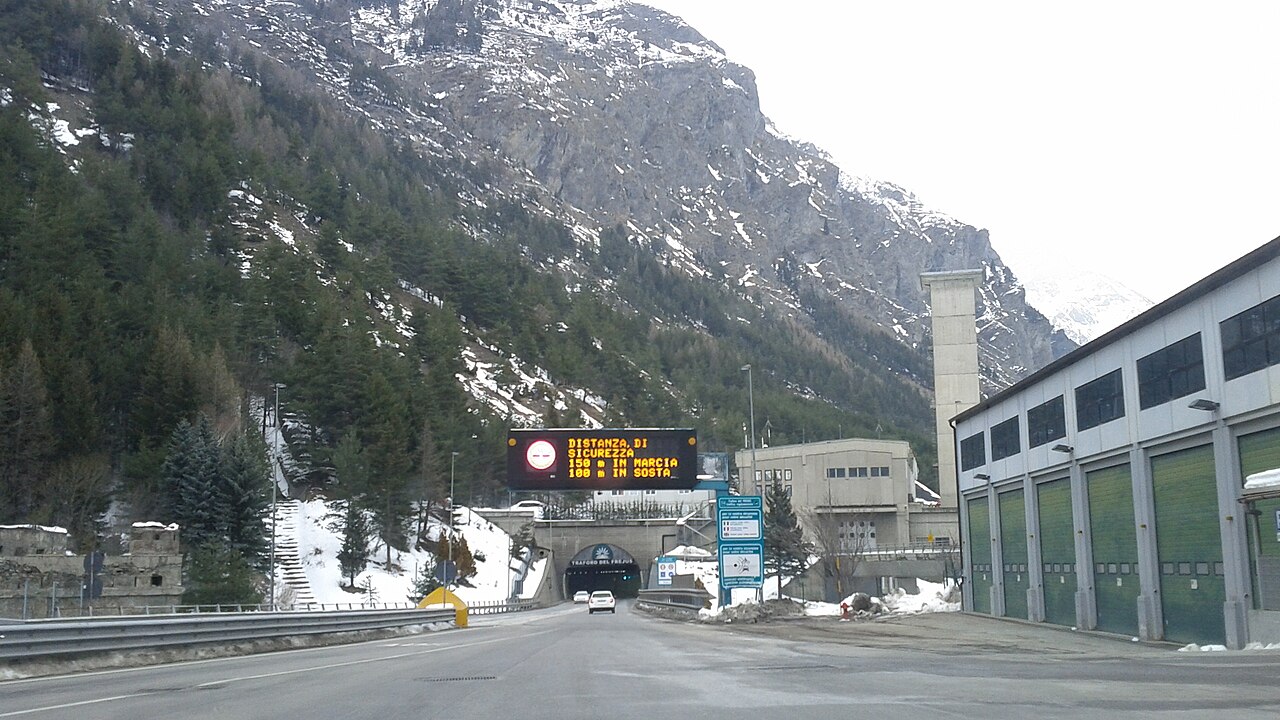
A camera approaches a tunnel in daylight. It is set for a bright scene. Its exposure time is short. Its gain is low. These settings stop a sunlit road from washing out. They suit the bright road outside the tunnel.
At the mouth the scene drops from full daylight to the gloom of the bore. This happens within a truck length or two. The camera cannot change its settings that fast. The automatic exposure needs time to open up. During that time the frame is nearly black. The lane lines sit below what the camera can detect. So does the vehicle ahead. So does the edge of the bore.
The detector can do little with those black frames. A forward-collision system has no clear target to measure. A lane-keeping system loses the lines. For a second or two the assistance runs on a frame with almost no useful information. The lane is narrowing at that point. The traffic is slowing at that point.
The scale is worth stating. A camera’s automatic exposure needs a noticeable fraction of a second to move from a bright setting to a dark one. At highway speed a fraction of a second covers tens of meters of road. The vehicle crosses that blind stretch before the exposure has adjusted. A faster vehicle covers more road in the dark.
The problem grows with the contrast between outside and inside. A bright noon and a long unlit bore make the worst case. The camera steps from the brightest light to the dimmest with the least warning. An older or dirtier sensor adjusts more slowly. It stays blind longer.
The driver’s eyes go through the same adjustment. A tunnel mouth feels briefly disorienting for that reason. The eye recovers in its own time. The point for ADAS is narrower. The system meant to support the driver is weakest during the same span the driver is weakest. Camera height adds to this on a truck. A camera high on the cab meets the shadow line of the portal at a steep angle. The bright sky stays in its frame longer.
The exit is the same trap in reverse, only sharper. Inside the tunnel the camera has opened right up. It runs a long exposure and high gain to read the dim bore.
At the exit the dark opens onto full daylight in an instant. The camera is still set for the gloom. It fills with light. The bright part of the scene saturates to a flat white. The road beyond the mouth disappears into that white. So do the vehicles. So do the signs. Engineers call this tunnel blindness. The camera is blinded by the same light the driver is squinting into. A lens with a large aperture overexposes the most. Recovery from the white-out is slower than a driver expects. The camera stops the aperture down. It lowers the gain. It shortens the exposure. Each step takes several frames. During those frames the bright part of the scene stays white. Its detail is lost.
The part of the scene that matters is the part that disappears. The exit is where traffic spreads back out. A queue may be stopped right past the mouth. A slip road may branch off. These are the things a forward system needs to detect. They stay in the white-out until the camera stops down to the daylight.
The exit needs the same thing as the entrance. It needs time for the exposure to catch up. The exit arrives at road speed. The change from dark to bright is sudden. The exposure adjusts a moment later, after the vehicle is already out and into whatever was waiting past the mouth.
The exit hides the worst hazards on the route. A queue can sit stopped right past the mouth, backed up from a junction ahead. A slip road can branch off within meters of the portal. Traffic that ran single file through the bore spreads back into several lanes at the exit. All of this sits in the white-out until the camera stops down. A forward system exists to detect exactly this kind of thing.
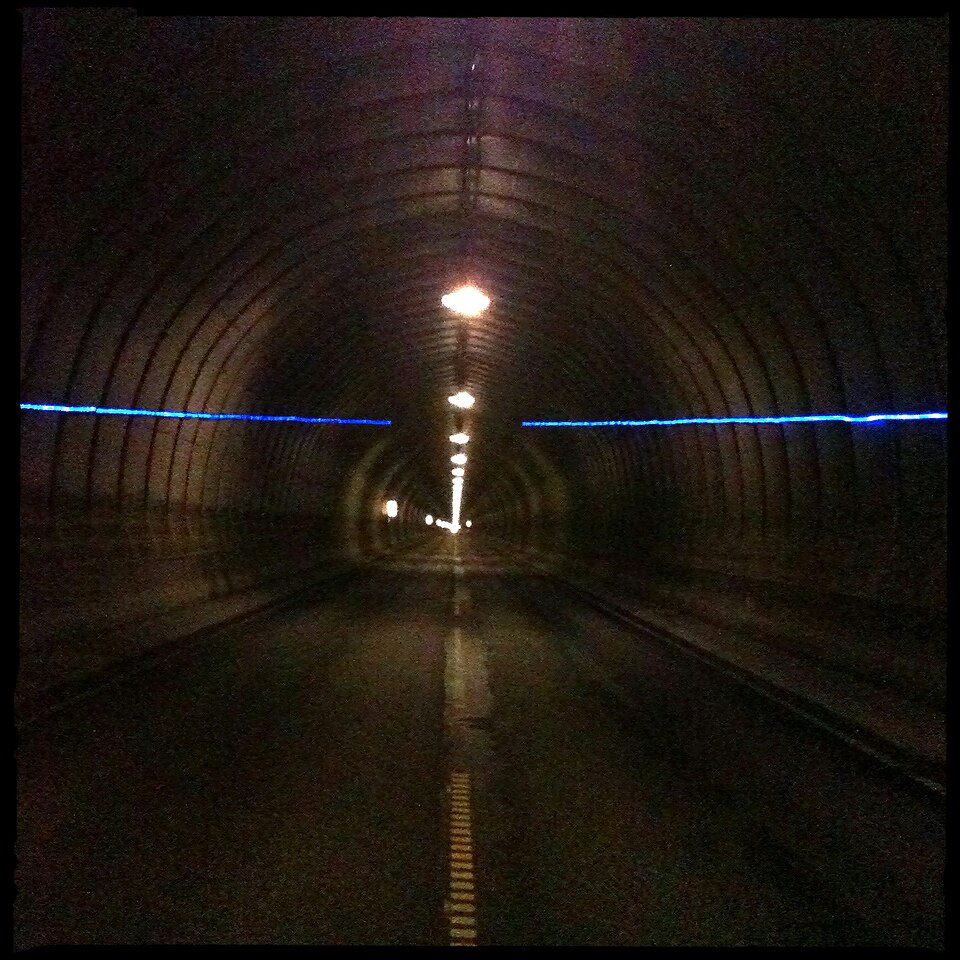
The camera is not comfortable between the two mouths either. Tunnel lighting is dim and uneven compared with daylight. Each lamp makes a bright patch with darker gaps between. The camera passes through that pattern of light and dark the whole way. It never settles on one exposure.
The lamps create a second problem. Many tunnel lights are LED. LED lights flicker quickly. The flicker is far too fast for the eye to see. A camera samples the scene many times a second. Its sampling can beat against the flicker. The image then pulses or shows moving bands of brightness. A camera has to be built to reject this flicker. A camera without that feature loses the frames the detector needs.
The road inside gives the camera little to work with. An old bore often has worn or missing lane lines that are seldom repainted. The walls are a plain curve of concrete or tile. They look the same for hundreds of meters. Inside a tunnel a vision system has no roadside features to judge its position by. A lane-keeping system can drift for that reason alone. Two hundred meters of identical tile give no fixed point of reference. A small drift can go uncorrected until the lane markings reappear.
None of this is as severe as the blackout at the entrance or the white-out at the exit. It is a steady, low-grade loss of quality along the whole bore. The camera keeps working the whole way through at poor quality.
There is a navigation effect too. It lands elsewhere. A tunnel blocks the sky. Satellite positioning drops out inside it. A vision-based ADAS does not use that signal to see the road. A lost fix matters more to the map than to the camera. The camera’s own problem in the bore stays the light and the bare walls.
The standard answer to a scene with bright and dark together is a high-dynamic-range camera. An HDR sensor captures a short exposure and a long exposure. It combines the two. It holds detail in the bright part and the dark part of the same frame. This is the right tool for the steady contrast at a mouth. A dark bore and a bright sky appear together there. Systems with HDR handle that contrast far better than a plain sensor. HDR stops the bright part from washing out. It stops the dark part from crushing to black.
HDR fixes the range problem. The speed problem is a separate matter. The trouble at a tunnel goes beyond bright and dark appearing together. The whole scene moves from one to the other within a second or two. The camera’s automatic exposure still has to follow that move. HDR widens the range the camera holds in one frame. The speed of re-aiming that range stays the same.
An HDR camera shortens the tunnel transition. The blackout on the way in is shorter. The white-out on the way out is less complete. Any camera has to set its exposure to the light around it. At a tunnel the light changes faster than it can set. HDR has a cost too. The technique combines a short exposure and a long one. A moving truck shifts the scene between the two exposures. Fast motion can blur or ghost in the combined frame. HDR also does nothing for LED flicker. In some designs it makes the flicker worse.
One sensor passes through all of this without trouble from the light. Radar uses radio waves. The blackout, the white-out and the dim bore mean nothing to it. The radar keeps measuring the vehicle ahead through every moment the camera is blind. This is a strong reason to fuse the two sensors. The choice between camera and radar has its own page.
A tunnel sets a different trap for radar. A bore is a tube of hard, flat surfaces. At 77 gigahertz those concrete and tile walls act as flat reflectors. The radar beam reflects off these walls and returns along paths it never took on the way out. A signal that left in one direction comes back from another. The radar then computes targets that are not present.
These multipath ghosts are radar’s version of the tunnel problem. A close vertical wall can return a false vehicle. The system has to identify that phantom and reject it. A bore has reflecting surfaces on every side. The radar picture fills with returns that match no real object. These false returns come from the shape of the bore.
Radar is the right sensor to lean on through a tunnel. It holds the range the camera loses. It needs careful handling of its own false alarms. A system that trusted every radar return in a tunnel would brake for ghosts. The fusion has to know which sensor to trust at each moment.
The pairing is what makes a tunnel manageable. The radar holds the range through the blackout and the white-out. The camera recovers a moment later. It then supplies the meaning the radar lacks. Neither sensor covers a tunnel on its own. The two work together, each covering the stretch the other loses. Closer walls make the ghosts worse. A narrow single bore puts hard surfaces right beside the beam and returns strong false signals. The same tunnel troubles the camera most at its mouths. It troubles the radar most along its length. Neither sensor alone is enough.
The tunnel tests one thing above the others. It tests how fast the camera can change its exposure. HDR already covers the range within one frame. What stays open is the speed of re-aiming. A tunnel is a step change in brightness along the road. There is a drop at the entrance. There is a rise at the exit. The camera meets each step at road speed. It spends the next moment adjusting. The length of that moment decides the outcome. A camera that re-adapts in a tenth of a second is blind across only a few meters. At a full second of re-adaptation, the blind stretch grows to tens of meters at speed. The recovery time separates a safe system from a dangerous one.
A larger sensor does not solve this. Holding the brightest and darkest parts of a scene in one frame still leaves the camera to aim that range at the right level. Aiming it takes time. A wider range shortens the recovery a little. It gives the camera a better starting point. The adjustment itself stays the same length. The limit is the speed of the loop that sets the exposure. A good HDR sensor handles the range. The reaction time is what remains. Leaving the tunnel calls for a fresh adjustment of its own. Sensor size does not speed that up.
That adjustment time is the blindness. It is the lag between a sudden change in the scene and the camera’s response. It is not a fault in the lens or the detector. The difficulty is where the lag falls. The blind moment at the entrance falls where the lanes narrow and the traffic slows. The blind moment at the exit falls where the road opens. A queue may wait there. A slip road may branch off there. The camera recovers a second later, out on an open stretch where the recovery no longer matters. This is the point on the route that most demands a clear view. It is also the point where the system is weakest. The dim bore, the LED flicker, the worn lines and the radar ghosts are all behind this. The central problem is speed. No camera today can set its exposure as fast as the light changes. Such a camera would pass through a tunnel almost cleanly, with the entrance and exit barely registering. The real question is how a system covers the gap while the exposure adjusts.
The camera reacts too slowly to a sudden change. The useful fixes remove the surprise. A system can know a tunnel is coming. It can then begin to adjust before it arrives.
That advance warning can come from several sources. The forward camera can recognize the dark rectangle of a tunnel mouth ahead. It can begin to open its exposure early. A map with tunnels marked can warn the system seconds before the entrance. A simple light sensor can read the coming change. Each of these turns a sudden step into a gradual ramp. The exposure can follow a ramp in time. The system then heads off the tunnel-blindness effect before it happens.
Faster sensors help in the same way. A camera whose exposure settles in a fraction of the usual time shortens every blind moment. Sensors built to reject LED flicker keep the lamps from corrupting the frames. These steps do not change the physics. They only shrink the window of lost vision.
Radar carries the load while the camera recovers. The condition is the same as before. The tunnel ghosts must be handled. A fusion can lean on radar through the transition. It can return to the camera once the camera has settled. That covers the gap neither sensor covers alone. The design treats the tunnel as a known event and prepares for it in advance.
The order of these fixes matters for a fleet buying today. Advance warning from a map or a forward read of the mouth is cheap and effective. Flicker-rejecting sensors are widely available. Radar fusion is standard on the better systems. The hardest part is a camera that re-adapts in a small fraction of the usual time. That part is still maturing. A fleet can ask for the first three now.
The honest fallback is the same one used in rain and at night. The system cannot always see well enough to be trusted. It cannot always adjust around a blind moment at a mouth. It should then say so. It should hand control back to the driver. It should not report a clear road it cannot see. A tunnel is a short event. In the middle of a tunnel, a confident wrong output is dangerous.
A tunnel breaks a camera ADAS in a different way from night and rain. Night leaves too little light. Rain hides the road. A tunnel changes the light too fast for the camera to follow. It changes at the entrance. It changes again at the exit. The blind moments fall over the one stretch that most needs a clear view. Each condition exposes a different limit of a daylight instrument working outside daylight. The tunnel exposes the limit on speed.
A tunnel-ready system needs two things. It needs a faster camera. It needs advance warning of the change. The real test of such a system is its speed. The test is how fast the camera keeps up when the light changes from one level to another.
The light changes faster than the camera can adjust. On the way in, the camera carries its bright-daylight settings into a dark bore. It underexposes and sees almost nothing until it adjusts. On the way out, it carries its dim-tunnel settings into full sun. It overexposes and washes out until it stops down. A tunnel throws both at the camera within a second or two, faster than the exposure can keep up. The blind moment lands where lanes merge and traffic slows.
It is the camera being blinded by the rush of light at a tunnel exit. The camera opens right up inside to read the dim bore. It carries those wide-open settings into the full sun at the mouth and saturates. The bright scene collapses into a flat white. A lens with a large aperture overexposes the most. The exposure needs time to stop back down. Until it does, the road, vehicles and slip roads right past the exit are lost in the white-out. A forward system most needs to read them at exactly that moment.
It fixes part of it. An HDR camera combines a short exposure and a long one. It holds bright and dark detail in one frame. That reduces the contrast between a dark bore and a bright sky. It answers the range problem. The speed problem is a separate matter. The scene still moves from bright to dark within a second or two. The automatic exposure still has to follow it. HDR makes the blackout and white-out shorter and less complete.
Radar is not troubled by the light. It keeps measuring the vehicle ahead while the camera is blinded. The catch is the walls. At 77 gigahertz a tunnel’s hard flat surfaces act as flat reflectors. The radar beam reflects off them. It produces multipath echoes. These are ghost targets that are not present. Radar is the right sensor to lean on through a tunnel. The system must identify and reject those false returns. It must not brake for phantoms.
The effective fixes remove the surprise. A camera that recognizes a tunnel mouth ahead can adjust early. A map that marks the tunnel can warn the system. A light sensor can read the coming change. Each turns a sudden step into a gradual ramp. The exposure can follow a ramp in time. Faster-adapting sensors shorten the blind moments further. LED-flicker rejection keeps the lamps from corrupting the frames. Radar carries the load through the transition. Its ghosts must be handled first. It covers the gap while the camera recovers.
Use it as an aid only, and stay in control yourself. Be most careful at the mouths. A well-designed system shortens its blind moments. It hands back to the driver when it cannot see. It does not report a clear road it cannot read. The driver should expect the assistance to be at its weakest at the entrance and the exit. The driver should stay ready to take the lane during those few seconds.