


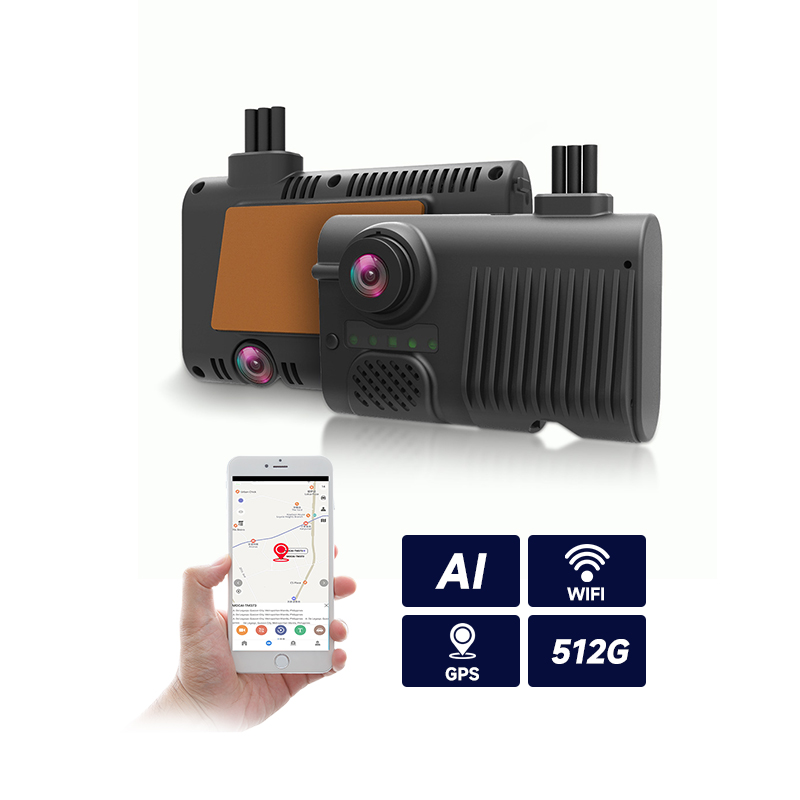
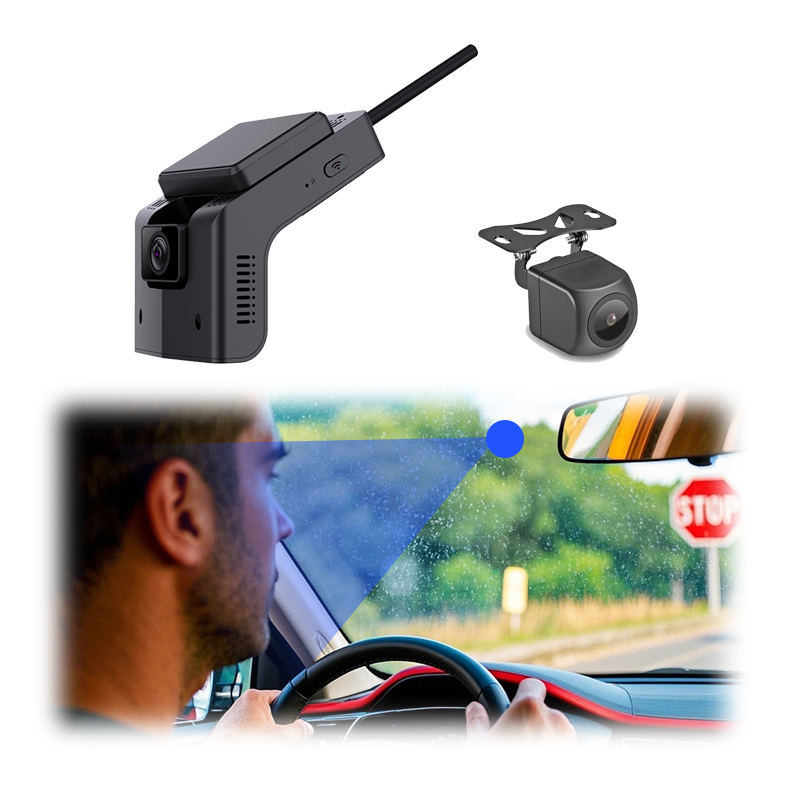
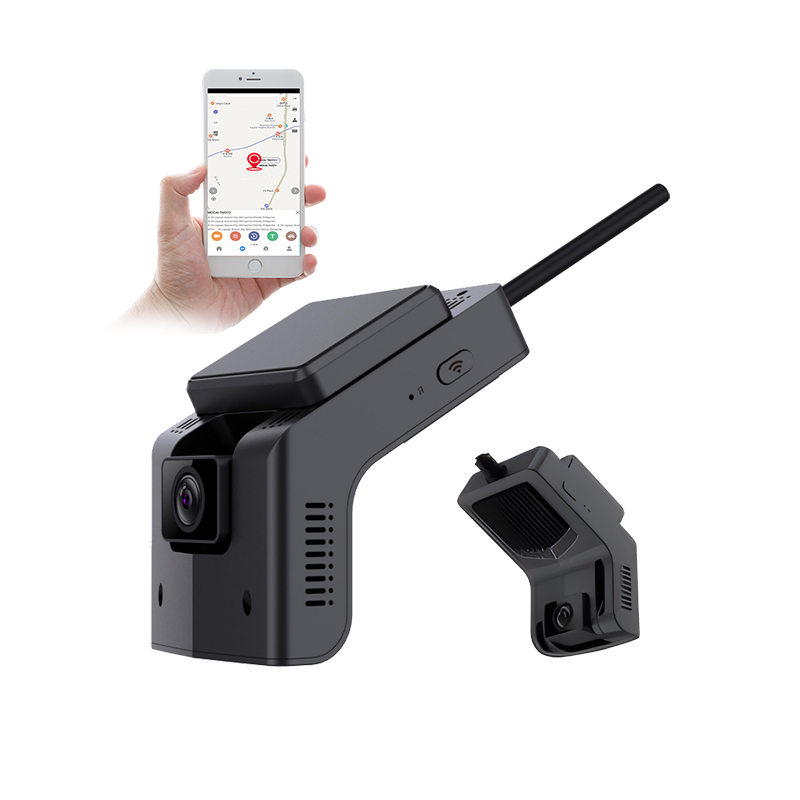
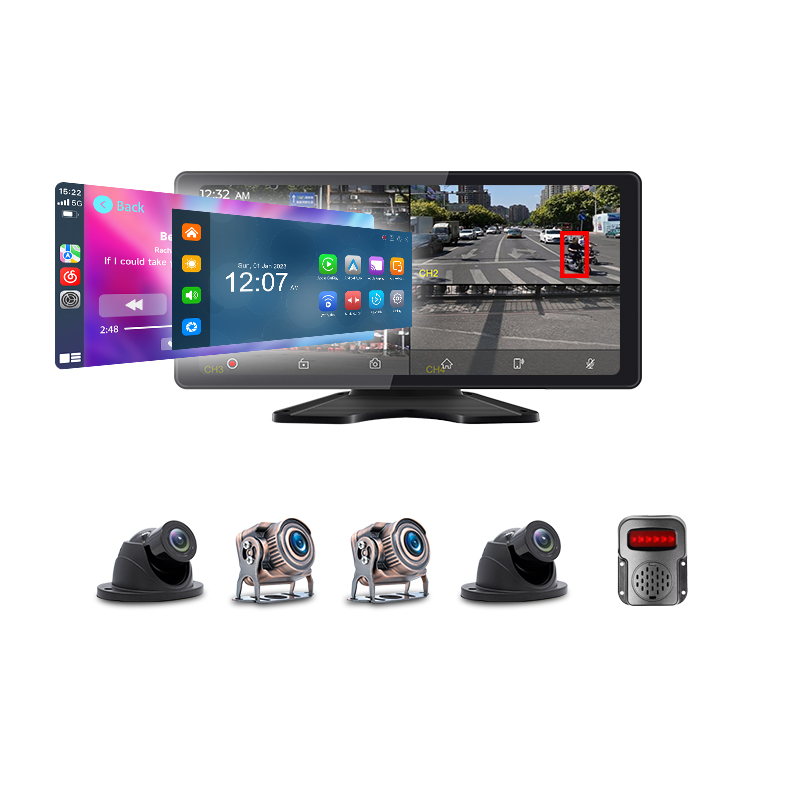

Four cameras running all day make more video than any cellular plan wants to carry, and the upload path on a commercial vehicle is built around that single inconvenient number. The box is not trying to stream everything it sees. It spends its airtime sending the least it can while keeping the rest on the card, ready for the minute a platform or an investigator asks for one.
A single 1080p channel at a watchable frame rate moves a few megabits a second, and in the older H.264 it runs higher, so four of them held open around the clock would reach tens of gigabytes in a day. The data a 4G upload draws in practice is the number the whole design bends around, and it is the reason no sensible box streams all four channels live by default. A fleet of a few hundred vehicles doing that would not be running a monitoring system, it would be feeding a mobile-network bill that grows with every truck added to the yard. The plan a fleet can afford sets the ceiling, and everything above it has to be footage somebody specifically called for.
The bandwidth H.265 saves over H.264 is enough to move the line of what is affordable, cutting the bitrate by close to half for the same picture, so the same card holds twice the days and the same link carries half the bytes. A box that loops thirty days out of a card in H.265 manages roughly half that in the older codec, which is the gap between meeting a retention rule and missing it. The price is compute, since H.265 is heavier to encode in real time, which is why that work sits in dedicated silicon and not the processor running the rest of the box. Fleets on current hardware are mostly there already, and the holdouts on H.264 are working through old stock or an old platform that never learned to read the newer stream.
The bitrate is not a fixed dial either. An adaptive bitrate strategy lets the box shed resolution and frame rate as the link thins out, so a live view holds together on a weak signal instead of stalling, then climbs back when the bars return. It works by watching how fast the platform is acknowledging what it sent and easing off before the buffer overruns, the same instinct a video call follows when a connection sours. The picture going soft through a bad stretch is the box choosing a degraded view over a frozen one, and the clip written to the card never drops below full quality while that happens, since the card does not care what the network can carry.
Per vehicle, the total comes in lower than streaming instincts expect. The real monthly 4G figure sits well under what continuous video would imply, because the box spends almost all of its airtime on small things and saves the costly full-resolution clips for the minutes someone asks to see. Fleets usually buy a directed IoT data plan sized for that pattern rather than a phone plan, a few gigabytes a month per vehicle that the carrier prices for machines, and a box that burns through it is usually one misconfigured to push live video it was never meant to send. A coach on a long intercity run and a van on local deliveries can land in the same modest band, which is the part that settles a finance team once they stop picturing four live feeds.
The link is the part that will not behave. The common causes of cloud streaming dropouts are mostly geography and motion, a vehicle sliding out of one cell into a weak handover, a tunnel, a depot wrapped in steel. A moving vehicle hands off between towers all day, and each handover is a moment the stream can stutter even where the map shows full coverage. None of it is a fault in the box, and a system that logs every drop as an error fills its memory with noise nobody can use. The right design expects the connection to come and go, and treats a clean reconnection as the normal case rather than the exception.
Recording stays intact when the network drops because the card, not the cloud, is the system of record. The box writes every channel locally at full bitrate the whole time, network or no network, and the cloud holds a copy of only what the platform pulled. When the link returns the box reconciles, working through the clips the platform asked for during the blackout and the alarms it could not deliver, so a dead zone costs the live view for a while and leaves the footage whole. Alarms go up first when the queue clears, because an active-safety event the platform is waiting on outranks a routine clip, and the ordering of that backlog is one of the quiet places a good box pulls ahead of a cheap one. A fleet that has worked this out sizes storage for the worst route any vehicle runs, not for the average.
The carrier can fail even where the coverage is fine. A dual-SIM primary-backup arrangement puts two networks in the box and lets it fall to the second when the first goes quiet, which earns its place on routes that cross between regions where one operator is strong and another is thin. The switch has to be quick and unattended, because nobody is in the cab to notice a dropped registration, and a box that takes a full minute to fail over loses that minute of live view and any alarm that fired inside it. The better designs keep the backup registered and warm so the cutover is a second or two and not a cold dial-up. Serious fleet boxes carry the second slot now, and the ones that skip it are betting the route never crosses a coverage seam.
The terminal keeps its session alive with a heartbeat on the 808 channel, and the right frequency for that heartbeat is a balance, often enough that the platform does not mark the vehicle offline, rare enough that it does not waste data sending it. The usual setting lands in the tens of seconds, slow enough to stay cheap and fast enough that a dispatcher trusts the online light. Set it too slow and a vehicle parked overnight reads as dead to the dispatcher; set it too fast and a thousand-vehicle fleet throws a flood of tiny packets the platform has to field. The cadence the platforms expect sits in a comfortable middle that few integrators ever need to touch.
After a long dead stretch a box can come back with hours of unsent clips queued behind it. How it drains that queue without saturating the link or falling behind the next blackout is behavior that only shows on the road, and a bench test on full bars never sees the backlog at all. A box can throttle its catch-up so the live channel still has room to breathe, or it can dump everything at once and starve the same stream a dispatcher is trying to watch. The difference between the two is the kind of thing a fleet finds out only once the vehicles are working a real route.
The trade-off between local and cloud recording is settled by regulation before the engineering gets a vote. The card on the vehicle is the legal record because a government platform has to be able to pull original footage from the terminal on demand, by time range and channel, and the cloud copy is there for convenience and for the clips already requested. A fleet that leaned entirely on cloud storage would be one outage away from a hole in its evidence, which is why on-vehicle storage is sized for full retention and the cloud is treated as the lighter, searchable layer on top. The platform searches the cloud, finds the moment, and reaches back to the vehicle for the original only when it has to have the original, which on a busy platform is a small share of everything it holds.
Not all of the upload has to ride the cellular network. Campus WIFI upload lets a depot pull the heavy files off a vehicle when it parks for the night, over the yard’s own network, which shifts the bulk transfer off the metered 4G link and onto something free and fast. A bus that fills its card on a day’s route can offload the whole thing at base while it charges, leaving the cellular link to carry only what cannot wait for the vehicle to come home. The boxes that support it watch for a known depot network and start the transfer on their own, so the driver never has to think about it.
Whatever moves, moves under a rule about how it is protected. Implementing SM4 encryption on the video is the Chinese state cipher’s answer to keeping a passenger’s footage and a vehicle’s position from being read in transit, and a box selling into the regulated market carries it whether the buyer asks or not. It adds a little processing and a key-management job the integrator solves once, since keys have to be provisioned, rotated, and survive a box being swapped out in the field. After that it stays out of the way, and few buyers ever know it is running.
The next shift is already on the calendar. The 5G pre-installation timeline for commercial vehicles is set by module cost and network buildout rather than by what the cameras could use, and for now a 5G box mostly buys headroom a 4G one does not have, the room to push more channels live without the same triage. Early 5G fleets often ride non-standalone networks that still lean on the 4G core, so the real gains arrive in steps as standalone coverage fills in. Fleets reach it when the modules cost what 4G ones cost today, and the routes that would benefit are often the rural ones still waiting on the coverage to show up.
For the fleet, almost none of this shows. The box is set up once and the data plan is sized for the traffic it sends, and after that the upload path only draws attention when a vehicle drops off the map for too long, or when someone needs a clip from a stretch of road where the link was down and the card kept writing through it.