




A live stream from a vehicle meets cells the coverage map calls served and the uplink calls hopeless. A fixed-rate stream dies there: it stalls, the session times out, the platform logs a dropout in a place with working coverage. The adaptive strategy keeps the stream alive by changing what it asks of the link, second by second, down a ladder of preset tiers and back up again. The strategy governs the transmitted stream alone. The recording on the card keeps its full quality through every adaptation, on the local-first rule this series repeats because it decides everything.
The problem is the gap between average and worst. The dropout page puts real 4G uplink at single-digit to low-double-digit megabits per second in working cells, falling toward one to five in fringe and congested ones. A supervisory stream configured for the average cell exceeds the worst cell on the same route, the configuration mismatch the dropout page lists among its causes. Weak-signal areas turn that mismatch from an occasional stall into a daily operational pattern: the same corridor, the same minutes, the same dead live view on the same screens.
The adaptive answer changes the question from whether the stream fits to which version of the stream fits. The terminal carries several preset versions of the same view, from a full sub-stream down to a minimal one, then moves between them as the link’s behaviour changes. The control room keeps a picture in the weak stretch. The picture is coarser. The session survives. The operator keeps eyes on the vehicle. The stream returns to full quality where the cells allow it.
The protocol machinery for this is already aboard. The transport standard’s video layer distinguishes main and sub streams, carries the parameters that set resolution and rate per stream, then supports switching streams in session, the mechanism deployments use to change clarity against network conditions. The adaptive strategy is a policy built on those existing controls: a ladder, a set of triggers, a floor and the hysteresis that keeps the whole thing from oscillating.
The ladder bends. The recording does not.
The adaptive scope is the outbound live stream and nothing else on the vehicle. The supervisory view an operator opens, the full-tier view an incident raises, the live window a client contract names: these ride the radio uplink in real time, so these are what the strategy resizes when the uplink thins under them. The adaptation happens at the encoder feeding the link, tier by tier, with the platform told which tier is playing so the viewer’s expectations follow.
The recording never adapts. The card receives full configured quality through every weak stretch, on the recording page’s loop that has no network step in it. A vehicle that crossed a dead valley at the ladder’s floor tier still holds the valley at recording quality on its card. An investigator who pulls that stretch later receives the full version, by query or by reader, exactly as if the route had run through city coverage.
The alarm parcels never adapt either. An event in a weak area packages its stills and its clip from the recording tier, at evidence quality, then queues them. The queue waits out the weak stretch on the resume machinery the recording page walks. The parcel that arrives late arrives whole. Adaptation governs what a viewer sees now. Evidence is the class with no now in it, the reason it sits outside the strategy’s reach.
The boundary needs writing because the temptation runs the other way. A configuration that lowered the recording tier in weak areas would save nothing on the link, the recording never touching it. It would cost evidence quality in exactly the places incidents are hardest to reconstruct. The scope clause in the specification states the boundary in one sentence: adaptation applies to transmitted live streams only, with recording and alarm content excluded by design.
A tier switch shows on the viewer’s screen. The design owns what it looks like. The picture holds, a keyframe lands, the new tier draws: one visible quality step, no black frame, no spinner, inside a second or two on a sane keyframe interval. The platform player labels the change where the indicator section below lands it. A switch that blanks the screen or stalls the player names an implementation cutting between streams without waiting for the keyframe, the first thing the drive test catches.
The first signal is the send buffer, read on the terminal itself. The terminal queues outgoing video ahead of the modem. The queue’s depth is the plainest measure of fit: a draining buffer means the link carries more than the stream needs, a growing one means the stream exceeds the link now. The buffer reads instantly, on the terminal, with no round trip, which makes it the loop’s fastest input. A buffer past a threshold for a held interval is the classic step-down trigger. The second signal is the acknowledgement flow. The platform confirms received media on the session the protocol runs, so the terminal reads loss and delay from its own traffic: confirmations slowing, retransmissions rising, round-trip times stretching. The acknowledgement view sees the whole path, the property the heartbeat and switching pages use for their own decisions. It reacts a beat behind the buffer and confirms what the buffer suspects. The third signal is the modem’s radio report: signal strength, signal quality, the serving cell’s identity. The radio view warns earliest, ahead of any traffic effect, the same fading the dual-SIM page’s middle trigger reads. It also misleads the loop more than the other signals do: a cell can read strong and carry little at rush hour, the congestion case the dropout page prices. The radio signal serves as early warning, with the traffic signals holding the decision. The fourth signal is the calendar of the route. A fleet that has run its corridors holds the overlay the dual-SIM page builds: the stretches where every vehicle thins, daily, at known kilometre marks. Pre-positioning uses that memory: the ladder steps down before the known stretch on position, ahead of any measurement, then steps back up past it. The reactive loop still runs underneath, catching what the map does not know yet. The four signals settle into an arbitration the firmware runs every decision cycle: the route memory proposes, the radio warns, the buffer decides, the acknowledgements confirm. A step-down needs one strong vote from the buffer. A step-up needs agreement across the slow window from everything the loop reads. The arbitration order matters because the signals disagree in exactly the places the ladder works: a strong-reading cell with a flooded buffer is rush-hour congestion, a weak-reading cell with a draining buffer is an empty fringe carrying a small stream comfortably. The buffer wins both of those arguments on the traffic evidence, which is the design’s one-line summary.
The ladder is a short list of named tiers, each a complete combination of resolution, frame rate and target bitrate the encoder can hold. The industry’s resolution steps give the rungs their names: the high sub-stream tiers around the D1 class of roughly 700 by 580 pixels, the middle around the CIF class of roughly 350 by 290, the floor below it, with common configurations pairing CIF-class video to a few hundred kilobits and D1-class to a megabit-scale rate. The exact pairings are configuration, set per fleet against the routes and the codec.
Three to five tiers cover the watching duty. Fewer than three rungs wastes the mechanism, one hard step from full to floor with nothing usable between them. More than five buys oscillation room with no visible quality benefit between adjacent rungs, each switch costing a keyframe and a settling period. Deployments land at three or four: a full tier for good cells, one or two middle tiers for the fade, a floor tier for the fringe, named in the configuration profile the platform pushes.
Each step down buys headroom in big bites. A drop from D1-class to CIF-class quarters the pixel count, with the bitrate falling by a similar factor at held visual quality per pixel. Frame-rate cuts ride alongside for the lower rungs: a supervisory view at a reduced frame rate stays readable for the watching duty, the dropout page’s point that the watch tier exists to confirm state, with the recording holding the smooth version. The floor rung combines all three cuts: smallest resolution, lowest workable frame rate, a bitrate the worst route cell carries.
The ladder travels as configuration, which makes it a fleet asset. The rungs, their figures and the loop’s windows live in the platform profile, pushed over the parameter channel and read back like every setting this series manages. One route’s ladder copies to the sister route with one edit to the floor. A new vehicle inherits the fleet’s ladder at commissioning. The drive-tested numbers stay attached to the profile in the configuration record, the same documentation habit the heartbeat page’s five fields set.
The keyframe cadence ties the rungs together. A stream switch lands on a keyframe, so the encoder’s keyframe interval bounds how fast a tier change takes effect. Short intervals make switches quick at a small steady bitrate cost. Long intervals slow the switch and trim that cost. Deployments hold the interval near the low seconds for streams meant to adapt, the timing that keeps a commanded step-down inside the buffer’s patience on a fading cell.
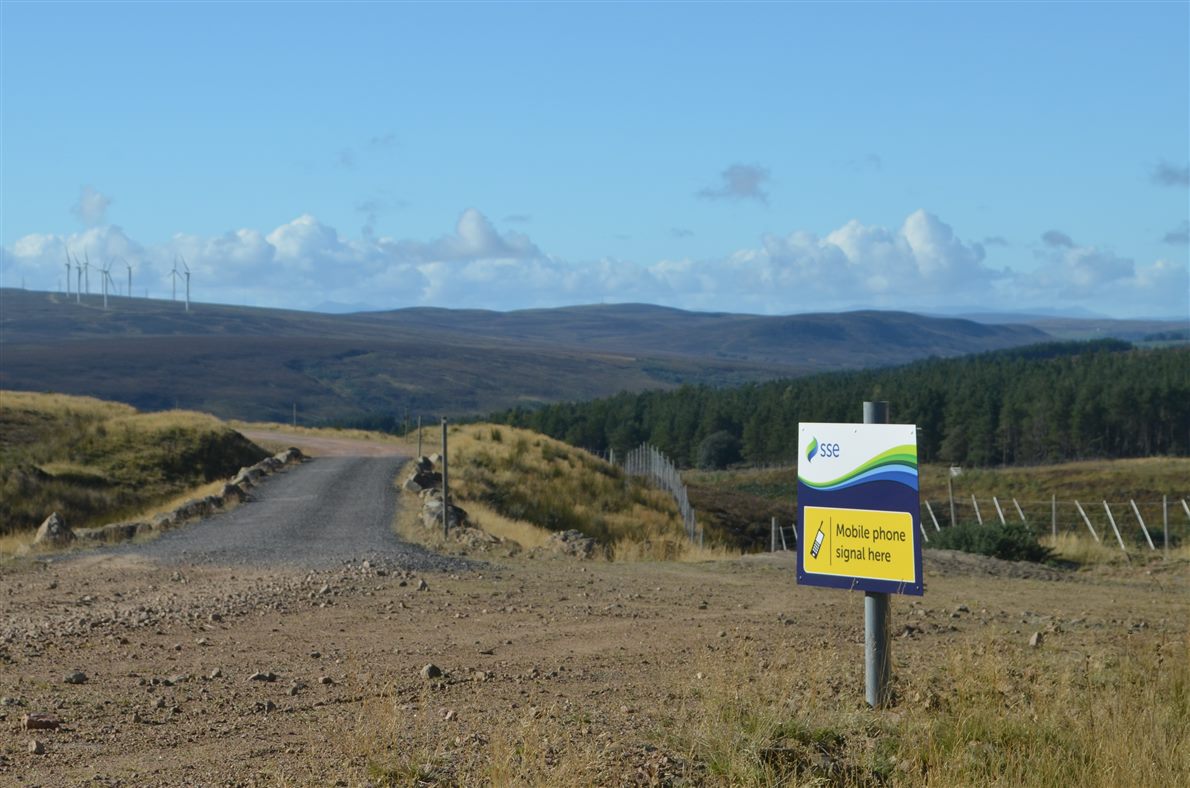
The floor tier is the design’s anchor, sized from the route and from nothing else. The dual-SIM page’s overlay names the route’s worst served stretches and the dropout page’s figures bound their uplink, toward one megabit and under in the fringe. The floor’s bitrate sits below the worst stretch’s working figure with margin, commonly in the low hundreds of kilobits, the band where a small supervisory picture still moves. A floor sized to the average cell is a floor that fails in exactly the places the ladder exists for.
The floor is a picture, deliberately minimal. At the floor the operator keeps the view that answers the watching questions: where the vehicle is pointed, whether the scene is normal, whether the driver is in the seat. Detail reading, plate reading and incident review belong to the recording, pulled later at full quality by query or by card. The floor’s job is presence with eyes, one step above the heartbeat’s presence without them.
The floor also shares its cell. A convoy or a depot cluster inside one weak cell divides that cell’s thin uplink across every streaming vehicle, the pooled-capacity arithmetic the campus page runs for its own yard. A floor sized for one vehicle alone can starve when three stream together at an incident. Fleets that work convoys size the floor against the worst case the operation runs in practice, vehicles per cell included, with the incident protocol naming who streams and who holds when the cell cannot carry all of them.
Below the floor sits the exit, written into the policy. A link that cannot carry the floor tier for a held period ends the live session cleanly: the operator sees a stated message, the session closes without a timeout cascade, the queued classes keep their order, the stream re-offers when the link returns. The clean exit is the difference between a designed floor and a stream that dies in retries, the session noise the dropout page’s logs would otherwise carry.
The ladder needs the same medicine the dual-SIM page gives failback: a deliberate reluctance to climb. A loop that steps up the moment the buffer drains will meet the same thin cell two hundred metres later, step down, recover, step up, then oscillate the whole stretch. Each oscillation costs a keyframe, a visible quality jump and a slice of the link, the flapping pattern every control system in this series damps the same way.
The asymmetric rule does the damping. Step down fast: a single held trigger, a second or two of growing buffer, drops a tier at the next keyframe. Step up slow: the link proves itself for a held window, tens of seconds of clean delivery at the current tier, before the loop tries the rung above. The asymmetry matches the two costs, a late step-down stalling the stream in front of the operator, a late step-up costing seconds of coarser picture nobody misses.
The window lengths come from the route’s grain. Short weak patches, bridges and cuttings, want a step-up window long enough to span them so the ladder rides through the patch at one held tier. Long weak corridors want pre-positioning from the fourth signal so the ladder is already down at the right rung before the corridor starts. The numbers land in the configuration profile beside the tiers, pushed and recorded like every parameter this series manages.
The codec page’s arithmetic applies rung by rung. The newer codec carries the same picture at a large fraction less bitrate, the H.265 saving that page prices against H.264. Applied to the ladder, every rung’s bitrate falls by the codec’s factor at held picture quality, which moves the whole ladder deeper into weak territory: the floor tier fits a thinner cell, the middle tiers hold through fades that forced the old floor, the full tier survives cells that forced the old middle.
The same arithmetic widens the ladder at fixed cost. A fleet holding its rung bitrates steady when it adopts the newer codec gets a quality jump at every rung: the floor’s picture grows from minimal toward useful at the same kilobit count. The choice between the two readings, same quality cheaper or better quality at cost, is the codec page’s standing trade, made once per fleet and inherited by the ladder.
The encoder’s rate-control mode is the small print under the tiers. The transport standard’s parameter set carries fixed, variable and averaged rate modes. Adaptive ladders run the steadier modes for the transmitted stream, holding each tier near its target so the loop’s signals read the link, with the scene kept out of the measurement. A variable mode that spikes on motion would trip the buffer on every busy junction, an oscillation source the mode choice removes before the loop has to.
A worked ladder shows the codec’s effect in numbers. A three-rung H.264 ladder at D1-class two megabits, CIF-class half a megabit and a floor near two hundred kilobits becomes, at the codec page’s saving band, an H.265 ladder near one megabit, a quarter megabit and a floor toward one hundred kilobits. The new floor fits cells the dropout page’s fringe figures call marginal for anything. The route stretches that forced the old clean exit now hold a moving picture, the corridor-level difference the drive test reads directly.
The operator sees the tier, named, on the live view. A small indicator stating the current rung turns a coarse picture from a suspected camera fault into a read condition: the vehicle is in the known weak corridor, the ladder is holding at the floor, the full view returns in two kilometres. The indicator costs a label in the player and saves a support ticket per fade, the same expectation-management the consumption page’s burst reading buys for the billing column every month.
The platform logs the tier history beside the session. A stream’s record of its rungs, timestamped and positioned, is the route’s uplink map drawn by the vehicles themselves: every fade, every floor stretch, every recovery, accumulated per corridor per week across the whole fleet. The log feeds the coverage overlay the dual-SIM page builds and the floor section leans on, replacing the one-off survey with a living one. The fleet’s weak-area map maintains itself as a by-product of watching.
The expectations belong in training, one paragraph of it. An operator who knows the floor tier’s purpose reads a coarse picture as the system holding on, opens the recording pull later for detail, then dispatches on the presence the floor preserves. An operator who does not know it reports a broken camera and opens a ticket on a healthy vehicle. The paragraph costs nothing and the difference shows in the ticket queue, the literacy point every operations page of this series lands somewhere.
The tier history also reads on the bill. Watching minutes spent at the floor tier cost a fraction of the same minutes at the full tier, on the consumption page’s per-tier rates, so a fleet with long weak corridors sees its viewing component run under the flat-rate prediction. The monthly review reads the gap as the ladder working. The same read exposes a ladder stuck at full tier, a configuration that never engaged, visible as a viewing line that ignores the route’s known geography.

The test is one vehicle, one known weak corridor, two passes. Pass one runs the legacy fixed-rate configuration with the platform logging stalls, timeouts and session drops along the stretch, kilometre by kilometre. Pass two runs the ladder with the tier log on. The comparison is the strategy’s whole case in two rows: sessions held versus sessions dropped, minutes of degraded picture versus minutes of no picture, with the position stream attaching every event to the map for both passes.
The acceptance numbers come off the second pass. Zero session drops across the corridor at or above the floor tier. Step-downs landing inside the buffer’s patience, read as no stalls before the switch. Step-ups held until the window passes, read as no oscillation bursts in the tier log. A floor stretch matching the overlay’s prediction, confirming the fourth signal’s map. Four reads, one afternoon, the same one-page acceptance habit every mechanism page files.
The tier log doubles as the test’s recorder, which keeps the instrumentation cost at zero. The two passes need no extra equipment: the platform’s session log carries the stalls and drops of pass one, the tier history carries pass two, the position stream stamps both against the kilometre marks. A fleet that can read its own logs runs the whole acceptance from a desk the day after the drive, the same no-special-tools posture every verification in this series holds.
The re-test cadence follows the inputs. A codec change re-prices every rung. A carrier change moves the corridor’s cells. A route change adds stretches the overlay has not seen. Each reopens the drive test on the affected corridor, against the filed baseline, the same trigger-list discipline the heartbeat and key pages keep beside their numbers.
The ladder line names the tiers: resolution, frame rate and target bitrate per rung, three to five rungs, with the codec stated. The floor line names the anchor: the floor tier’s figures, the route stretches that size it, the clean-exit behaviour below it. The loop line names the control: the four signals, the step-down trigger, the step-up window, the keyframe interval. The scope line names the boundary: transmitted live streams only, recording and alarm content excluded. The acceptance line names the drive test with its four reads and its baseline file.
The five lines land where this series always lands them: the ladder and loop in the platform’s configuration profile, the floor in the route documentation beside the overlay, the scope in the security and evidence paperwork, the acceptance in the test file. A fleet that writes the five has turned the weak corridor from a daily dropout source into a managed quality gradient, on paper anyone can audit.
Specify the ladder with named rungs and the codec stated beside it. Size the floor from the route’s worst stretches off the overlay, with the clean exit written below it. Set the asymmetric windows and the keyframe interval in the profile. State the scope clause that keeps recording and evidence outside the strategy. Run the two-pass drive test on the worst corridor at acceptance and file both rows against the map. The live view then degrades by design and recovers by design. The recording holds full quality throughout. The weak corridor stops writing dropouts into the log it used to own.
The transmitted live stream alone. The terminal moves between preset tiers of resolution, frame rate and bitrate as the uplink’s behaviour changes, stepping down fast in fades and back up slowly after the link proves itself across a held window. The recording on the card and the alarm parcel contents never adapt: they keep full configured quality through every weak stretch, with only their upload timing riding the queue and resume machinery. A tier switch lands on a keyframe, one visible quality step with no blank frame.
A permanently low stream wastes the good cells, which are the route’s majority. The ladder gives the control room full quality wherever the link carries it and degrades only where it does not, with the tier log recording exactly where that was, corridor by corridor. A fixed low rate also fails the same way a fixed high one does in the worst stretches, the floor question still needing an answer sized to the route. The tier-minutes read on the bill under the flat-rate prediction, the consumption review’s confirmation that the ladder engaged.
Four, in layered roles. The send buffer’s depth is the fast trigger, read on the terminal with no round trip. The acknowledgement flow, loss and round-trip times, confirms across the whole path. The modem’s radio report warns early and decides nothing alone, because strong-reading cells can carry little at rush hour. The route memory pre-positions the ladder ahead of known weak corridors, with the reactive loop underneath. The arbitration is one line: the buffer decides, the rest propose, warn and confirm.
From the route’s worst served stretches, off the coverage overlay and the dropout figures: a bitrate below the worst stretch’s working uplink with margin, commonly in the low hundreds of kilobits with a small resolution and reduced frame rate, falling further under the newer codec. The floor preserves presence with eyes, the watching duty, with detail left to the recording. Below the floor, the session exits cleanly by policy, with a stated message and an automatic re-offer. Convoy operations size the floor with vehicles-per-cell included.
No. The recording loop has no network step, so the card holds full quality while the live stream rides the ladder. An incident inside a weak corridor reads coarse on the live view and full on the pulled footage, with the parcel queueing at evidence quality throughout. The scope clause writes this into the specification: adaptation applies to transmitted streams only, with recording and alarm content excluded by design.
A two-pass drive test on a known weak corridor: fixed-rate baseline against the ladder, stalls and drops against tiers held, both passes stamped by the position stream. Acceptance reads four lines from the second pass: zero drops at or above the floor, step-downs inside the buffer’s patience, no oscillation bursts in the tier history, floor stretches matching the overlay’s marked kilometres. The test re-runs when the codec, the carrier or the route changes, against the filed baseline rows.