









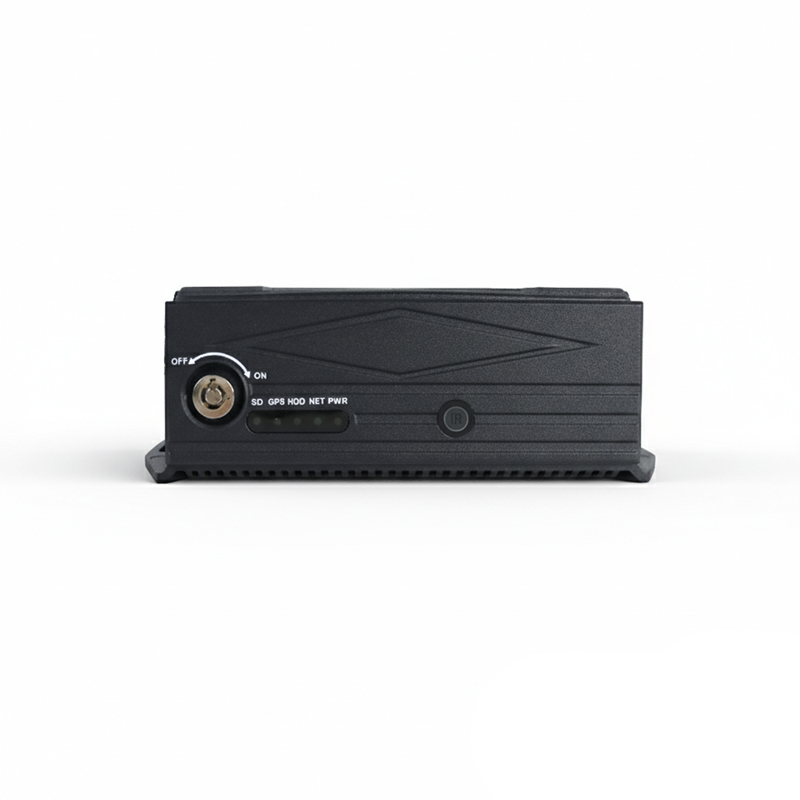
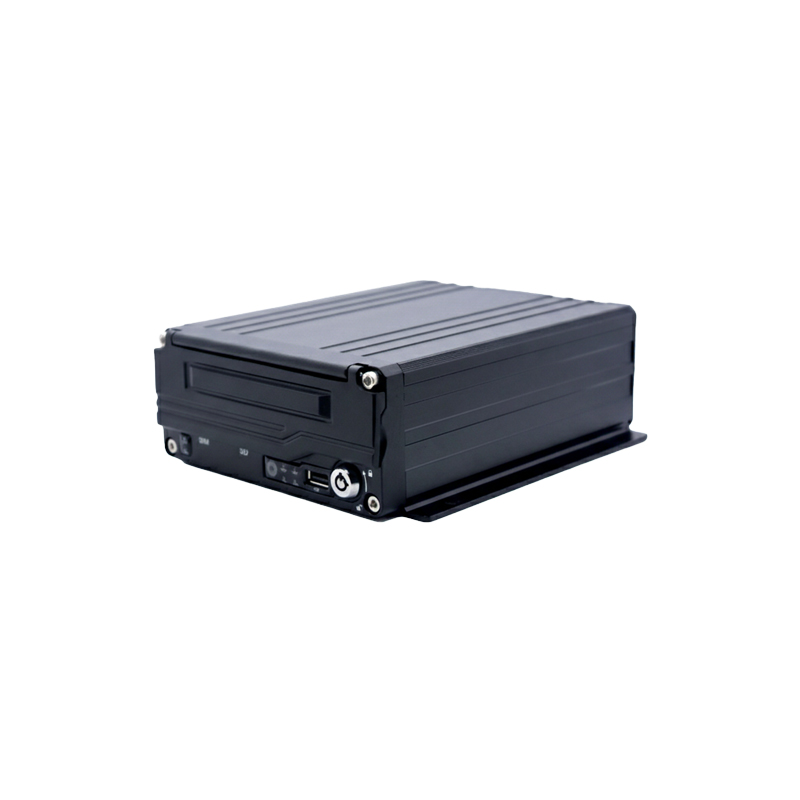
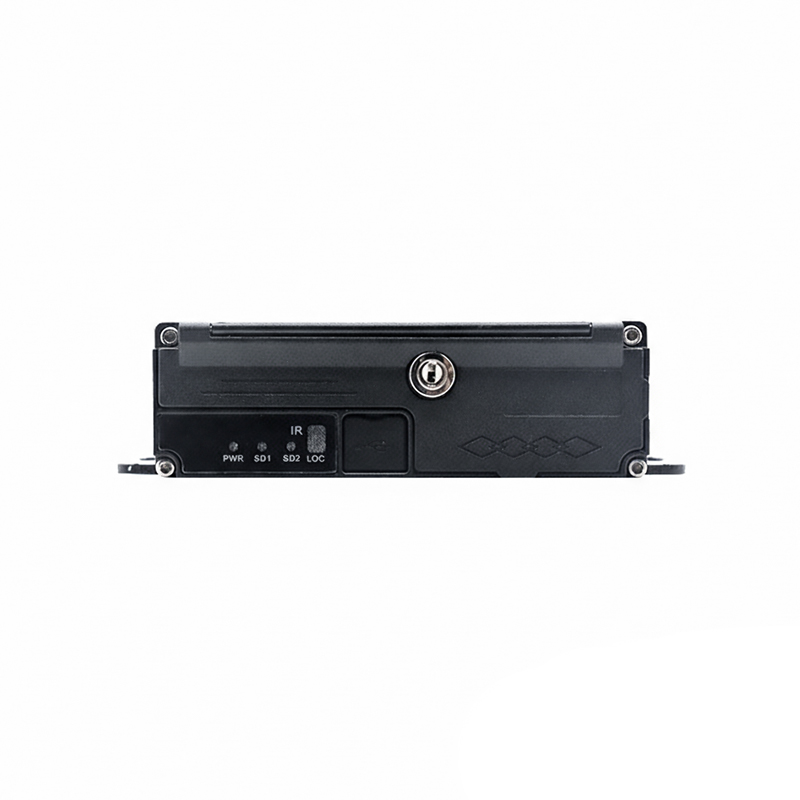
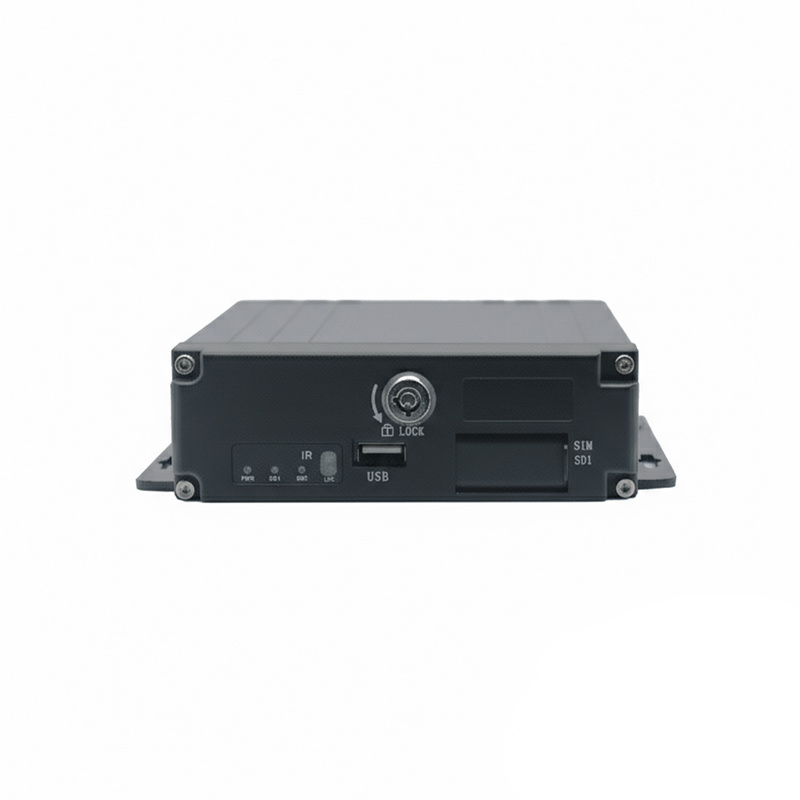

A monitoring terminal sends a small message to its platform on a fixed cycle. The message is the 808 heartbeat. The cycle is one number, set in seconds, pushed to the terminal as a configuration parameter. The number looks minor on the configuration screen. It decides when a quiet vehicle drops off the map, how fast the platform notices a dead link and a measurable slice of the monthly data bill. The appropriate value comes from a squeeze between two failure modes, both of which show up in the logs the fleet already reads.
The heartbeat itself is the smallest message in the protocol. The standard assigns it a message number and an empty body: a header, a checksum and nothing else. The terminal sends it on the configured cycle whenever no other traffic is flowing. The platform answers each one with its general response. The exchange carries no data. Its one function is to show that the path still works.
The interval is a named parameter in the terminal’s remote configuration table, a count of seconds the platform pushes over the same parameter channel every other setting in this series rides. The standard defines the parameter and leaves the number to the deployment. Deployments commonly run from tens of seconds to a few minutes, a band with a complete derivation from first principles.
The derivation needs the three jobs the heartbeat performs, the two ways a wrong number fails and the small arithmetic of what each beat costs. All three sit below.
One number, set once, paces every quiet vehicle in the fleet.
The 808 protocol defines a terminal heartbeat with an empty message body. The frame carries the header fields every message carries, the terminal’s identity among them, plus a checksum. No position, no status, no alarm flags travel in it. The position report carries the vehicle’s state on its own schedule, the schedule the platform-frequency page of this series owns. The heartbeat carries presence alone.
The terminal starts the cycle after registration and authentication succeed, the connection flow the protocol pages walk. From that point the terminal sends a heartbeat whenever the configured interval passes without other traffic. A vehicle streaming video or uploading parcels proves its presence by the traffic itself, so terminals suppress the beat when other messages are flowing. The heartbeat fills the quiet stretches: the parked hours, the long empty motorway between reports, the loading bay wait with the engine off.
The platform answers every heartbeat with its general response message. The pair forms a round trip that proves the whole path: terminal, modem, carrier network, public internet, platform port, then back. A heartbeat unanswered starts a count that ends in reconnection, the recovery routine the dropout page describes from the outside view.
The interval lives in the terminal’s parameter table as a count of seconds, readable and writable over the configuration channel. A fleet sets it once in a profile and pushes the profile to every vehicle. The push takes effect without a visit, the property that makes the tuning a desk job.
The heartbeat divides labour with the position report, the division the sibling page on platform reporting frequency owns. The position report carries movement and state on its own configured cycle, set for tracking quality. The heartbeat carries bare presence on a cycle set for session survival. A parked vehicle reports no movement for hours, so its heartbeat is the only thread. The two cycles are tuned for different things and must not be confused into one number.
The heartbeat does three jobs at once. Each job pulls on the interval from its own direction. The first job is keeping the network path open. Mobile carriers place vehicles behind address translation, the dropout page’s middle layer. The translation table holds an entry per session and expires entries that go quiet, on timers that commonly run in minutes on cellular networks, with measured cases shorter. Each heartbeat refreshes the entry. An interval longer than the carrier’s timer lets the entry die between beats. The platform’s next message toward the vehicle then finds no path. The first job sets a ceiling on the interval: beat faster than the quietest translation timer on any of the route’s carriers, with margin for the cases measured shorter. The second job is the platform’s online clock. The platform marks a vehicle offline when its messages stop for longer than the timeout. The heartbeat is the message stream the platform watches during quiet hours. The interval, multiplied by the platform’s miss allowance, is the lag between a vehicle going silent and the map saying so. A fleet that wants dead links flagged within two minutes cannot run a three-minute heartbeat under any miss allowance. The second job sets a second ceiling, tied to how fast the operation wants to know. The third job is liveness from the terminal’s own side. The terminal reads the platform’s answers as proof the session works. Missed answers past a count trigger the terminal’s reconnection routine. On dual-SIM terminals the failover logic the switching page describes sits behind the same evidence. A faster beat gives the terminal earlier warning of a dead session and earlier recovery. The third job pushes the same direction as the second: shorter intervals buy faster detection on both ends of the link. The miss allowance shapes the third job’s speed. Deployments hold a small count, large enough to ride out a handoff, small enough that detection stays inside the operation’s patience. The three jobs agree on one point. The heartbeat exists for the quiet times. A vehicle with traffic flowing proves everything the heartbeat would prove. The interval question is a question about silence: how long the system tolerates not hearing from a healthy, quiet vehicle before some timer somewhere acts.
An interval set past the carrier’s translation timer produces the signature the dropout page catalogues: regular short offline events with no geography attached. The translation entry dies in the quiet between beats. The next heartbeat opens a fresh path and the platform shows the vehicle returning as if nothing happened. The log fills with brief, evenly spaced drops on parked and idle vehicles, in depots with strong signal, at hours with no movement. The pattern follows the clock and ignores the map, the combination that names the cause in one read of the offline log.
The same setting slows every notification the platform owes the operation. A vehicle that loses its link at minute one of a long interval stays green on the operations map until the platform’s timeout expires, missed interval by missed interval. An operator dispatches against a map that lags reality by the product of two numbers nobody remembers setting, on the quiet vehicles where the lag runs longest. The lag is invisible until the day it matters, which is the reason the pair belongs in writing, with nobody’s memory as the only record.
The long side also breaks the platform’s reach. Commands the centre sends toward a vehicle, a configuration push, a playback request, a live-view start, ride the same session. A dead translation entry swallows them until the next heartbeat rebuilds the path. A fleet that wonders why remote commands work on moving vehicles and fail on parked ones is reading this failure, one interval too long, on the quietest vehicles it owns.
The private-APN contract changes this section’s arithmetic, the structural option the dropout page prices. A fleet SIM on a private APN bypasses the public translation pool and holds sessions longer, which raises the ceiling the carrier timer sets. The notification ceiling stays where the operation put it. A fleet on private APNs tunes against the platform timeout alone, with the carrier timer measured once to confirm it moved out of the way.
The short side fails in money and power, gently and continuously. Every beat is a message, a radio wake, a row in the carrier’s meter. A fleet of hundreds beating every few seconds spends a steady stream of small charges that the billing pages teach the fleet to read per vehicle. The waste shows as a flat, identical line item on every SIM in the portal, the pattern that names a configuration cost. A configuration cost like this repeats to the byte.
Power pays the same tax on parked vehicles. A terminal in parked monitoring holds its budget in fractions of a watt, the arithmetic the power pages walk. Each heartbeat wakes the radio out of its idle state and spends transmit energy. At parked hours the beats draw down the battery margin the installation reserved, beat by beat, through every hour of the overnight watch.
The platform pays in concurrency. Every online vehicle’s heartbeat arrives at the platform’s port and takes a response. A platform sized on the session arithmetic the capacity pages describe absorbs its fleet’s beats as designed. Halving the interval doubles that background load fleet-wide, for no information the slower beat did not already carry, the trade that makes aggressive intervals a platform-sizing line item.
The short side has no cliff, which makes it the side fleets drift toward. Nothing visibly breaks at an interval shorter than needed. The bill rises a little, the parked battery margin thins a little, the platform headroom shrinks a little. The drift costs more than the failure it guards against, on numbers a fleet can put on one sheet of paper.
A worked fleet sum shows the drift’s size. Three hundred vehicles at a fifteen-second beat send around five and a half million more exchanges per month than the same fleet at one minute. The data difference stays in tens of megabytes per vehicle, small money. The parked-power difference shortens the overnight monitoring window on every vehicle that sleeps outside. The platform sees four times the background load around the clock. Nothing on the benefit side moved: detection at fifteen seconds beats detection at sixty by three quarters of a minute, on a map nobody reads that fast for parked vehicles.
The appropriate interval is squeezed from both sides by everything above. The ceiling comes from the carrier’s quietest translation timer and the operation’s notification demand, whichever is lower. The floor comes from the data, power and platform costs, none of which cliff, all of which accumulate. Between them sits a band, in tens of seconds to low minutes, where deployments in this market run.
The ceiling needs measurement before trust. Carrier translation timers differ by network, by region, by contract type and sometimes by time of day, the private-APN difference the dropout page prices among them. The measured way reads the dropout log: park a test vehicle, sweep the interval upward profile by profile, then read off the value where the regular short drops begin. The quietest timer on the fleet’s carriers shows up in an afternoon of log reading, as a measured number with a date on it.
The notification ceiling is a management decision read off the operations contract. A fleet that promises clients incident response within minutes works backward from the promise: response time, minus dispatch time, minus the platform timeout, leaves the interval budget. The arithmetic is three lines on paper, each line a number someone already owns. It turns a vague preference for fresh maps into one defensible figure with a contract clause behind it.
The floor is the cost arithmetic at the fleet’s scale. The bytes section below prices the data. The power pages price the parked drain. The platform’s session capacity prices the concurrency. A fleet sums its three costs per candidate interval and watches them fall as the interval grows. The floor is the point where further lengthening saves nothing measurable on any of the three meters, commonly well before the ceiling threatens.
The band between floor and ceiling is wide in practice, the comfortable property of this parameter. A deployment that lands anywhere inside it works. The tuning exercise is one afternoon of measurement and three lines of arithmetic, done once per carrier contract and revisited when the carrier, the platform timeout or the client promise changes. The number then sits in the profile, documented, with its derivation beside it.
The platform’s offline timeout and the terminal’s interval are one decision wearing two settings. The platform marks a vehicle offline after some multiple of missed beats. Deployments commonly allow a small number of misses, the working balance between flapping markers on radio hiccups and stale maps on real failures.
The two numbers live in different screens, owned by different roles, which is how they drift apart. A fleet that tunes one without the other gets surprises in both directions: offline storms after shortening the timeout, lagging maps after lengthening the interval. The specification line that prevents it states both numbers together, as a pair, with the product named as the detection lag the operation accepted.
The arithmetic starts at the frame. An empty-body heartbeat is the protocol’s header and checksum, a frame in the tens of bytes. The transport wraps it in its own overhead. The platform’s response comes back the same way. A full exchange, both directions with transport included, lands on the order of one to two hundred bytes. The number is small enough that the meter rounds it away in any single hour and just large enough to count across a full month of beats.
The monthly product follows the interval. At a one-minute beat, a vehicle that idles around the clock sends on the order of forty thousand heartbeats a month. At one to two hundred bytes per exchange, the month’s heartbeat traffic sits in the single-digit megabytes per vehicle. Halve the interval and the figure doubles. Every figure stays small against the data plan the billing pages size in gigabytes.
The smallness is the point of the calculation. The data cost of the heartbeat cannot justify a long interval on its own, because even aggressive beats cost megabytes against a plan of gigabytes. A fleet stretching its interval to save data is saving a rounding error. The long side’s failures then arrive at full price. The honest reasons to lengthen sit in power and platform load. The data line turns out close to irrelevant, a finding the specification benefits from stating.
The carrier’s meter granularity affects the bill more than the bytes do. Plans that round each data session upward to a kilobyte or more turn a hundred-byte exchange into a billed kilobyte, a tenfold paper multiplication on the same traffic. The per-vehicle figures from the billing pages show the effect directly. The cure sits in the contract’s rounding clause, one question to the carrier at renewal, with the heartbeat as the line item that exposes the answer.
The same arithmetic scales to the fleet for the platform’s view. A thousand vehicles at one-minute beats deliver around seventeen beats per second of background load to the platform port, each wanting its small response. The platform capacity the acceptance pages size against morning registration storms carries this comfortably at sane intervals. The figure is in the sizing sheet because it grows linearly with fleet count and inversely with the interval, the two levers procurement holds.

The parked vehicle is where the heartbeat does its main work and where it spends the design’s power budget. Parked vehicles are silent for ten hours at a stretch, with the heartbeat as their only signal. The interval decides how long a theft, a power cut or a dead modem on a parked vehicle goes unnoticed, the survival case the storage and dropout pages frame from their own angles.
The power budget pulls toward a longer interval through the night. Parked monitoring runs on the battery margin the installation reserved, on the wide-voltage arithmetic the power page owns. A terminal that holds its full driving heartbeat all night spends radio energy on presence nobody is watching. The common design answer is a sleep profile: the terminal drops into a low-power state and beats on a longer cycle, with the platform told which profile is active so its timeout follows.
The two-profile design resolves the parked contradiction cleanly. It runs the short interval through driving hours for fresh maps and fast detection, the long interval through parked hours for battery life, with detection lag accepted on a vehicle that is not moving. The profiles switch on ignition state, the same signal the recording and power systems already read. The specification names both intervals and both platform timeouts, four numbers that describe the whole day.
The setting travels as one parameter in the remote configuration push. The fleet writes the chosen seconds into the profile, pushes it, then confirms the read-back, the same round trip every parameter in this series rides. The platform timeout changes in the platform’s administration screen the same afternoon. The pair goes into the configuration record with the derivation: the measured carrier timer, the notification budget, the chosen miss allowance.
The proof is the dropout log read the following week, against the three predictions the derivation made. A correct interval leaves the parked fleet’s log clean of the regular short drops the long side produces. The billing figures show the heartbeat line where the bytes arithmetic predicted. The map’s lag, tested by pulling one test vehicle’s antenna and timing the marker, matches the product of interval and miss allowance within a beat. Three observations, one week, no special tools beyond the logs the fleet already reads.
The revisit triggers belong written next to the number. A carrier change or a new SIM contract can move the translation timer under the fleet. A new client promise can tighten the notification budget by contract. A platform migration can reset the timeout to a vendor default with no announcement. Each trigger reopens the one-afternoon exercise, against the documented derivation, so the number stays a decision and does not decay into a legacy.
The configuration record’s heartbeat entry has five fields when written completely. The driving interval and its platform timeout. The parked interval and its timeout. The measured carrier timer with its measurement date. The notification budget with the contract line it came from. The revisit triggers. Five fields turn the next engineer’s question into a one-page read, the same documentation habit every parameter page of this series ends on.
Specify the heartbeat interval and the platform timeout as one paired line, with the detection lag named in seconds. Specify the parked profile’s second pair beside it. Require the interval parameter to be remotely settable and readable, on the standard parameter channel. Run the interval sweep on the fleet’s own carriers at acceptance and file the measured timer with the configuration record. The quiet vehicles then stay on the map. The bill carries megabytes. The one number behaves as the engineering decision it always was.
Nothing beyond the frame. The standard defines the terminal heartbeat with an empty message body: a header carrying the terminal’s identity, a checksum, no position or status data. The platform answers each one with its general response. Position and status travel in their own reports on their own schedules. The heartbeat carries presence alone, during stretches when no other traffic is flowing. The position report carries movement on its own cycle, owned by the sibling page on platform reporting frequency, with the two cycles tuned separately for different jobs.
The standard leaves the number to configuration. Deployments commonly run from tens of seconds to a few minutes. The ceiling comes from the carrier’s address-translation timer, commonly minutes on cellular networks, plus how fast the operation needs dead links flagged. The floor comes from data, parked power and platform load, none of which fail sharply. The band between is wide. The right value inside it is measured, derived and documented per fleet: a parked-vehicle interval sweep finds the carrier timer in an afternoon, the notification budget reads off the operations contract in three lines, the costs sum on one sheet. Private-APN contracts raise the carrier ceiling and leave the rest of the derivation standing.
The carrier’s translation entry expires between beats. The log fills with regular short offline events on parked and idle vehicles, with no geography attached. Remote commands toward quiet vehicles fail until the next beat rebuilds the path. The map lags a dead link by the interval times the platform’s miss allowance, a delay that surfaces exactly when an operator needs the map to be right.
No. A full exchange runs on the order of one to two hundred bytes with transport overhead. A round-the-clock vehicle at a one-minute beat sends roughly forty thousand exchanges a month, single-digit megabytes against a plan sized in gigabytes. The honest costs of short intervals sit in parked battery drain and platform concurrency, the reason the floor comes from power and capacity arithmetic, with the data line a rounding error against the plan.
The platform marks a vehicle offline after a configured number of missed beats. The terminal’s interval and the platform’s timeout multiply into the detection lag, so the two numbers are one decision and belong in the specification as a pair. Tuning either alone produces offline storms or stale maps, because the two settings live in different screens owned by different roles. Deployments commonly allow a small miss count to ride out radio hiccups, keeping healthy vehicles unflagged. The configuration record states both numbers with the detection lag they produce.
Commonly no. A parked terminal runs on reserved battery margin. Each beat spends radio energy on a vehicle nobody is watching move. The two-profile design beats short while driving for fresh maps and fast detection, then drops to a longer parked interval with the platform timeout adjusted to match. The profiles switch on ignition state. The specification names all four numbers: two intervals, two timeouts, one whole day described.