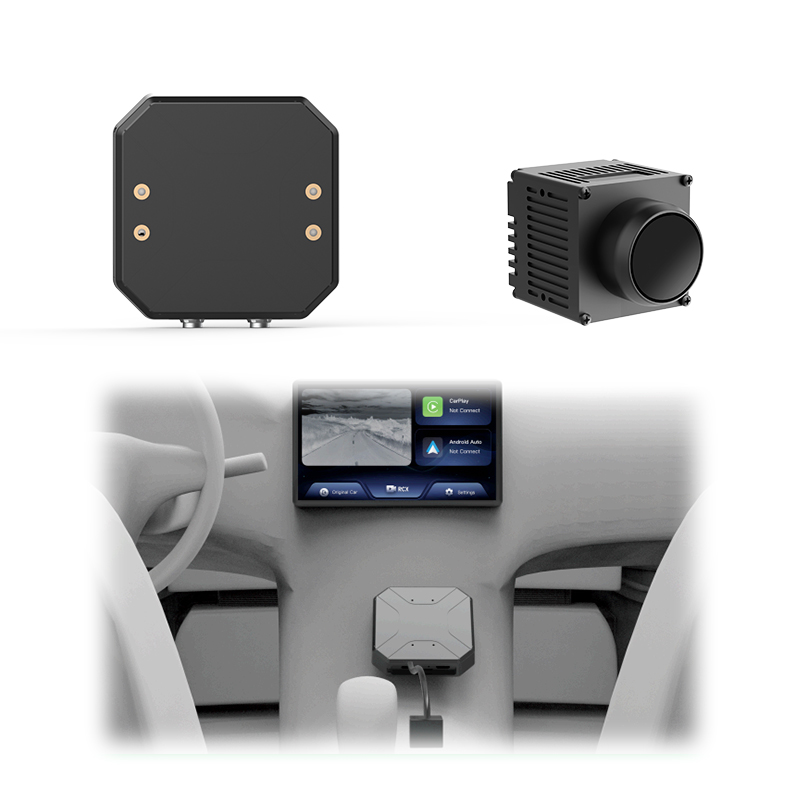


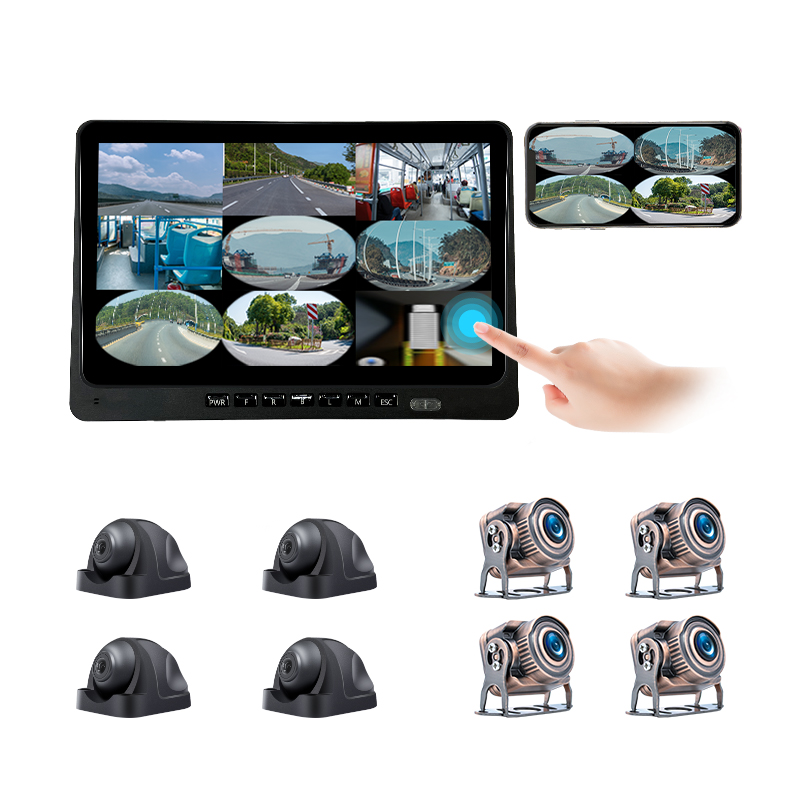
Every surround view system carries a set of measured numbers: where each camera sits, how each lens bends. The unasked question on a specification sheet is what happens to those numbers after the measuring. One regime writes them once and freezes them until a trigger forces a re-measure. The other keeps estimating them from the road itself, trip after trip. The choice decides compute budget, fault behavior, evidence quality and what an acceptance test can prove.
The title’s wording needs one correction before the argument starts. Stitching is always real time: the composite is assembled fresh for every frame, on every system, under both regimes. What differs is the calibration behind the stitch. The frozen regime stitches every frame with yesterday’s measured parameters. The self-updating regime re-estimates those parameters in service and stitches with the latest opinion. The debate is about the numbers. The frame rate is the same on both sides. Brochures blur the line from both directions: a frozen system advertises real-time stitching because the stitch is real time, a self-correcting system advertises automatic calibration, never saying what evidence it reads or who can audit the result. Both phrases leave the regime unstated.
The calibration page of this series owns the measuring session itself, cloths, residuals and records. The seam page owns what the parameters feed, the handover lines and the color loop. The question left between them: how long a measurement is allowed to live and who is allowed to change it. The answer reads like an organizational policy because it is one, enforced by firmware.
One regime measures and freezes. The other never stops measuring.
The frozen regime treats calibration as a measurement event. A session on laid cloths produces each camera’s lens profile and pose, the values go into the configuration store with a date and a residual. The lookup tables built from them run unchanged. The parameters move only when a person re-runs the session, on the trigger list the calibration page maintains: a camera swap, a knocked bracket, a body repair, a failed check. Between triggers the numbers are constants in the exact sense the firmware means it, burned into the tables the imaging hardware walks each frame.
The self-updating regime treats calibration as a running estimate. Software watches the live pictures for evidence of misalignment, lane lines that bend at a seam, ground texture that disagrees between neighboring cameras, motion that contradicts the recorded geometry. From that evidence it re-solves camera poses in the background and feeds the refreshed values to the stitch. No cloths, no bay, no appointment. The vehicle re-solves its own geometry in service, continuously and without a record a person signed.
Between the two ends sits a spectrum with named points. Re-running the cloth session every quarter is the frozen regime on a calendar, common where contracts demand periodic certification. Watching for drift and raising a lamp without touching the parameters is the monitoring hybrid, self-calibration demoted to a referee. Full self-correction, where the system rewrites its own poses in service, is the far end. A product sits at one of these points by design. The point belongs on the order sheet by name.
The published methods behind the self-updating end describe themselves as refinement. They correct an existing calibration that has drifted, on the order of a few degrees at the worst, with the factory measurement as the starting point. Self-calibration from nothing, on an uncalibrated vehicle, is outside their stated scope. Every regime on the spectrum begins with the cloth session, whatever the marketing implies. The debate is only about what happens after the session ends and the vehicle leaves the floor.
The first argument is compute. Frozen parameters mean static lookup tables, the per-pixel fetch pattern the seam page described, built once and burned in. The processor spends nothing on estimation at runtime: no feature detector scanning the ground, no solver iterating in the background, no memory traffic beyond the fetch itself. The overview’s compute-budget discipline runs through this series for a reason. A fleet system’s imaging silicon is sized for the pipeline it ships with. A background pose solver is a permanent new tenant in that budget, paid for in silicon cost or in something else dropped.
The second argument is evidence. A frozen parameter set has a date, a residual and an author. When a recorded clip becomes part of an insurance claim, the question of what the cameras’ geometry was on the day has one answer, stored in the configuration record beside the footage chain. The distance a screen showed between bumper and bollard can be defended with the calibration certificate that was in force. A system that rewrites its own poses in service answers the same question with a version history at best, a shrug at worst. Fleets that treat recordings as evidence lean hard toward parameters that hold still.
The third argument is acceptance. The acceptance walk works because the thing it tests does not move: a vehicle that passes the line checks and the tape checks today is running the same geometry tomorrow. Pass means something, to the operator signing the handover and to the body builder warranting the fit. Testing a self-correcting system certifies one moment of a moving target, the difficulty the acceptance section below returns to.
The fourth argument is fault behavior. Under frozen parameters, a seam that breaks names a mechanical event, the sorting rule the seam page’s fault families rely on. Under self-correction, a broken seam has two suspects, the bracket or the solver. The first workshop visit spends its hour deciding which. Field diagnosis gains a second axis. The workshop manual adds a chapter. The fleet’s average repair time absorbs the difference.
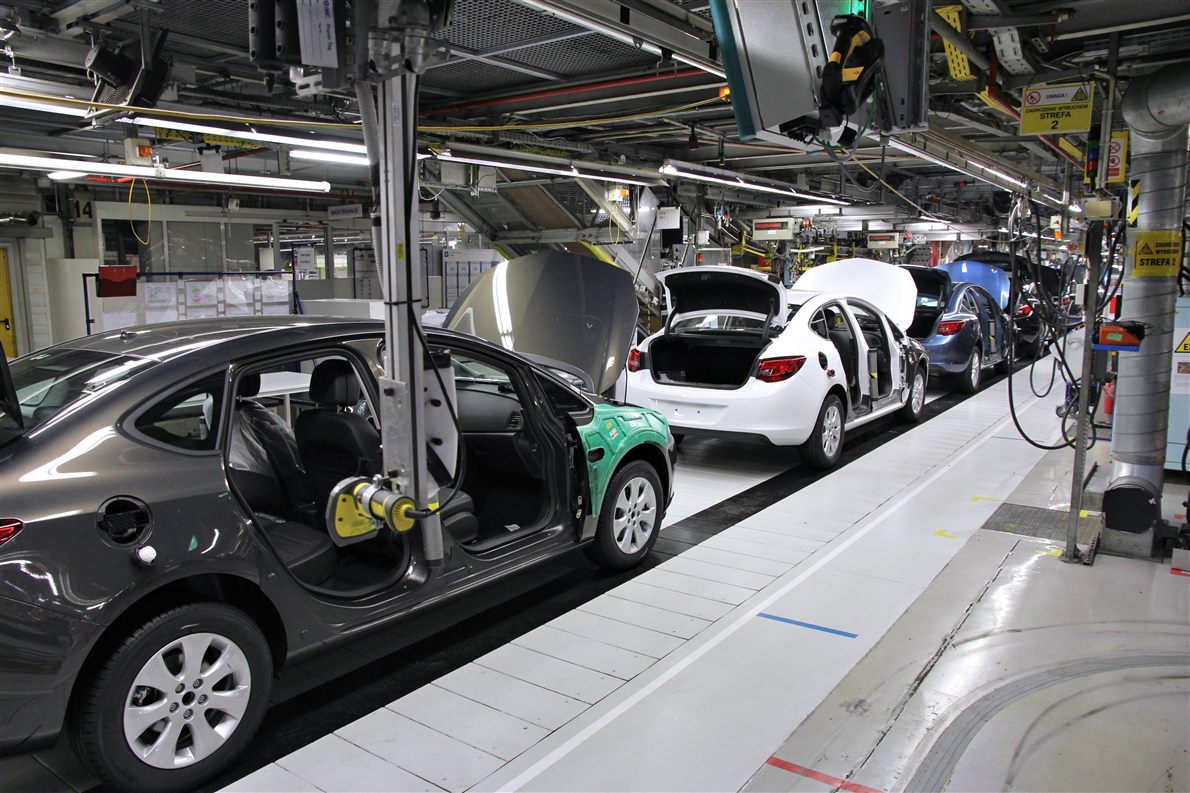
The assembly line in the photograph is where the frozen regime’s strength concentrates. Measure on a flat, lit, controlled floor at fitting, with the kit, the dimension sheet and a trained crew. Write the record. Ship the vehicle. Everything afterward is comparison against that record, the delta read the calibration page builds into every revisit, on a reference that cannot have drifted because nothing is allowed to touch it.
The self-updating end exists because the published motivation is real: small displacements and ordinary vibration move cameras enough to misalign a composite. A fleet vehicle collects displacements between depot visits. A regime that can read its own drift from the road closes the gap between the knock and the next bay appointment. The methods differ in what they treat as the reference, the stand-in for the truth the cloths provided in the bay. Three families of reference dominate the literature.
The lane-line family uses painted geometry. Adjacent cameras see the same markings in their overlap, the software samples points along the detected lines and solves for the poses that bring the two views back into agreement. The approach carries its assumption openly: it wants parallel painted lines in view, the highway environment. It idles where paint is absent, broken or buried. A vehicle that works quarries by day holds its corrections for the motorway leg home.
The texture family drops the assumption. One published method extracts ground texture in the projected view, tiles, surface grain, whatever the road offers, then aligns neighboring cameras on it directly. Its reported numbers frame the regime’s working range: starting errors up to about three degrees of rotation pulled down to a fraction of a degree. A direct comparison method tolerated only a third of a degree of starting error before failing outright. The factor of ten in tolerance is the difference between correcting a drifted system and correcting a knocked one. The same paper names the failure mode in plain words: environments without visible texture starve it.
The motion family uses the vehicle itself. Forward travel sweeps the ground past all four cameras in a geometrically consistent way. Estimators compare what each camera reports against the movement the vehicle made, read from wheel speed and steering or from the imagery itself. Some published systems fold the pose estimate into a full visual-odometry solve, calibration and motion estimated together. The reference is consistency over distance, accumulated while the vehicle drives its ordinary route.
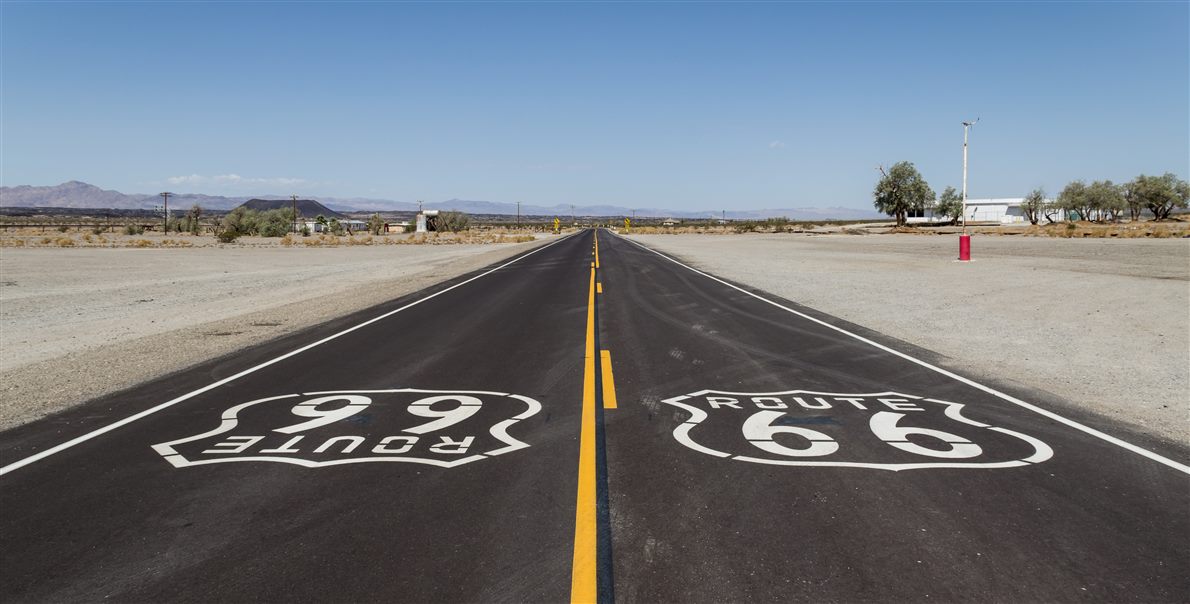
All three families share a posture: they refine. The factory measurement seeds the estimate, the road supplies corrections, the solved poses stay within a few degrees of where the cloths put them. None of the published methods claims to calibrate a blank vehicle from the driver’s seat. The road in the photograph is the instrument. An instrument made of public asphalt has the availability of public asphalt: present on the highway, absent in the mud yard, ambiguous under snow, gone at night on an unlit lane.
The risk that defines the self-correcting end is a category error. The long paragraph belongs to it because every entry on the list is the same error in different clothes: the solver explains every disagreement it sees as camera movement, because camera movement is the only variable it is allowed to adjust. A long uphill grade breaks the flat-ground assumption for minutes at a time, the projected views disagree in a way that looks exactly like a pitched-down camera set. A solver without a slope model tilts its poses to compensate, writing a real error into the store to fix an apparent one, an error it must then unlearn on the flat, with the screen wrong in both transitions. A full load settles the body several centimeters, every camera genuinely drops and pitches, the solver tracks the new geometry as honest drift, the cargo comes off at the dock. The corrected poses are now the wrong ones until enough readable road has passed to walk them back, a chase the loading section below sets out in full. A mud film over one lens degrades the features the estimate feeds on, turning the input from measurement into noise. A solver that keeps solving on noise walks the poses away from truth at the exact moment the pictures are at their worst, a coupling the frozen regime cannot exhibit because dirt on a lens leaves its parameters untouched. A tunnel, a snow field, a wet unlit lane: each starves the feature supply, suspending correction for as long as the starvation lasts. The suspension is silent: the regime’s protection is absent without announcement in the conditions where knocks and vibration keep happening. Cold start belongs on the list too. The estimate converges over driven distance, with the published numbers measured on road scenes at road speeds. The first minutes of a shift are spent in the yard, at walking pace, in the tight quarters the composite exists for: the correction arrives after the maneuvering that needed it. Underneath everything runs the bookkeeping cost. There is always a window where the screen renders with parameters in transit, neither yesterday’s audited set nor tomorrow’s settled one. The configuration record becomes a version stream. The acceptance certificate attests to a geometry that may not survive the week. The workshop inherits the two-suspect diagnosis for every seam complaint. None of this argues that the mathematics fails. The published corrections work on their stated inputs. It argues that a fleet vehicle’s service life supplies, daily, the inputs the category error feeds on: slopes, loads, dirt, darkness and a cold start every morning.
Loading is the one drift source the trigger list cannot catch, because nothing mechanical has failed. A laden body sits lower on its suspension than an empty one, by visible centimeters on leaf-sprung trucks. The drop is uneven: the loaded axle settles harder, tipping the body forward or back as it sinks. Every camera rides down with the body and tilts with it. The ground projection built for the unladen stance now maps pixels to slightly wrong ground positions. The distance bands the screen draws stretch by the same proportion. A driver who trusts the one-meter band learned it empty and reads it loaded.
The frozen regime answers with stance discipline. The dimension sheet states the loading condition the calibration session assumes. The session runs at that stance, commonly the working load the vehicle spends its shifts at. Operations that swing between empty and full live with a known, bounded error at one end of the swing, or hold two parameter sets, one measured per stance, selected by the load signal the body already reports for other systems. The second table costs one extra calibration session and a switch input, a price a specification can state in advance.
The self-updating regime answers automatically: the solver tracks the settled body as honest geometry, the composite stays aligned through the load. The price is the walk-back from the section above, in reverse, at the dock door. The composite stays correct through the laden leg. At the dock it turns wrong for the first readable kilometers, the exact place low-speed maneuvering accuracy is bought for. The automatic answer carries its own condition: the yard has to offer features to read, the availability problem the road-as-instrument carries everywhere it goes.
The practical read on loading is a question for the order sheet, in numbers. Ask the supplier what body drop the system tolerates before the distance bands move past their stated accuracy, in centimeters against the band error. Ask which answer the quoted system implements: re-measure per stance, a second parameter set on a load switch, or in-service tracking. The two answers sort marketing language into a regime faster than any brochure page.
The two regimes are commonly presented as the menu. The deployable middle takes a third path: run the self-calibration mathematics, deny it the pen. The monitoring layer computes the same pose estimates an online solver computes, from lane lines, texture or motion, then compares the result against the stored, frozen parameters. Agreement within tolerance produces nothing. Disagreement past a threshold lights a calibration lamp and writes an event with the estimate attached. The parameters themselves never move.
The split keeps each regime’s strength and drops its weakness. Because the parameters stay frozen, the evidence chain, the acceptance certificate and the one-suspect fault sorting all survive intact. The detection power of the online methods is still spent on watching. A knocked camera announces itself in days of driving, with no wait for a complaint or a scheduled walk. The compute bill is lighter: a referee can run its estimate periodically, on idle capacity. A correcting solver must keep pace with its own promises.
The lamp lands in an existing process. The calibration page’s trigger list gains one entry, monitor alarm, beside camera work and body repair. The response is the same cloth session as every other trigger, run by the same crew to the same record. The monitor’s threshold inherits a sane default from the published numbers: the correction literature works in degrees of drift and fails in tenths. A lamp set near the degree mark flags real movement and stays dark through measurement noise.
The hybrid’s own weakness is what it leaves undone. It corrects nothing between the alarm and the bay visit. A hard knock still means degraded seams until the session runs, days of imperfect composite on a vehicle that has already detected the problem. The category errors of the previous section apply to its judgment too: a monitor without a load model raises false alarms at the dock unless its threshold and its averaging are set with the loading numbers in hand. A lamp that trips weekly gets ignored by week three. An ignored lamp is a monitoring layer the fleet paid for and switched off with its attention.
The articulated case runs on its own clock. A tractor and trailer pivot at the coupling with every turn, the geometry between the units changes by tens of degrees in seconds. No fixed parameter set can describe it. The trailer side is genuinely re-solved in real time, from an angle input, on every articulated system that stitches across the joint. That special case, its sensors and its failure modes belong whole to the articulation page. The regime debate covers the rigid geometry underneath.
Color runs on its own loop. The photometric leveling the seam page described re-estimates gains and curves continuously in service, under both geometry regimes, on every production system. The frozen-versus-updating debate is about geometry only. Color was never frozen anywhere. A supplier who answers the regime question with the color loop has answered a different question.
Acceptance testing follows the regime. A frozen system is accepted by the standard walk: lines across seams, tape against distance bands, the walking figure, all meaningful because the certified geometry is the operating geometry. A self-correcting system needs the harder protocol: acceptance at a stated stance and a stated parameter version, with the version number written on the certificate, the only honest way to certify a value that moves. A certificate without the version certifies a system that no longer exists by the second week.
A hybrid adds one demonstration to the standard walk: trip the monitor. Displace the estimate by the supplier’s stated test method and watch the lamp light and the event write, with the event’s content checked against the record format the contract names. A monitoring layer that cannot be demonstrated at acceptance is a brochure feature, the same proof-or-strike-it rule this series applies to every claimed function.
Three lines then carry the regime into the purchase document. The regime line names the point on the spectrum, frozen with triggers, frozen with monitoring, or self-correcting, with the monitor’s threshold and event format stated where one exists. The record line requires every parameter change, human session or machine correction, to land in the configuration store as a dated version, the evidence-chain requirement made explicit and checkable at audit. The loading line states the stance the calibration assumes and the body-drop tolerance in centimeters, with the supplier’s chosen answer for operations that load heavy written beside it.
The regime is a property of the product, set by firmware and contract, invisible in a showroom demo where every system stitches a clean composite on a flat floor. The differences surface in month three: at the insurance request for the geometry on the day of the clip, at the dock where the bands stretch under load, at the seam complaint with one suspect or two, at the acceptance walk that either proved something or certified a moment. Two questions belong on the order sheet. Who is allowed to change the numbers. What happens when they change. A frozen answer buys a stable instrument. A monitored answer buys the same instrument with an early warning fitted.
The measured numbers describe physical mounting geometry. Glass-and-bracket geometry holds until a mechanical event changes it: an impact, a loosened mount, a body repair, a camera swap. The regime pairs the frozen parameters with a trigger list naming exactly those events, plus periodic checks like the acceptance walk. Between triggers the calibration is as current as the day it was measured. Drift without a mechanical cause is loading and suspension stance, a separate effect with its own handling, stated on the dimension sheet.
It is. Every surround system composes the bird eye view fresh for each frame, under any regime. The phrase in the title contrasts the lifecycles of the calibration behind the stitch: parameters measured once and frozen against parameters re-estimated continuously from the road. A buyer comparing systems should translate any real-time stitching claim into the question that has content: does this product re-solve camera poses in service, on what evidence and who can audit the result.
Published methods replace the cloth’s known geometry with structure the road already offers. Lane-line approaches align adjacent cameras on shared painted markings. Texture approaches align them on ground surface detail in the projected view, with reported corrections from a few degrees of error down to fractions of a degree. Motion approaches check each camera’s view against the vehicle’s measured movement. All of them refine an existing factory calibration within a few degrees and need their feature supply visible. They idle on bare, dark or snow-covered ground.
Four reasons recur. Frozen parameters cost no runtime compute, on processors sized to the pipeline. They give recorded clips a single auditable geometry, the evidence requirement fleets carry. They make acceptance testing meaningful, because the certified geometry is the operating one. They keep fault diagnosis at one suspect, a mechanical event. A self-correcting system adds the solver as a second. The cost is coverage: a knocked camera shows degraded seams until a trigger fires, the gap the monitoring hybrid exists to close.
A laden body settles by visible centimeters and every camera drops and pitches with it, stretching the screen’s distance bands away from their measured accuracy. Nothing mechanical has failed. No trigger fires. The frozen answers are stance discipline, calibrating at the stated working load, or two parameter sets switched by stance. The self-updating answer tracks the load automatically and then mistracks the unloading. The number to request from a supplier is body-drop tolerance in centimeters against the stated band accuracy.
A monitoring layer runs the online-calibration mathematics in the background and compares its pose estimate against the frozen stored parameters. Within tolerance, nothing happens. Past threshold, it lights a calibration lamp and writes an event. The response is the standard cloth session. The parameters never change by themselves, keeping the evidence chain and acceptance meaning intact, with the online methods’ detection power spent on early warning. At acceptance the layer is proven by tripping it deliberately.