

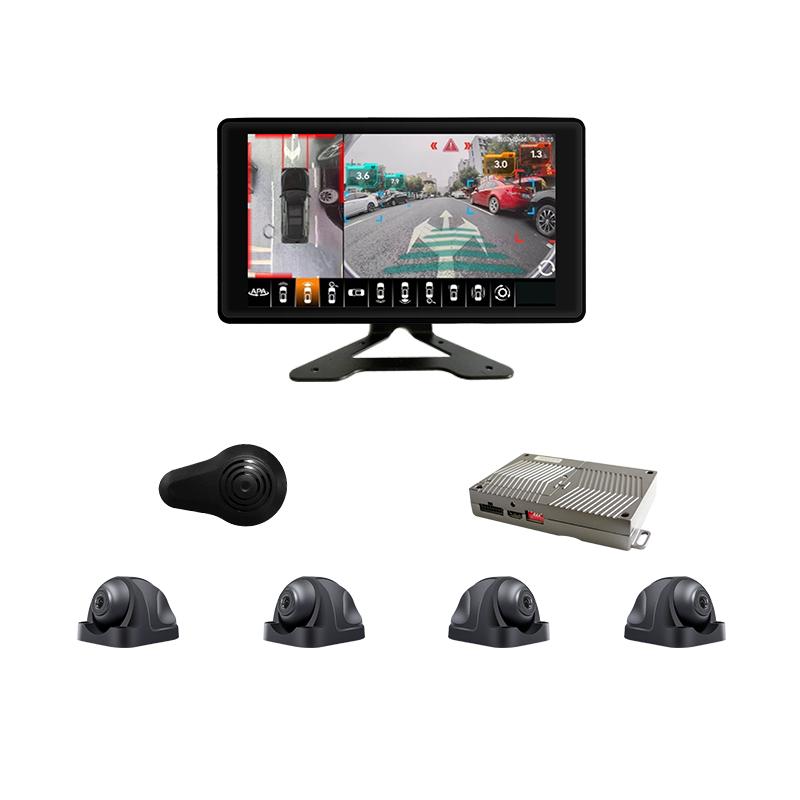




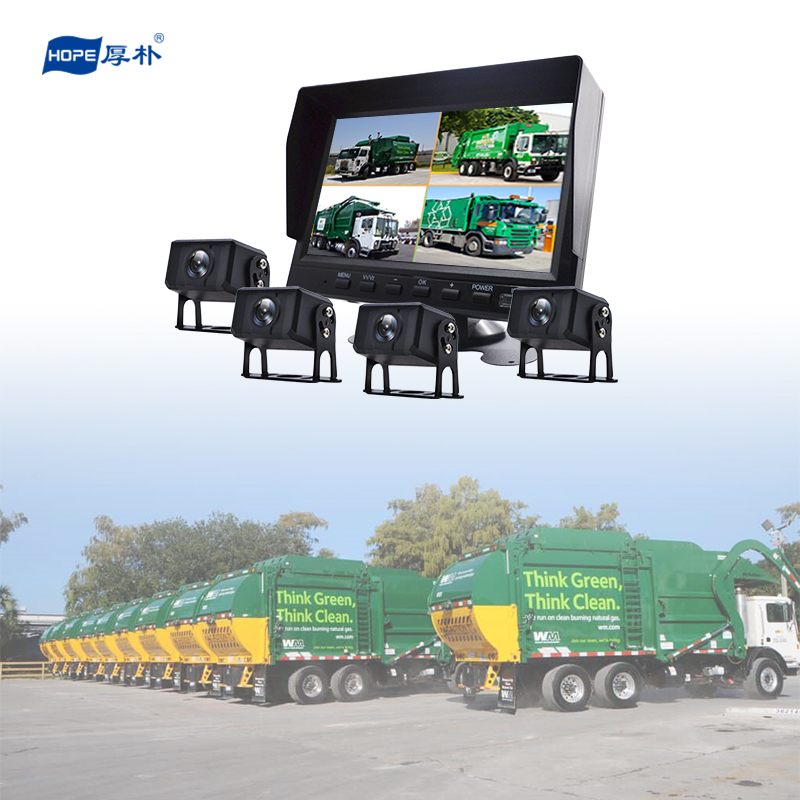
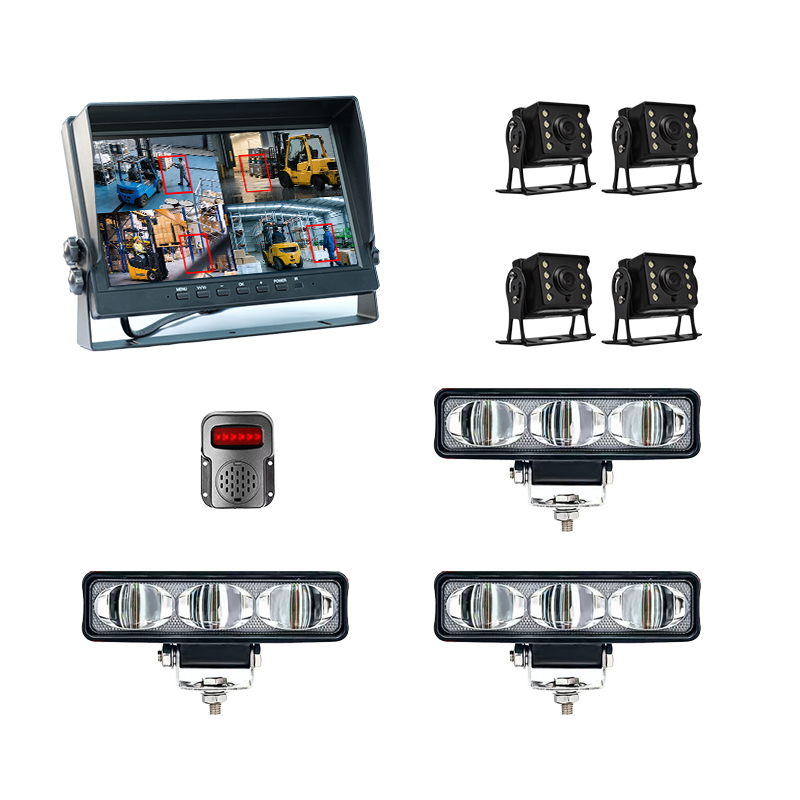
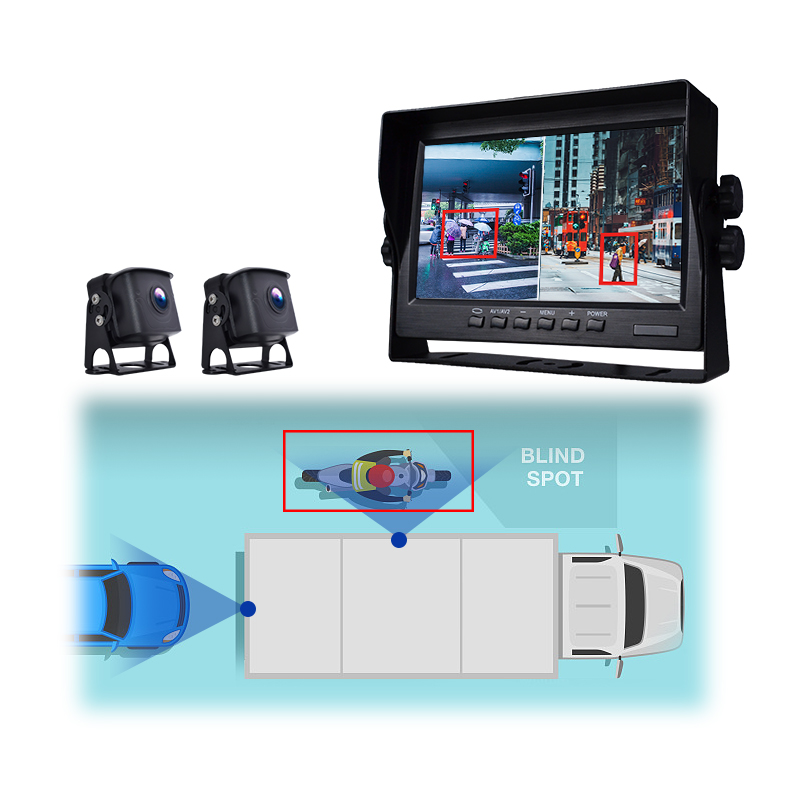



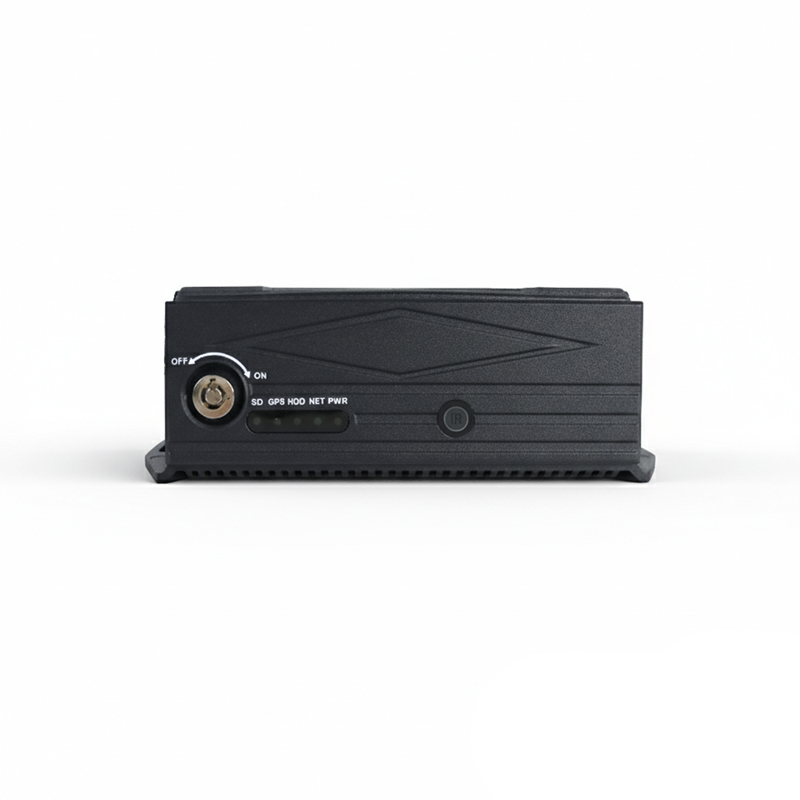
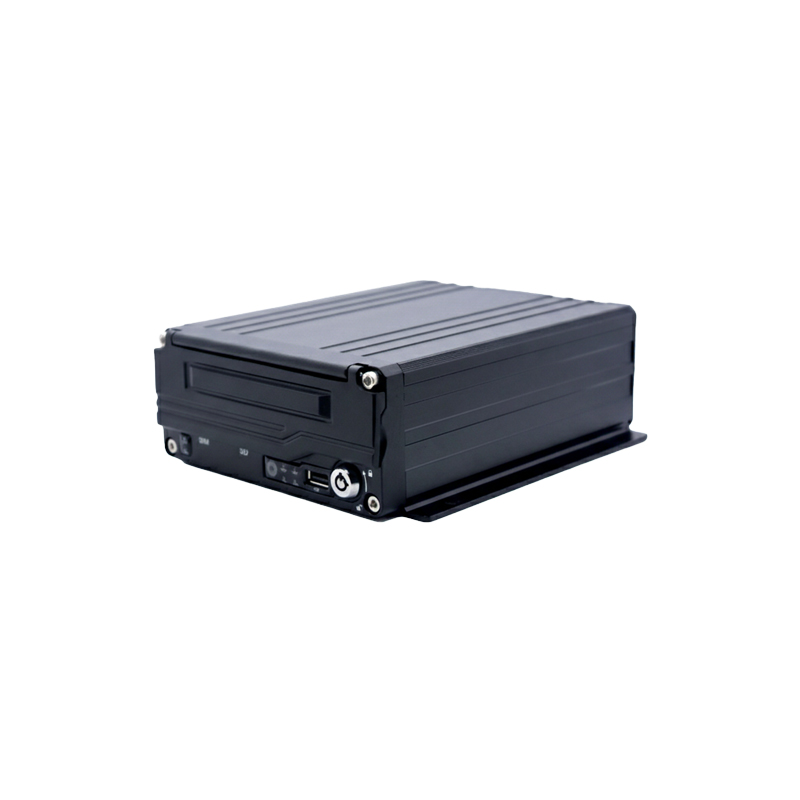
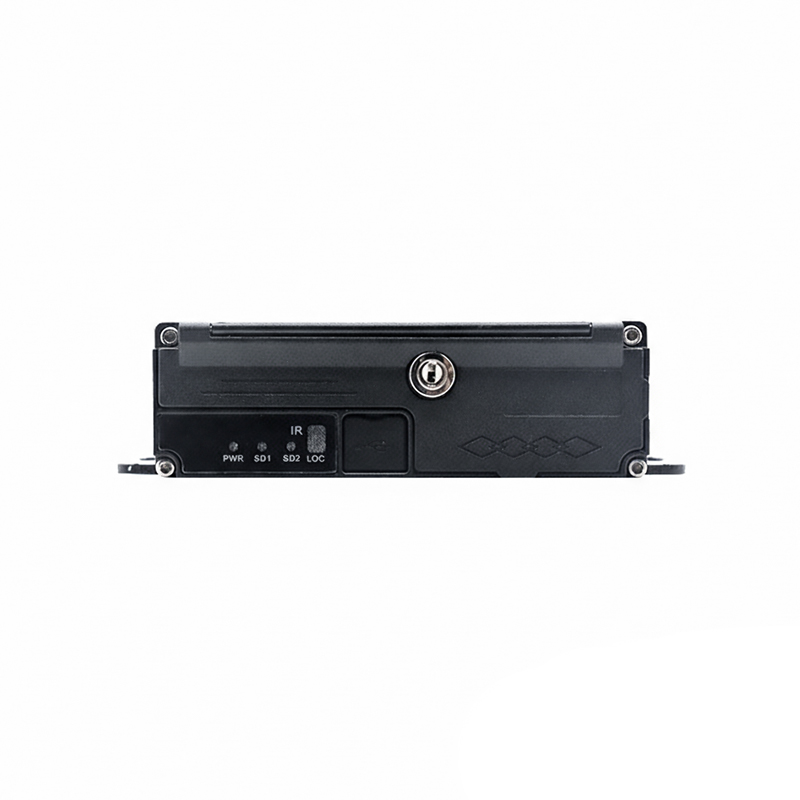
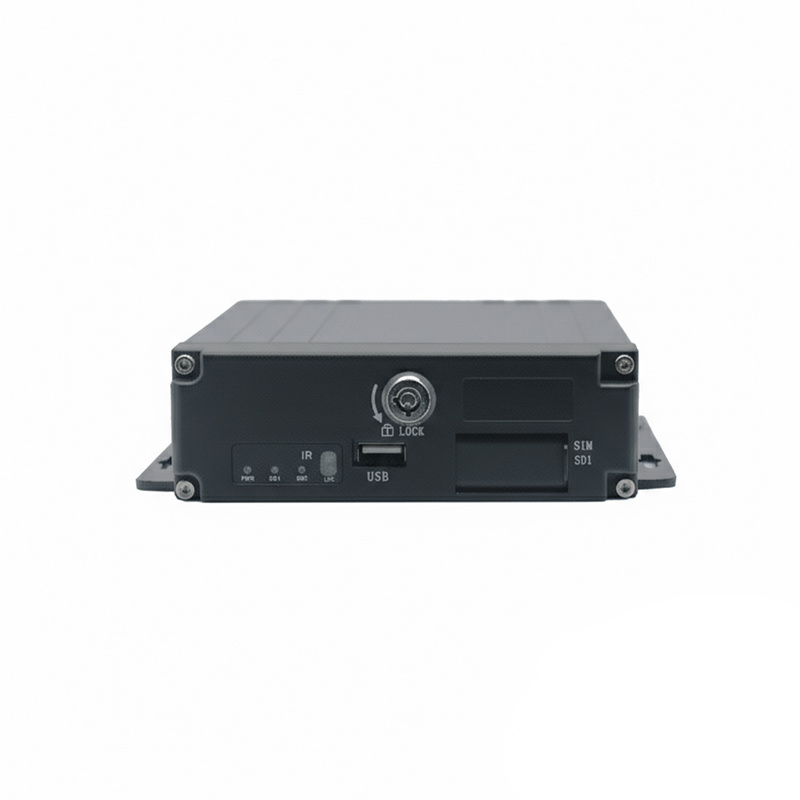


A vehicle device has to keep working amid the electrical disturbance its own vehicle produces. EMC immunity names that ability, and the testing proves it. Proving that ability is a testing discipline with its own standards: ISO 7637-2 for transients on the wiring, ISO 16750-2 for load dump, ISO 11452 for radiated fields, ISO 10605 for electrostatic discharge. Each route the disturbance takes has a bench test that reproduces it, with severity grades written for the vehicle.
Testing immunity means recreating, on a bench, the electrical disturbance a vehicle delivers in service. The wiring carries surges and spikes; the air carries radio energy; a touch can deliver thousands of volts of static. A laboratory reproduces each of these under controlled conditions, at the strength a vehicle reaches, to see where the device holds and where it breaks.
Electrical disturbance reaches a device by a few defined routes. Immunity testing has a method for each route, a standard behind the method, a severity set for the vehicle. The way to understand the testing is to follow the routes one at a time, matching each disturbance to the method that recreates it on the bench.
Each route gets its own bench and its own standard.
EMC immunity is the ability of a device to keep working in the presence of electrical disturbance. The word immunity is the same one used for resistance to disease. It carries the same sense: the device meets something that should make it sick and stays well. A monitoring terminal with good immunity goes on recording, reporting and responding as the electrical noise of the vehicle arrives around it, showing no sign that anything is happening at all.
Proof comes from testing. A laboratory subjects the device to the disturbances a vehicle delivers, raising each to the level the vehicle reaches, watching the device the whole time. The device has to do more than survive without damage; it has to keep functioning correctly throughout, neither resetting nor freezing nor corrupting its work. A device that passes has shown, under measured conditions, that the vehicle’s electrical environment cannot stop it doing its job.
A vehicle is one of the harshest electrical environments a device can be asked to work in. The reason is the machinery packed around it. The ignition fires high-voltage pulses. Relays and motors throw spikes onto the wiring every time they switch. The alternator and battery deliver surges that dwarf anything a mains-powered device meets. The disturbances are larger, faster and more frequent than those of a home or an office.
The closeness makes it worse. A device in a vehicle shares its wiring and its cramped metal body with the machinery making the noise, with no distance to soften the blow. Radio transmitters ride in the cab and pass close on the road. Static builds in dry weather and discharges on a touch. A device hardened for a gentle setting, dropped into this, meets disturbances it was never designed to take, which is why a vehicle device has to be tested to a far higher standard of immunity than ordinary electronics.
The numbers give a sense of the scale. The transients reproduced on a 24 volt lorry’s wiring reach tens to hundreds of volts in either polarity, the fastest with rise times measured in nanoseconds. A load dump on an unsuppressed 24 volt system can push the supply toward a couple of hundred volts for a fraction of a second. Radiated test fields for vehicle work commonly run from tens of volts per metre to around a hundred, far above what consumer equipment is asked to meet. An electrostatic discharge arrives at up to fifteen thousand volts by contact, twenty-five thousand through the air, under the harshest grades of ISO 10605.
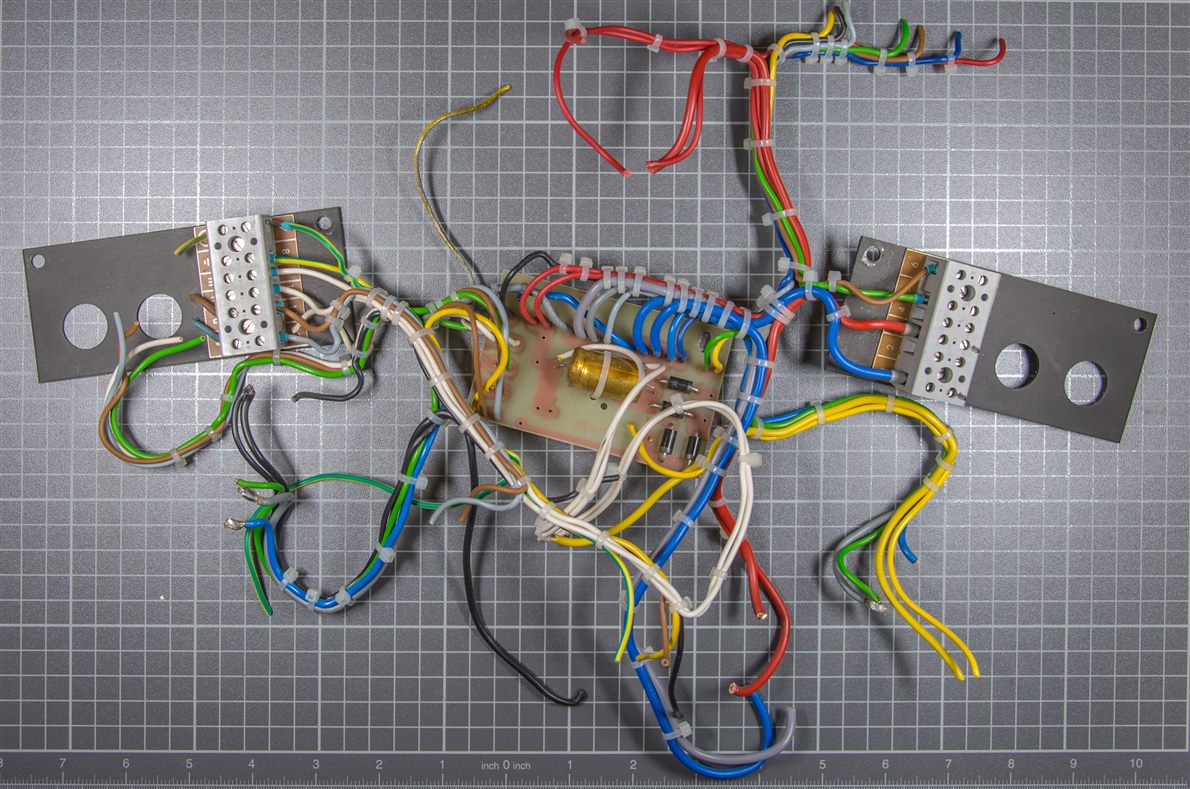
The first route is the wiring. The disturbances that travel it are called conducted transients. When a relay or a motor switches off, the sudden collapse of current throws a sharp voltage spike down the loom. The shared wiring carries that spike to every device connected to it. These transients are brief, high in voltage, delivered through the same wires that bring the device its power.
The method for testing conducted immunity is set out in ISO 7637. The standard defines a set of test pulses, each modelled on a real disturbance the wiring carries, the spike from an inductive load, the dip as a heavy load drags the supply down, the fast burst a switching contact throws. The test applies these pulses to the device’s power lines at a defined severity and checks that it rides each one without faltering. A device that passes ISO 7637 has met the wiring’s catalogue of transients under controlled conditions and kept working through them.
ISO 7637-2 in its current edition defines that catalogue as a small set of numbered pulses. Pulse 1 reproduces the negative spike thrown onto the supply when an inductive load is switched off. Pulse 2a is the positive spike from a device elsewhere on the loom having its current cut. Pulses 3a and 3b are trains of fast, short spikes in each polarity, standing in for the switching noise that relay contacts and motors put onto the loom. Each pulse is published with its shape, its source impedance, its repetition. A laboratory applies them in defined numbers over defined periods, the device powered and running its functions the whole time.
Two members of the older catalogue are no longer in it. The cranking dip once labelled pulse 4 and the load dump once labelled pulse 5 now sit in ISO 16750-2, the standard for electrical environmental loads, which is why a modern test plan cites two standards where an older one cited a single list. The wiring also carries disturbance into lines other than power: ISO 7637-3 covers the transients that couple capacitively or inductively into a device’s signal and data lines from neighbouring cables in the same harness, a quieter route that still reaches the electronics.
One conducted disturbance is severe enough to be treated on its own, the load dump. It happens when the alternator is charging hard and its load, the battery, is suddenly disconnected, by a loose terminal or a cable thrown off. The energy the alternator was driving has nowhere to go and rises into a long, high-voltage surge across the whole electrical system. Every device on the wiring is hit by it at once.
Immunity to load dump is tested as a distinct, severe case because the surge carries so much more energy than an ordinary spike. The test generates a load-dump pulse to the shape and size the standards define and applies it to the device, then checks the device lives through it and goes on working. A device built for a vehicle carries protection sized for this surge. The load-dump test proves that protection holds against the one disturbance likeliest to destroy an unprotected unit outright.
Suppression complicates the picture in one respect. Many alternators carry clamping diodes that cut the surge down at its source, so the standards define the load dump in two forms, unsuppressed and suppressed, with the second peaking far lower. A device maker cannot count on the kinder form. A terminal sold across fleets will meet old vehicles, retrofitted vehicles, vehicles whose alternator was swapped in a yard with whatever was on the shelf. The protection is sized for the surge as ISO 16750-2 defines it in its unsuppressed form.
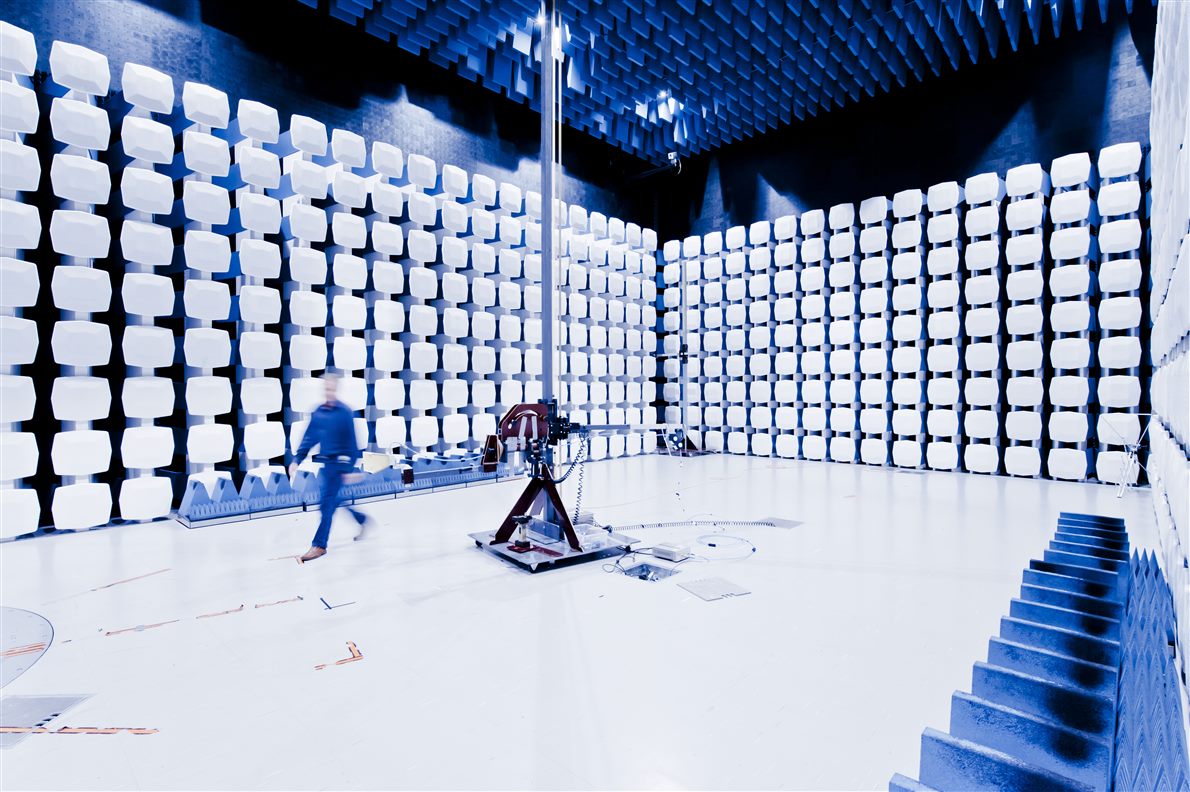
The second route is the air. Radio energy fills the space around a device, from the vehicle’s own transmitters and from the world it drives through, broadcast towers, mobile masts, a handheld radio keyed up in the cab. This energy reaches the device with no wire required, coupling into its circuits and its wiring as a field that surrounds it.
Radiated immunity is tested under ISO 11452, which places the device in a controlled electromagnetic field and measures whether it keeps working. The test sweeps across the range of frequencies a vehicle meets, from broadcast radio up through the bands of phones and two-way radios, raising the field at each to the strength the vehicle sees. The sweep matters because a device can hold against one frequency and fall to another. The test finds the frequency where its defences are weakest. A device passing ISO 11452 has held steady in a field that would scramble an unshielded unit, across the whole band the vehicle exposes it to.
The companion method, bulk current injection under ISO 11452-4, clamps the disturbance straight onto the harness across roughly 1 to 400 megahertz, the band where the wiring picks up more than the case does. The reference method for the field itself is the absorber-lined shielded enclosure of ISO 11452-2, a screened room whose walls are covered in material that absorbs reflections. The device sits on a bench with its harness laid out to a defined geometry. An antenna a metre or so away builds the field. The lining stops the room itself from distorting what the antenna produces. Calibration is done before the device arrives, the field set and recorded across the band, then reproduced with the device in place. The method covers from tens of megahertz up into the gigahertz range, where mobile networks, radar and satellite services sit.
Below those frequencies the energy couples into the harness more than into the box, so the bench changes method. Bulk current injection under ISO 11452-4 clamps an injection probe around the loom itself, driving radio-frequency current straight into the bundle from 1 to 400 megahertz, the range where cable runs act as the best receiving antennas. The injected current stands in for what a strong field would have induced. The device has to keep working as the current is swept across the band, dwelling at each step long enough for a fault to show. Between the two methods the spectrum a vehicle meets is covered from the megahertz range to the gigahertz range, into the wiring at the low end, through the air at the top.
The third route is touch. Static charge builds on a person crossing a seat or walking a dry floor; when they reach for the device, it jumps across as a sharp electrostatic discharge, thousands of volts in an instant. The same can happen as the device is handled during installation. The discharge is brief, fierce enough to upset a device or damage it outright.
Immunity to electrostatic discharge is tested by delivering calibrated discharges to the case, the connectors, the controls, every point a hand or a tool would touch, then checking the device takes them without harm or upset. The points chosen follow what a person can reach with the device installed, with extra attention to the connector pins a fitter handles during installation. A device built to survive this gives the discharge a safe path to ground, away from its sensitive parts, so the energy passes through without reaching the circuits that a jolt would disturb. The test proves that a touch on a dry day does not reset or ruin the device.
ISO 10605 is the vehicle’s own ESD standard, written separately from the generic electronics one because a person in a vehicle stores charge differently. A body in a seat, insulated by clothing against dry air, holds more charge than the office scenario the generic standard assumes. The automotive test networks use larger capacitances with their own resistances, so the discharge dumps more energy for longer. Test voltages climb accordingly, to the order of fifteen kilovolts for contact discharge, twenty-five for discharge through the air, with the device tested both running and unpowered, since a unit can be destroyed during installation as easily as in service.
An immunity test is only as meaningful as the level it is run at. The standards define grades of severity. The same test pulse or field can be applied gently or hard. A device for a vehicle is tested to the harsh end of the scale, because the vehicle delivers disturbances at the harsh end of what these standards describe. A pass at a mild level says little about whether a device survives a vehicle.
This is why a buyer has to look past the bare claim of an immunity test to the level it was run at. A device tested to ISO 7637 or ISO 11452 at a low severity has been proven only for a gentle environment. A vehicle is not one. The severity is set by where the device will work and what it will meet there. A device proven for a vehicle has been held to the levels a vehicle reaches, far above what office equipment is asked. The number behind the test is as important as the test itself.
The grading runs through every method. ISO 7637-2 publishes its pulses at four severity levels, the highest reproducing the harshest credible wiring environment. Radiated immunity plans set field strengths for each frequency band, with figures chosen for the vehicle class. ESD grades climb from a few kilovolts to the full fifteen or twenty-five. A test report is a grid: each disturbance, the level applied, the result observed. Two devices can both say ISO 7637-2 on the page with one tested at the bottom of that grid.
What the device is allowed to do during the disturbance is graded as carefully as the disturbance itself. Automotive immunity work runs on a functional status classification, a scale agreed between maker and buyer before the test starts, written into the test plan pulse by pulse and band by band. At the top of the scale the device performs every function to specification all the way through the exposure, with nothing on its outputs drifting past tolerance. This is demanded of anything whose momentary lapse matters, a brake controller being the textbook case. One step down, the device is allowed a visible wobble during the pulse, a parameter that strays past its limits, provided every function comes back to specification on its own the instant the disturbance ends, with no memory lost and no hand laid on the unit. A step below that, a function may stop outright during the exposure so long as the device recovers it by itself afterwards. The grades below cover the device that stays down until someone resets it, then at the bottom the device that comes off the bench damaged. The classification is what turns a pulse into a pass or a failure, because the same behaviour reads differently for different equipment. A video terminal that blanks its live monitor view for the duration of a load dump has done something a fleet can live with. The picture returns, the driver looks again, nothing is lost. The same terminal corrupting the recording it was writing has failed in the only way that counts for evidence, because footage of a collision cannot be re-recorded once the moment has passed. A test plan for a monitoring terminal sets the recording chain at the strict end of the scale, the storage written without corruption straight through every pulse, the clock and position data holding their integrity, with the gentler grades reserved for cosmetic functions like the on-screen display. Watching for the grade is its own engineering: the laboratory instruments the device’s outputs, recording the video feed alongside the supply current, so that a half-second lapse during a pulse is caught in the log. The report then shows, for each of the dozens of pulse applications and frequency steps, which grade the device achieved. The grid takes time to read. The answers a buyer needs are in it. A device can be advertised as tested to the full immunity catalogue even as it sits in the lower grades of that scale for the functions a fleet cares about, which is why the classification needs reading alongside the standard numbers.
For commercial vehicle work the question of level has a short answer: the 24 volt severities, at the harsh end of the published grades. A lorry’s electrical system throws larger transients than a car’s, its wiring runs are longer, its service life is harder. A terminal that will ride in one for a decade is tested at the levels written for that life, with the functional grades for its core work pinned at the top of the scale.
An immunity failure rarely looks like a broken device. Nothing is cracked, nothing worn. The device works perfectly on the bench, then misbehaves in the vehicle. It resets when the engine cranks. It drops a frame of video when a relay clicks. It freezes when a driver’s radio transmits beside it. A monitoring terminal shows the pattern in its own ways: a recording with a gap at the moment the tail-lift motor ran, a position trace that jumped as the compressor started. Each looks random until it is matched to the electrical event beside it. Taken out and tested in quiet, the device passes, since the fault lives in its response to disturbance, with every part of it sound.
Immunity testing exists to catch exactly these faults before a device ships. They are awkward to chase in the field, coming and going as the machinery around them switches, hard to reproduce, easy to blame on anything but the real cause. A workshop that meets one usually swaps the unit on suspicion, finds the identical replacement behaving the same way, then loses days to wiring checks that find nothing wrong. The hours go on a fault that was designed in, the kind no amount of fitting and refitting can remove. A device that has passed its immunity tests does not produce these faults, having been proven against the disturbances that trigger them. The value of the testing is a device that behaves the same in the vehicle as on the bench, its reliability settled before the first unit ships.
Immunity is built into a device at design time. The testing measures what the design achieved. Filtering on the power and signal lines catches conducted transients at the connector before they reach the electronics. Protection components clamp a surge like the load dump down to a level the circuits can take. Shielding in the enclosure keeps radiated energy out. A sound path to ground carries a static discharge safely away. These defences, laid into the device as it is designed, are what an immunity test puts to the proof.
The defences have names. A transient suppressor diode across the supply input clamps a spike to a voltage the regulator behind it can stand, absorbing the load dump’s energy as heat. It is chosen by the surge it must take, physically larger for a 24 volt lorry than for a car. A common-mode choke on the power pair turns the fast bursts of pulse 3 into heat before they pass the connector. Capacitors at the input shunt radio-frequency current to the chassis. The enclosure is a conductive box whose weakest points are its joints, with the cable shield bonded around the full circumference of the gland, since a shield earthed through a single pigtail re-radiates inside the case.
Placement counts alongside parts. Board designers keep the protection at the connector edge, so that transient current entering a pin meets the clamp before it crosses the board; they route sensitive tracks away from the loom side, give the discharge from the case a copper path to ground that bypasses the logic, separate the grounds so that a surge returning along the chassis cannot detour through the measurement circuits. None of this shows on a feature list. It shows on the bench, in the grade the device achieves as the pulses arrive.
A device that fails an immunity test fails because one of these defences was missing or too weak. The fix usually means going back to the design. This is why immunity is hard to add late and best engineered from the start. A maker serious about the vehicle market designs the filtering, the clamping, the shielding and the grounding in from the first, then runs the immunity tests to confirm the device meets the vehicle’s disturbances at the severity they arrive. The test result is the record that the hardening works.
For a fleet choosing a vehicle device, immunity is where reliability is quietly decided. A device can do everything its feature list promises on a bench and still fail in service if its immunity is weak, resetting and freezing in ways no demonstration reveals. What settles it is the test record. The record should show the supply transients of ISO 7637-2 with load dump to ISO 16750-2, the fields of ISO 11452, the discharges of ISO 10605, all at the 24 volt severities a lorry delivers. A 12 volt report offered for a 24 volt fleet is the wrong document, common enough to be checked for. It should show the functional grade achieved on each, with the recording chain held at the strict end of the scale through every pulse. A spec that lists features and answers none of this has left the vehicle behaviour unproven. A fleet that asks for the record gets electronics whose behaviour in service has already been proven.
EMC immunity is a device’s ability to keep working in the presence of electromagnetic disturbance. For a vehicle device it means carrying on, without resetting, freezing or corrupting its work, as the vehicle’s electrical noise, surges, radio energy and static arrive around it. It is one side of electromagnetic compatibility, the side concerned with what a device can withstand.
It is tested by reproducing the vehicle’s electrical disturbances under controlled conditions and watching whether the device keeps working. Conducted transients on the wiring are applied to ISO 7637, radiated radio fields to ISO 11452, plus tests for electrostatic discharge and the load dump. Each is run at a severity set for the vehicle. The device has to keep functioning correctly throughout.
Because a vehicle is a severe electrical environment. The ignition, relays, motors and alternator throw large, fast surges onto shared wiring. Radio transmitters ride close by. Static discharges on a touch. These disturbances are far stronger than those of a home or office, so a vehicle device must be tested to a much higher level of immunity to work reliably.
Load dump is the harshest surge a vehicle delivers, occurring when the alternator is charging and the battery is suddenly disconnected, leaving the alternator’s energy to rise into a long high-voltage surge. It carries far more energy than an ordinary spike, so immunity to it is tested as a distinct, severe case, with a device needing protection sized specifically to clamp it.
Because the fault sits in the device’s response to disturbance, with every component itself sound. A quiet bench has little disturbance to upset it, so it passes. In the vehicle the surges, radio energy and static trigger resets or lock-ups. A device with proven immunity behaves the same in both places.
Confirm the device’s immunity was tested against the vehicle’s disturbances, to ISO 7637 for conducted transients, ISO 11452 for radiated fields, plus electrostatic discharge and the load dump, at a severity fit for a vehicle. A spec that lists features and stays silent on immunity testing leaves the device’s real-world reliability unproven.