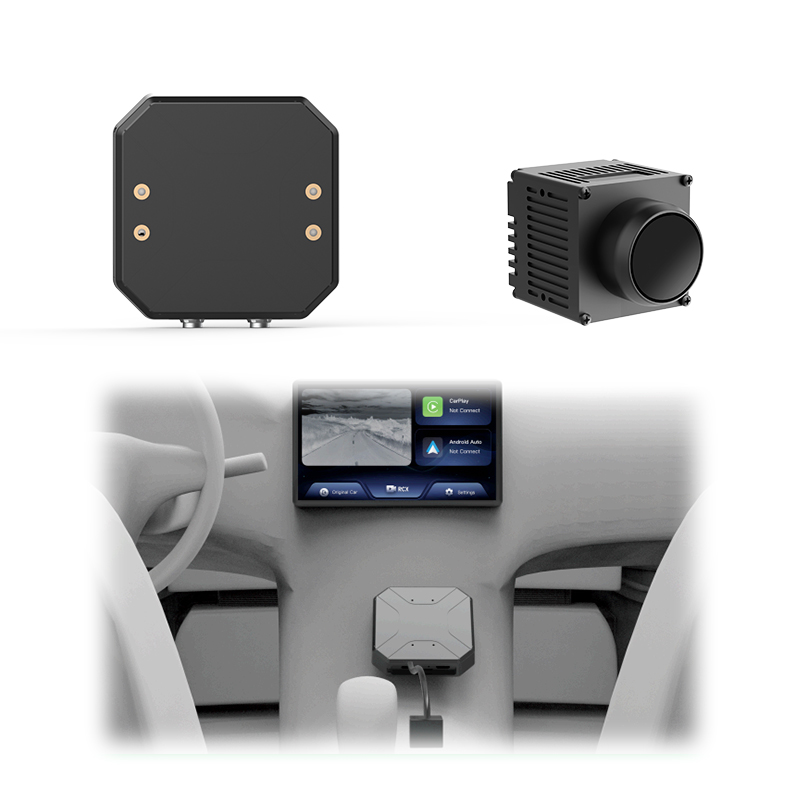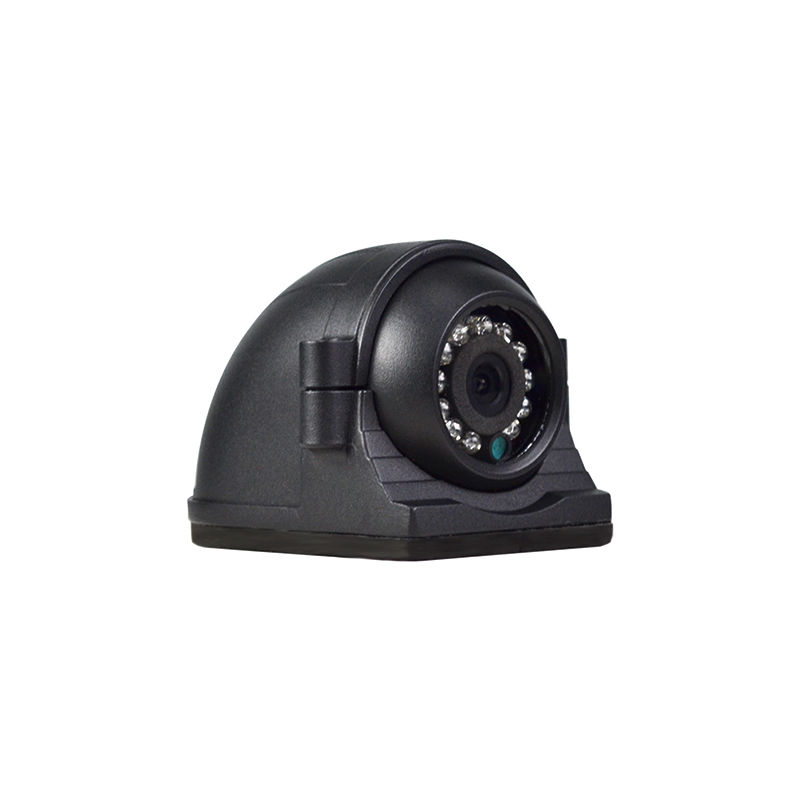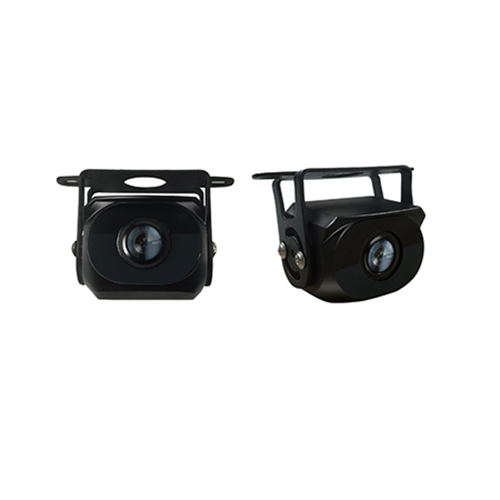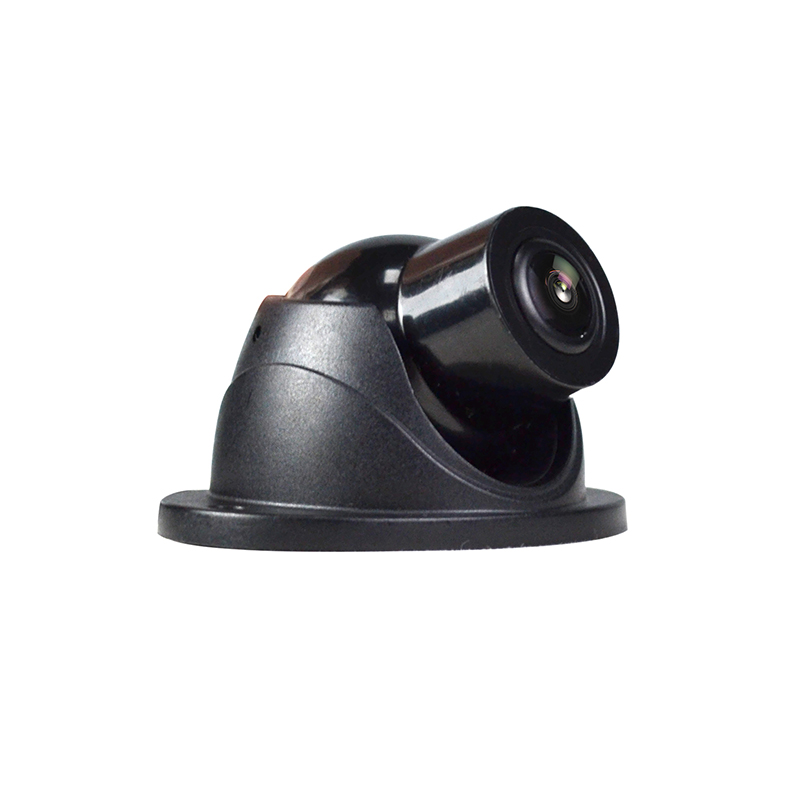
Blind spot detection watches the spaces around a commercial vehicle that the driver cannot see from the cab, and warns when a road user is in one of them. On a truck the hard case is the right turn.
Blind spot detection on a commercial vehicle watches the spaces the driver cannot see from the cab. It raises a warning when a person or a vehicle is in them. A car carries a version of this for the quarter behind each door. A truck asks much more of it. The vehicle is longer and taller. It also turns by pulling its rear wheels inside the line the front wheels take.
That last trait is what makes the right turn dangerous. The rear wheels cut inside the front ones, so the trailer flank swings in toward the kerb. A blind wedge opens down the right side, then travels the length of the body as the truck comes round. Much of the engineering in commercial BSD goes into covering that moving band, in the slow turns where the worst accidents happen.
The rest follows from the size of the vehicle and the kind of thing it has to spot. A pedestrian returns a far weaker signal than a car. A tipper and a coach hide different lengths of road. The sections below work from the geometry of the turn, through what a side sensor can pick out at low speed, to where the sensors have to sit on a vehicle blind on every flank.
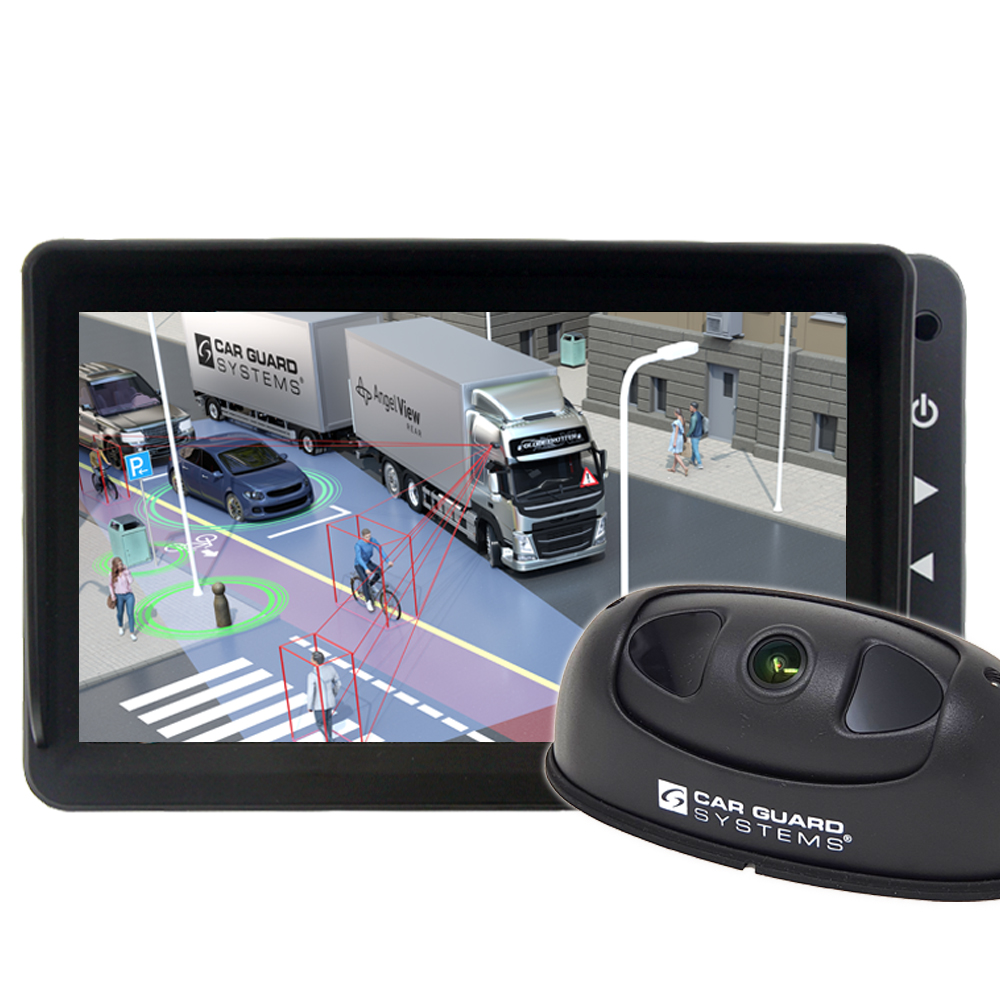
A car BSD guards one zone on each side, the patch a driver misses in the door mirror on a lane change. A heavy vehicle hands the system a longer list. One blind region sits right at the kerb beside the cab. A second runs the length of the trailer, past anything the mirrors reach. A third lies straight ahead and low, under the high cab, where a person standing at the bumper drops out of sight. The driver of a modern truck can be looking forward through the screen and still have a child within a metre of the front wheels, unseen.
So the side system is less an alert in one spot than a question of coverage. A rigid box truck, a city bus, a tractor with a trailer swinging behind it: each shows a different length of blind flank to fill. The unit has to know the vehicle it is bolted to. It has to know the speed, because the rules at walking pace are nothing like the rules at sixty. It has to tell a parked car the truck is rolling past from a cyclist easing into the danger band. The right turn is where every one of those demands arrives at once.
Numbers put it in scale. A heavy truck can hide a strip of road several metres long down its nearside. A person who steps into it leaves the driver’s view from that moment until the trailer reaches them. The taller the cab and the longer the body, the larger the hidden strip. A modern high-floor tractor sees nothing within a metre or so of its right front corner, the precise corner a pedestrian steps past at a crossing.
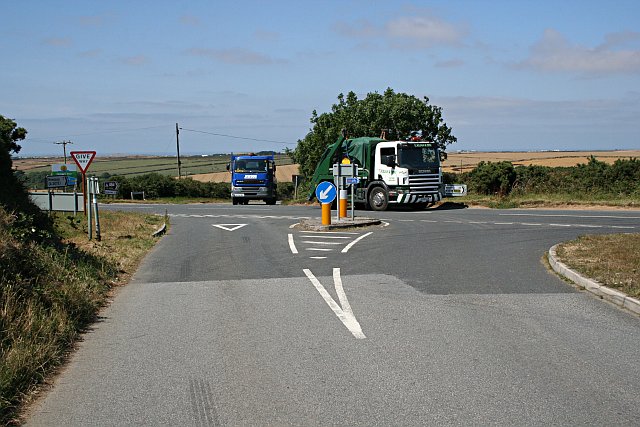
A long vehicle does not corner the way a car does. The front wheels follow the steer angle. The rear wheels track a tighter radius, cutting inside the front path. Engineers call the difference off-tracking. It grows with the wheelbase. On a rigid truck it might be the better part of a metre. On a long combination it runs to a metre or two. On a drawbar outfit or a long semi-trailer it is wider again. It shifts as the trailer articulates through the bend.
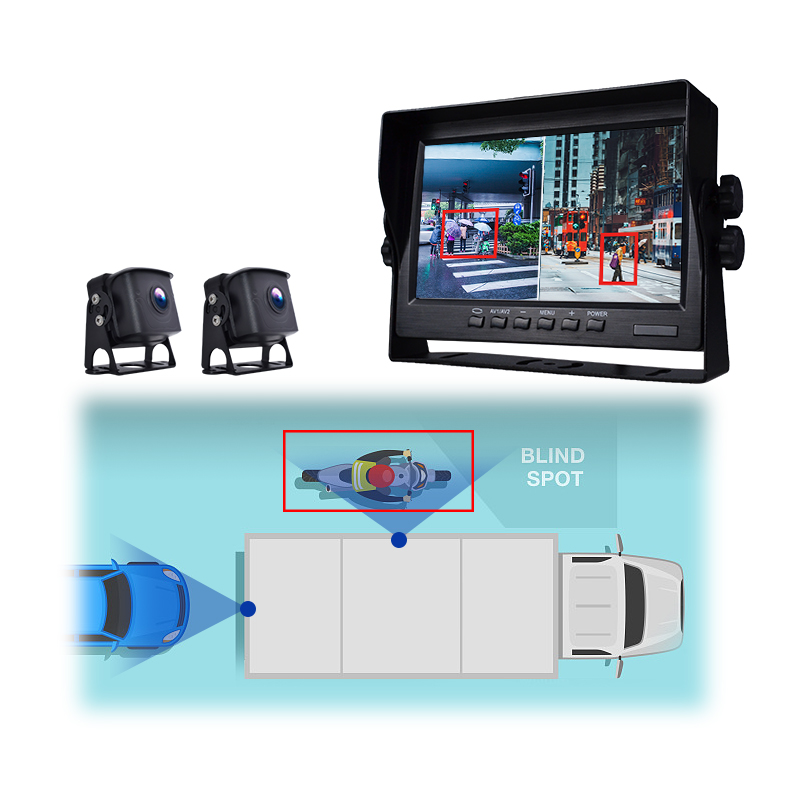
Picture the turn from above. A cyclist waits at the kerb on the truck’s right. The driver swings the cab out to the left to set the angle, then brings it round to the right. The front wheels clear the cyclist on their left, so from the cab the road reads as empty. The rear wheels are on a tighter arc. They draw in toward the kerb as the body comes round. The trailer flank sweeps after them. The slot the cyclist stands in narrows from the inside. Nothing touches the rider until the side of the trailer arrives, by which point there is no room left to brake or to steer clear. This is the collision that fills the casualty tables in Chinese cities under the name of the right-turn blind spot. It is geometric before it is anything else. How far the rear wheels cut in depends on the wheelbase and the sharpness of the turn. A tight junction taken by a long combination can pull the rear axle a metre or more inside the front track. The inner sweep keeps widening as the bend tightens. An articulated outfit is worse again. The trailer pivots about the fifth wheel and chases its own shorter radius behind the cab. A driver doing every part of the job correctly still cannot see into that closing wedge. The seat is two metres up and several metres ahead of the rear axle. The danger forms behind and below the line of sight. From the moment the rider enters the wedge to the moment the trailer reaches them, they have been out of the driver’s view for the whole turn. The structural blind spots pile on top. The thick right A-pillar blocks the corner at the moment of the turn. The deep shadow under the nearside mirror swallows the kerb. No flat mirror shows the run of a long body end to end. A mirror aimed to frame the trailer wheels can no longer show the kerb beside the door, so the driver picks one view and loses the other. A wide-angle nearside mirror helps a little, at the price of shrinking everything in it, so the cyclist it does show is a thumbnail caught for a fraction of the turn. BSD exists to hold the part of the road the driver had to give up, and to keep holding it through the whole sweep of the corner from first movement to last.
The wedge is not a fixed place. It opens, slides rearward along the body, and shuts again over a few seconds. A sensor aimed at one square of road catches the danger only while it crosses that square. Covering the turn means covering the length of the vehicle, then tracking a target as it travels down the flank from cab to trailer end. One eye at the mirror cannot do it on anything long.
Speed twists the problem in a direction that feels backwards. The turn is slow, often under twenty kilometres an hour. A slow target hands a radar almost nothing to lock onto.
That last point shapes the entire sensor choice.
A car’s blind spot warning does its best work on the motorway. Everything moves fast there. A car closing from behind carries an obvious relative speed. A millimeter-wave radar reads that speed straight off the Doppler shift. A quick target lifts cleanly out of the still background. The right turn throws the advantage away. The truck is crawling. The pedestrian or the cyclist is barely moving. At the kerb they may be dead still. Relative speed falls close to zero. To a radar a motionless person looks much like a post, a railing, or the kerb stone behind them. A sensor built around speed is being asked to work at the one pace it was never designed for.
So the side sensor has to do the one thing radar handles worst. It has to hold a slow or stationary target in heavy clutter, then separate a human from the street furniture around it. A unit set to drop stationary returns, the sane default at speed, falls silent at the exact moment a person is planted in the path. Set the other way, it fires on every sign and bollard the truck rolls past. The low-speed turn sits in the narrow gap between those two failures. Closing that gap is much of what divides a real commercial BSD from a passenger-car part screwed onto a bigger vehicle.
The radar’s own design works against it here. A side radar runs a constant false-alarm-rate filter that learns the background and subtracts it. That is how it ignores the railing it rolls past a hundred times a shift. A pedestrian standing still sinks into the learned background and is subtracted with the railing. Lift the sensitivity to keep them and the filter passes the railing too. The way out is a second cue the radar lacks on its own. A camera that can call the shape a person lets the system trust a still return the bare radar would throw away.
The target that counts here is a person, on foot or on two wheels. That alone changes the engineering. A car is a big metal reflector with a shape and a speed the system can predict. A pedestrian throws back a weak, soft return. The same body turns without notice, or stands dead still at the kerb. The radar cross-section of a person is a fraction of a vehicle’s, so the signal is faint to begin with, and softer still against a wet road that scatters the beam.
A better radar has one more handle on the human target. The swing of arms and legs throws back a faint spread of speeds around the body’s own pace, a micro-Doppler signature. A walking person carries a different one from a rolling wheel or a flapping sheet. It is weak, it needs a clean look to read, so it firms up a guess and does not stand on its own. Paired with the camera it lifts a slow pedestrian out of the noise the bare range return leaves them in.
Picking that target out is a job in itself. How a BSD pulls a pedestrian from the clutter leans on the faint, shifting return a body gives, backed by a camera that can label the shape whenever the light is good enough to see it. A cyclist or an e-bike rider falls between the two cases. The frame adds metal the radar can find. The speed adds motion it can track. The same speed makes the rider quick enough to enter the wedge in the second the driver looked away.
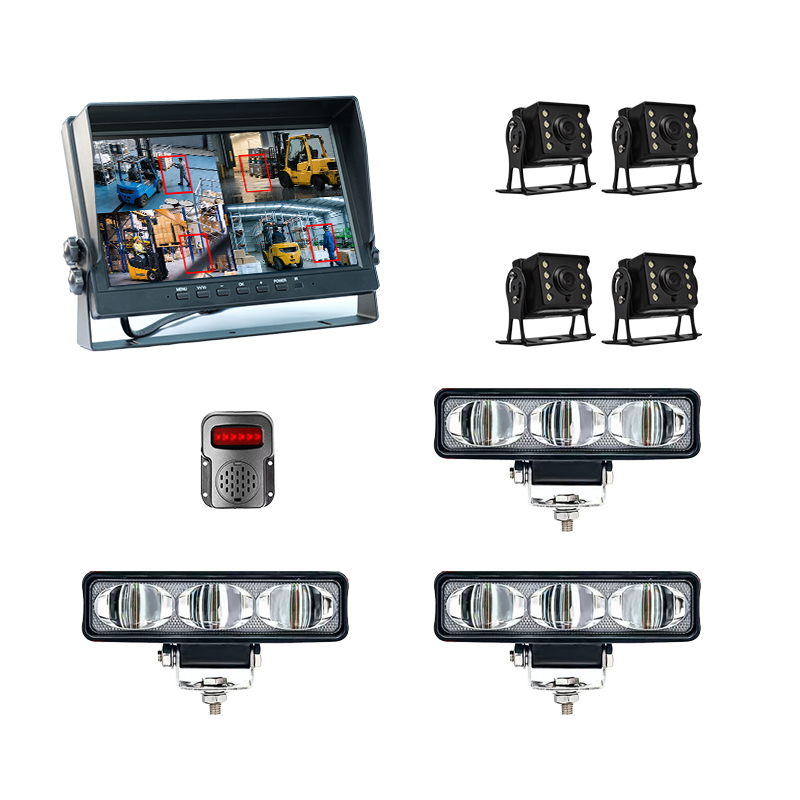
Get it wrong in either direction and the system fails. Miss the person and the warning never comes. Flag every shopper on a crowded pavement and the driver learns to ignore the buzzer inside one shift. The unit has to stay calm through the crowd standing safely at the kerb, then be certain enough to shout for the one who steps off it into the turn.
This is a different problem from the one a forward camera solves. The difference is one to keep straight. The forward unit watches a lane and a vehicle closing along it. The side unit watches a person at walking pace, a metre off the body, through the worst few seconds of a corner.
The flank of a truck can be watched by a camera, by a radar, or by both. The low-speed turn sharpens the old trade between them. A camera names what it sees and copes with the still pedestrian the radar loses. It depends on light. It blurs in the spray thrown off the rear wheels. A radar reads range in the dark and the wet, then leans on motion the turn does not always give it. The detail behind the stereo-camera and radar comparison comes down to which of those failures a fleet can least afford on the roads it runs. A night delivery operation weighs the camera’s blindness in the dark heavily. A daytime urban fleet worries more about the radar falling quiet on a still pedestrian.
The serious systems carry both and fuse them, the same conclusion the forward stack reaches for a different reason. On the side the balance tips toward the camera, because the one target it cannot afford to miss is a slow human the radar would let slide. A radar-only side unit is cheap and shrugs off weather. It is also the one that stays silent on the cyclist standing still at the kerb, which is the exact case the whole feature exists to catch.
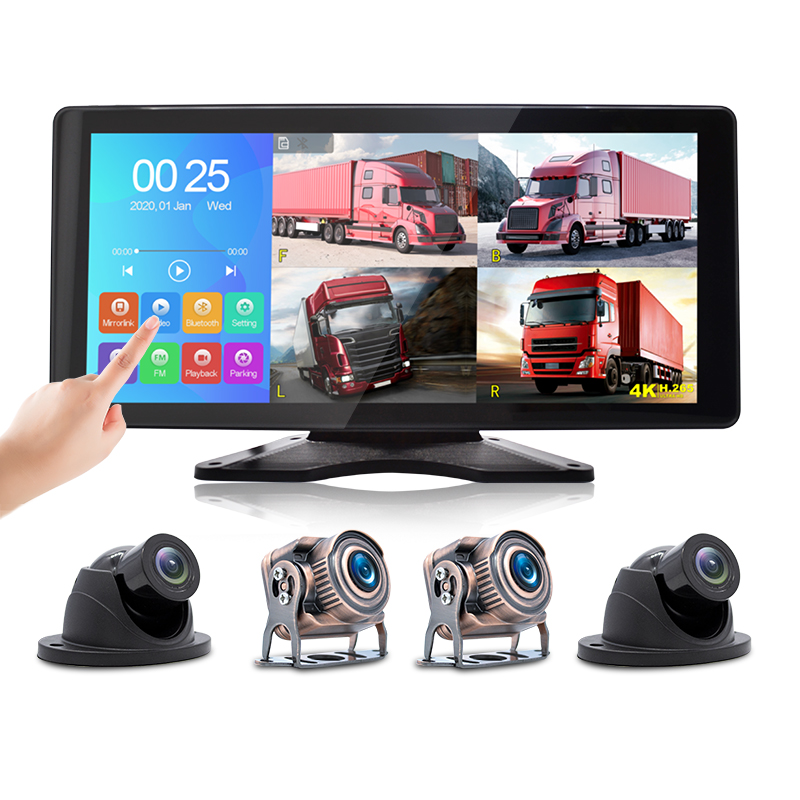
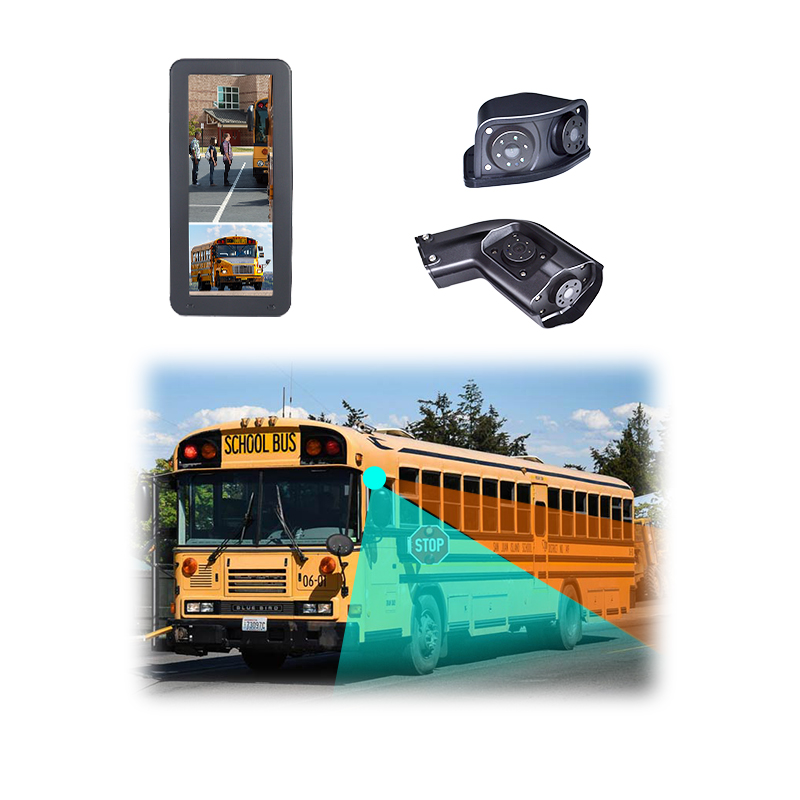
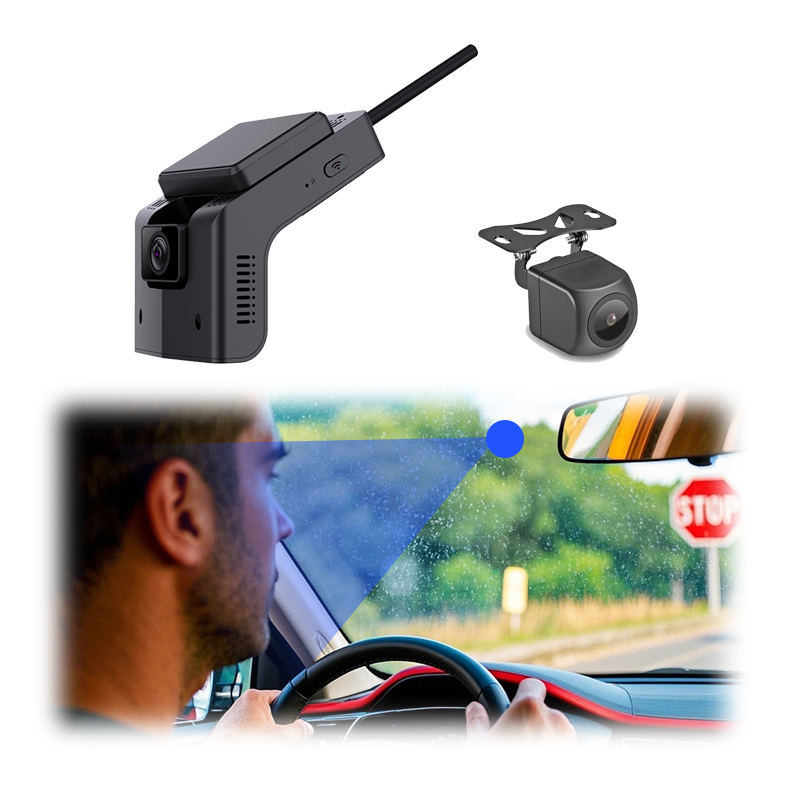
Coverage rests on placement. Placement on a truck is unkind. A side camera usually sits under or beside the nearside mirror, looking down and back along the body. Mounting it beneath the mirror buys a clean view down the flank. It also puts a lens a metre off the road, in the path of spray and grit, on a panel that shakes, so the glass needs cleaning far more often than anyone plans for.
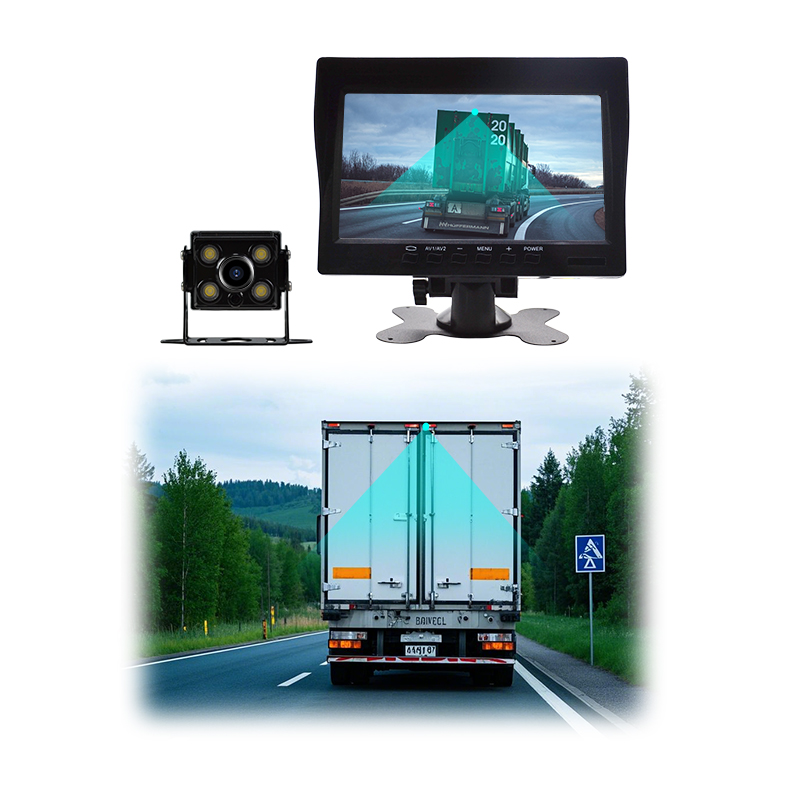
One sensor seldom covers a long vehicle. A rigid truck might cope with a unit at the mirror and a second further back. A semi-trailer cannot. The trailer is a separate body, often dropped by one tractor and picked up by another the same week. It hides its own length of road. Covering the blind spots along a semi-trailer means sensors on the trailer itself, fed and wired through the trailer harness, reporting to a head unit in a cab they were not paired with that morning. The handshake between trailer sensors and an unfamiliar cab is its own piece of the design.
Placement also fights the body. Mount the sensor low and it reads the kerb well, then drowns in spray. Mount it high and it can look clean over the head of a child at the bumper. Every spot trades one blind region for another. That trade is the reason a long vehicle ends up wearing several modest sensors where one clever sensor cannot reach the whole body.
Power and aim are headaches of their own. A trailer sensor draws from a harness never built for a data feed, so an installer runs a dedicated line and takes on the failure points that come with it. Each sensor then has to be aimed and calibrated to the body it rides on. A knock at a loading dock walks that aim off true, the same way it does a forward camera. A fleet that fits BSD then forgets it ends up with a row of trucks guarding a blind spot that has quietly slid off the kerb it was meant to watch.
A side warning has to fire at the right distance and the right speed, or it turns into noise the driver tunes out. The trigger distance and speed thresholds have to suit a crawling turn, not a motorway lane change, so the active zone hugs the body and the speed gate sits low. Open the zone too wide and the unit barks at parked cars and passing walls. Draw it too tight and the cyclist is already alongside the trailer before it speaks. The numbers that work for a coach on an open arterial are wrong for a tipper threading a building site at walking pace. So the thresholds are tuned to the vehicle and its work, not shipped as a single figure for every truck on the road. A coach settles into a steady zone for its fixed routes. A skip lorry switching sites all day needs a setting that copes with a tight yard one minute and open road the next, so the better units tie the active zone to road speed and loosen it as the truck picks up pace.
The shape of the vehicle sets the shape of the danger. A dump truck works sites and city streets. It turns tight, under a high body that throws a long shadow of blind road down its right side. Treating the right blind spot on a tipper is part sensor work and part timing, because a loaded tipper pulls away hard from a light and gives the warning only a few metres to do its job. Drivers under delivery pressure make it worse. A site at knocking-off time, with machines moving and people on foot among them, is the hardest minute of the day for any side sensor to read.
A city bus carries its own version of the problem. It runs kerbside all day, pulling in and out beside the people waiting for it, so its nearside is crowded with exactly the road users BSD has to protect. The overall approach to a bus nearside blind spot has to separate a passenger stepping back from a stop from one walking forward into the path of the turn, two motions that look nearly the same to a sensor.
A semi-trailer is the hardest of the three. It is the longest body, it bends in the middle, and the part that hides the road is not the part holding the driver. Each vehicle type lands on a different sensor count and a different idea of where the warning has to reach before the wheel comes round.
A side warning has to land differently from a forward one. The threat sits to the right, often on the side the driver has already turned away from, so the cue has to point. A light low in the nearside mirror, a tone that comes from the right, a buzz through the seat or the rim of the wheel: the useful ones tell the driver which way to look without a word. The blend that earns its place, set out in the buzzer, voice and steering-wheel vibration combinations, climbs from a quiet light when something is merely present to a jolt no one can miss the moment the driver begins the turn regardless. A buzz through the wheel that fires only once the indicator is set and the wheel starts to move keeps the loudest cue tied to the act that creates the danger.
BSD lives or dies on its false alarm rate. It works in a town where the kerb is never empty. Parked cars, railings, sign poles, a wall on a tight bend: each one can trip a side unit that has not been taught to expect it. A driver who collects a buzz at every junction soon stops believing the buzz that counts. The feature then sits on the truck doing nothing, switched off in the driver’s head if not at the panel.
So the real work is suppression. It has no finish line. The common false-alarm scenarios and their fixes run from filtering the steady return of a wall the truck is tracking, to holding fire on an object that is moving away from the body rather than into it. A target on a constant bearing, closing on the flank, is the one that earns a shout. The aim is a unit that stays quiet through the ordinary furniture of a city street, then speaks the single time a cyclist is in the wedge.
Set the pieces side by side and the pattern is bleak and repeatable. The geometry tucks a vulnerable road user into the one place the driver cannot look. The speed is too low for a plain radar to help. The target is the hardest kind to tell from background. The causes behind heavy-truck right-turn accidents are not, in the main, a careless driver. They are a tall cab, a long body, a rear axle that tracks inside the turn, and a person in the single spot where all three line up to hide them.
BSD does not undo that geometry. It puts an eye on the stretch of road the driver was never handed, then a voice in the cab a half-second before the wheel swings over. On a vehicle that kills when it turns right, half a second is the whole margin. The camera and the radar are only the means. The geometry is the reason they are bolted on at all. No fleet fits a side sensor for the open road. It fits one for the junction, where the wheels come round and the kerb is full of people the cab cannot see.
A long vehicle turns with its rear wheels cutting inside the front ones, by a metre or more. During a right turn that off-tracking opens a closing wedge down the nearside the driver cannot see from a high, forward cab. A pedestrian or cyclist the front wheels passed safely can be drawn into the path of the rear wheels or the trailer. The danger is built into the geometry, not a simple lapse of attention.
Either, and the better systems use both. A camera labels what it sees and handles a slow or stationary pedestrian, though it needs light and suffers in spray. A radar reads range in poor weather, though it leans on motion a low-speed turn does not provide. Fusing the two covers the gap, with the side system leaning on the camera more than a forward unit does.
It works in town, where the kerb is full of parked cars, poles, railings and walls. A unit that has not been carefully tuned trips on all of them. The fix is steady suppression of the predictable clutter, so the warning stays quiet through ordinary street furniture and fires for a genuine vulnerable road user.
A side camera usually sits under or beside the nearside mirror, looking down and back along the body. One sensor seldom covers a long vehicle, so a rigid truck needs at least two and a semi-trailer needs sensors on the trailer itself. Mount too low and spray blinds it; too high and it looks over a child at the bumper.
That is the main job here. A pedestrian gives a weak, soft return and can stand still at the kerb, the hardest target for a motion-based radar. A camera that labels the shape, fused with the radar, is what lets the system hold a slow or stationary person instead of dismissing them as street furniture.
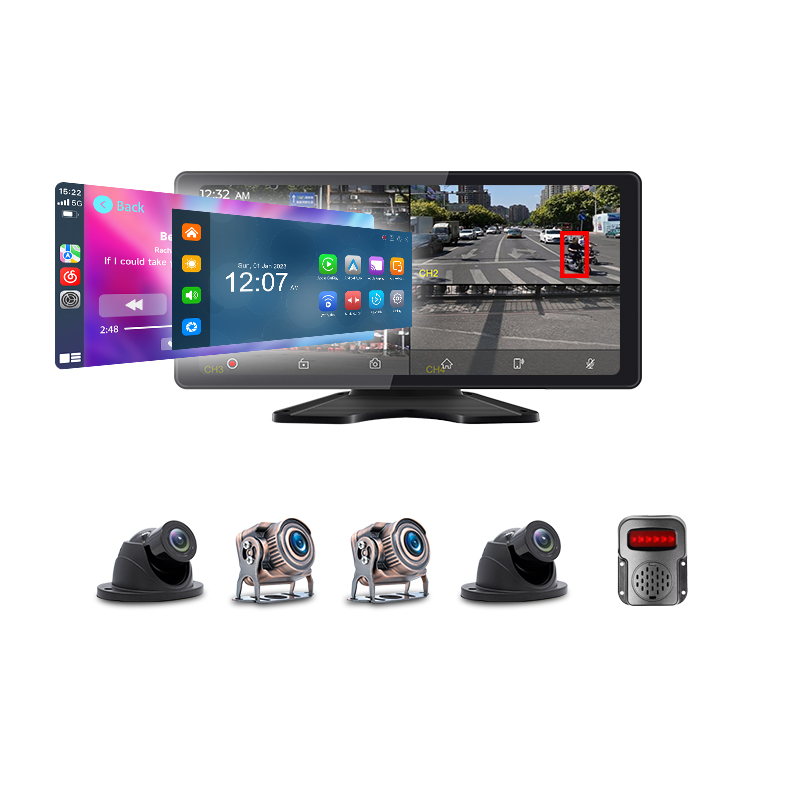
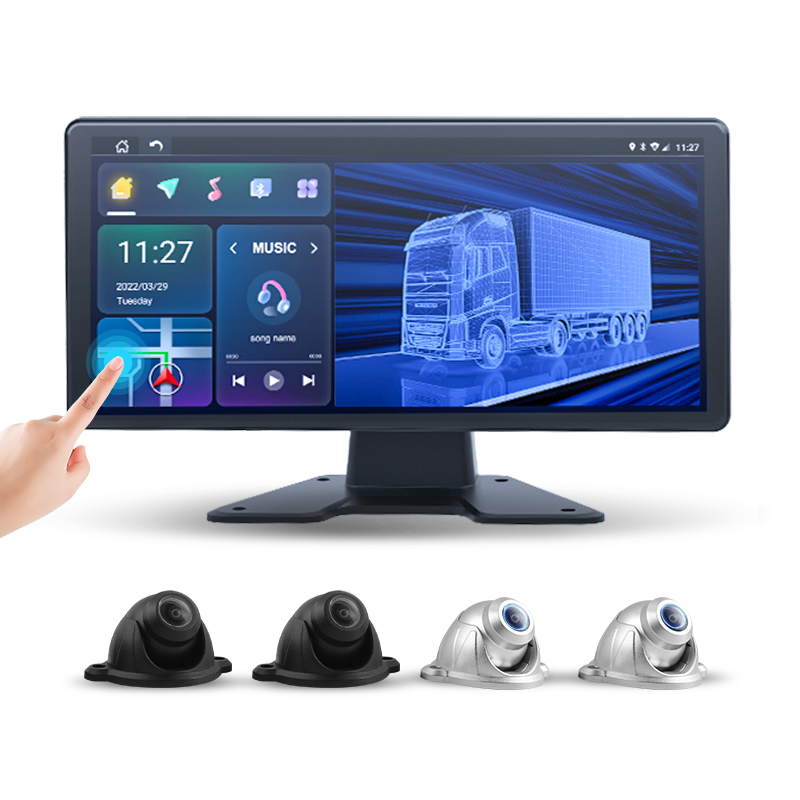
No. A 360 system stitches camera views into an overhead picture for the driver to read. BSD actively detects a target in the blind zone and raises a warning on its own. The two complement each other: the around-view shows the scene, while BSD watches it and speaks when the driver cannot.