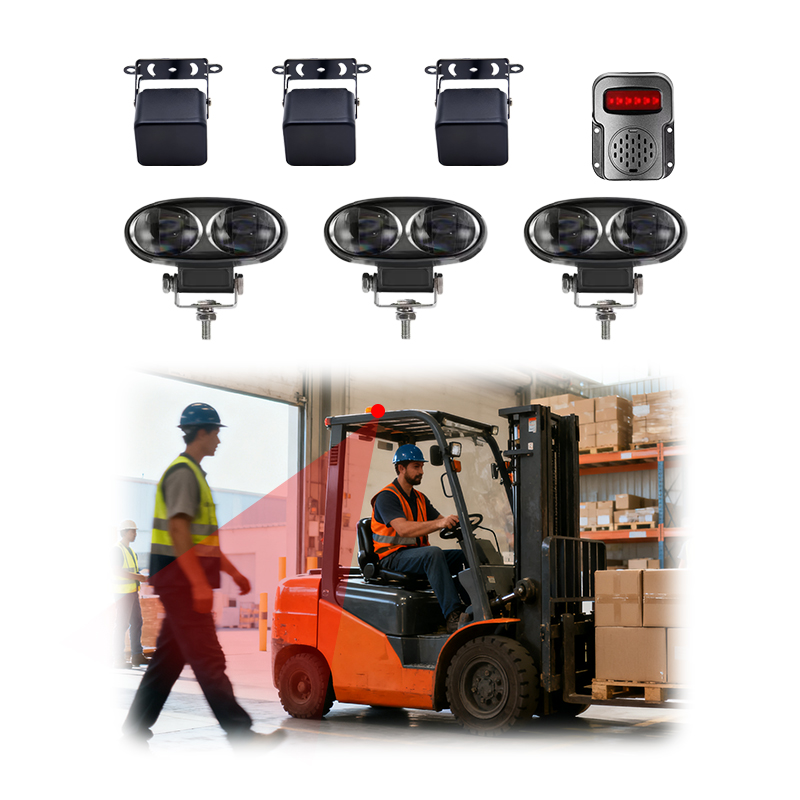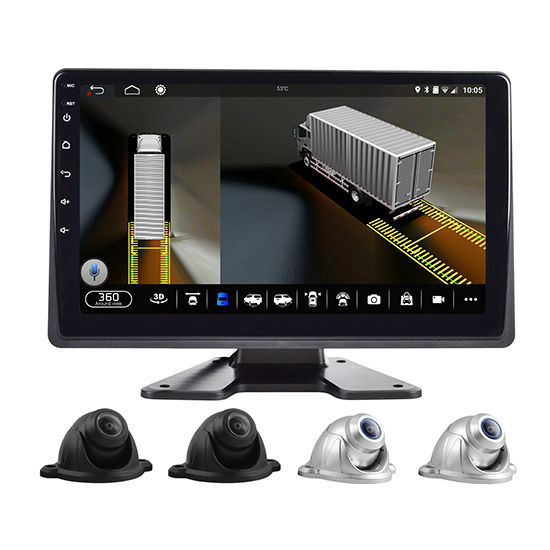

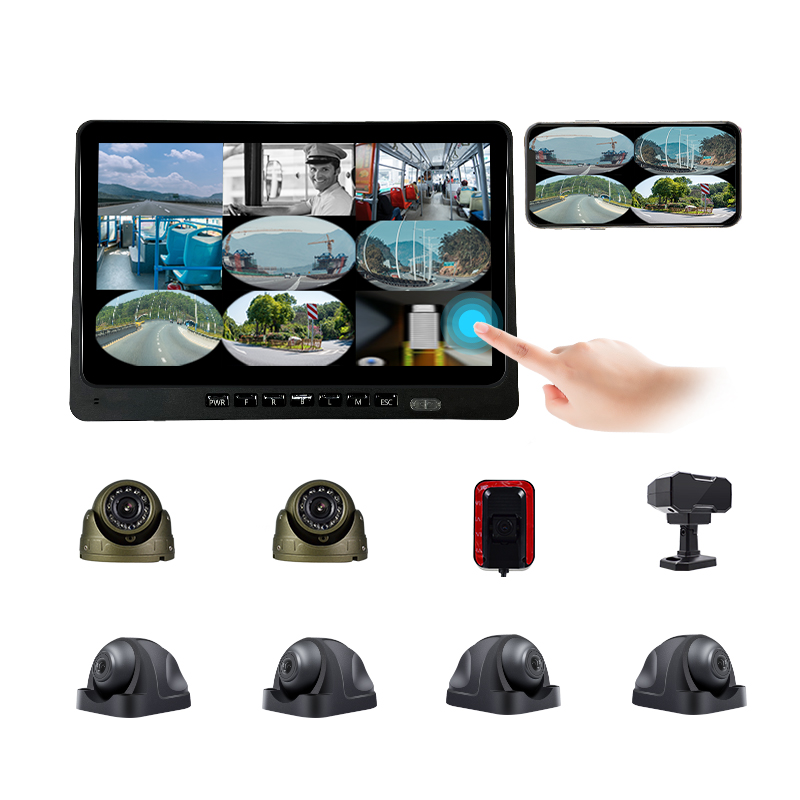
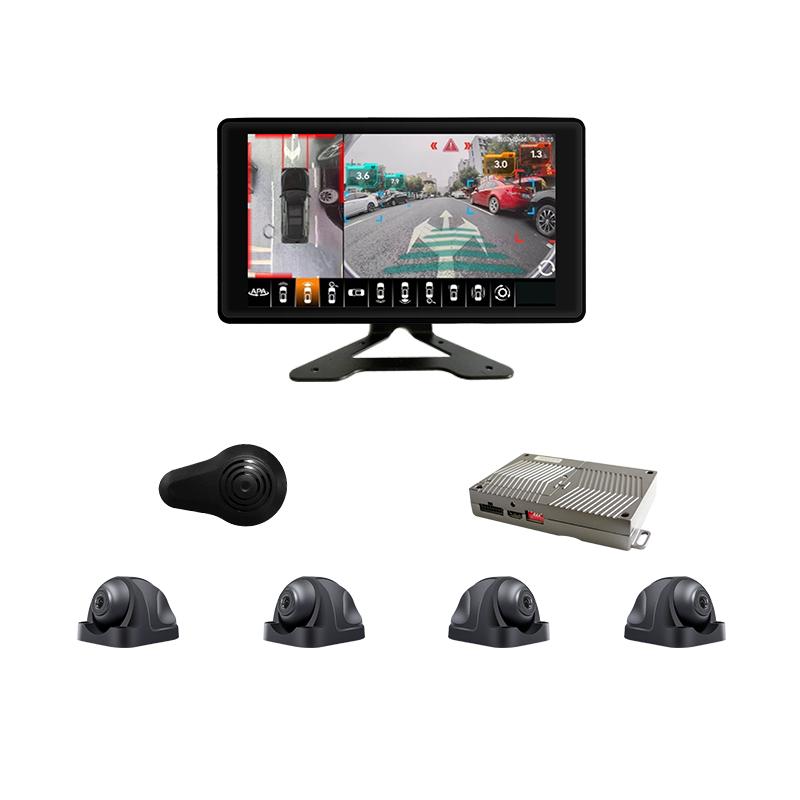
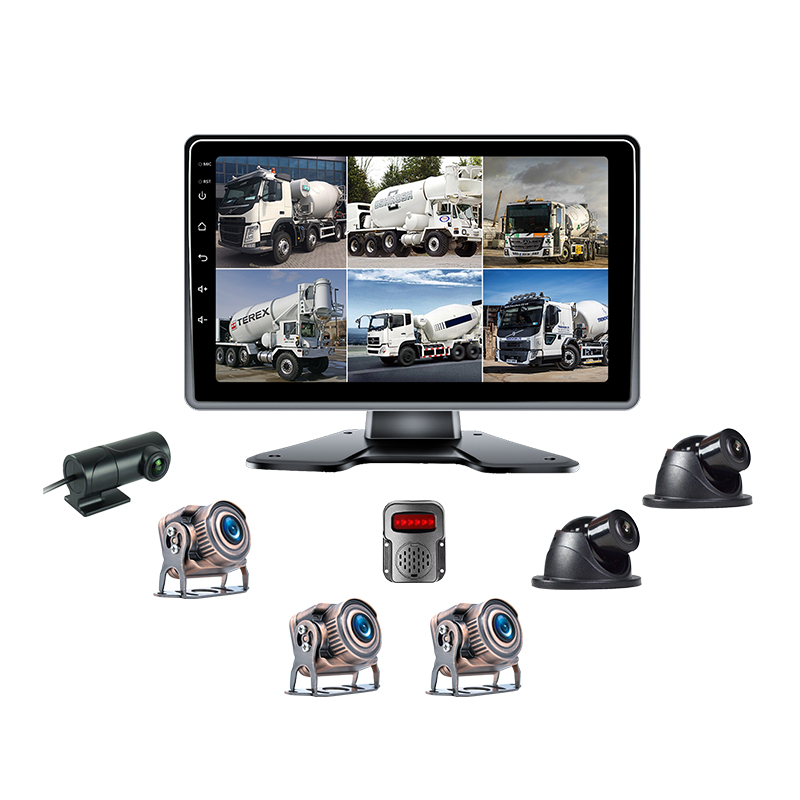
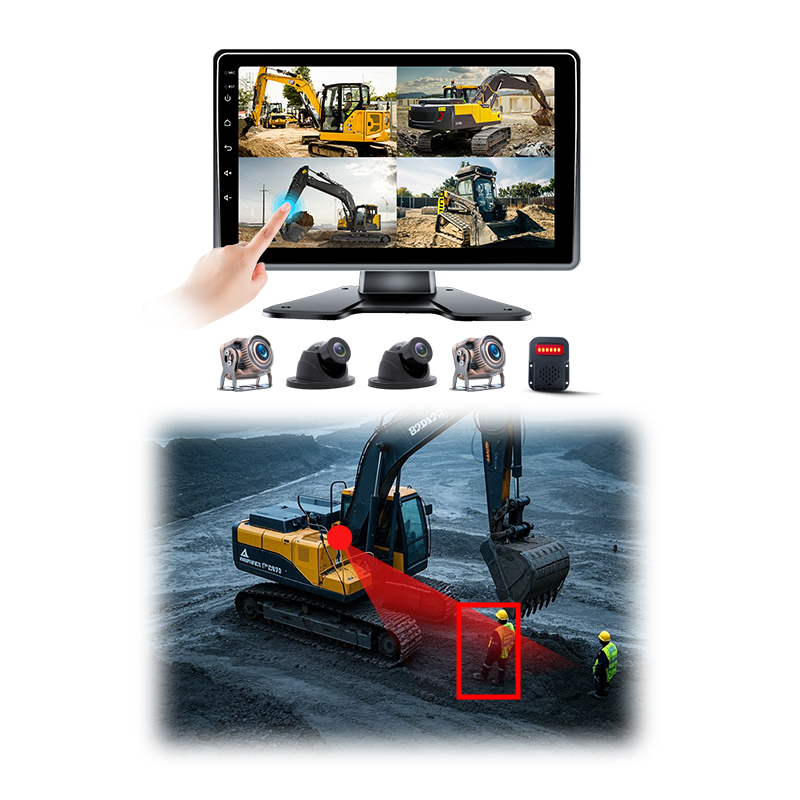
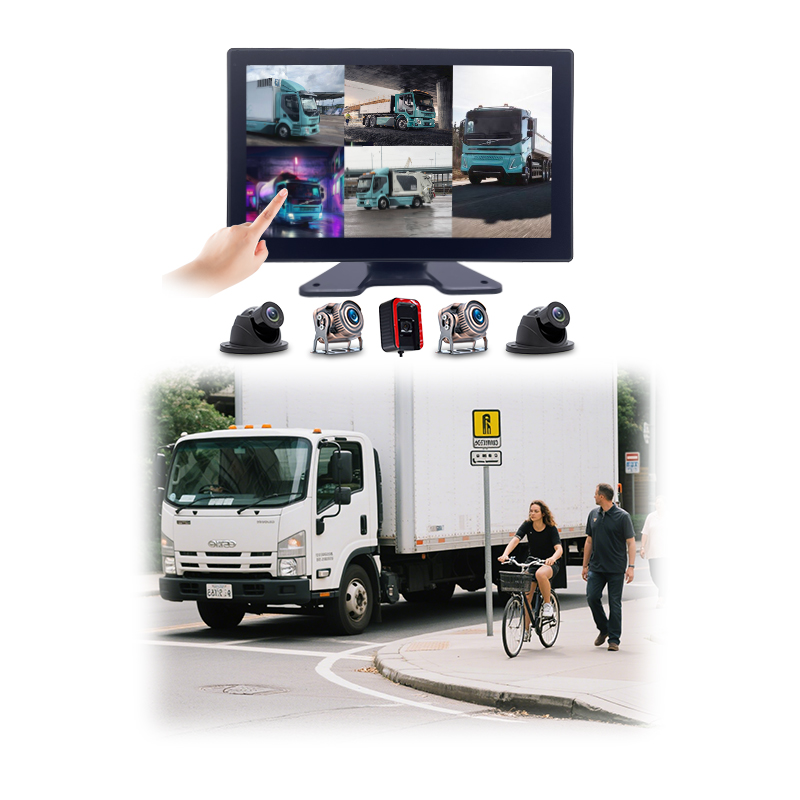
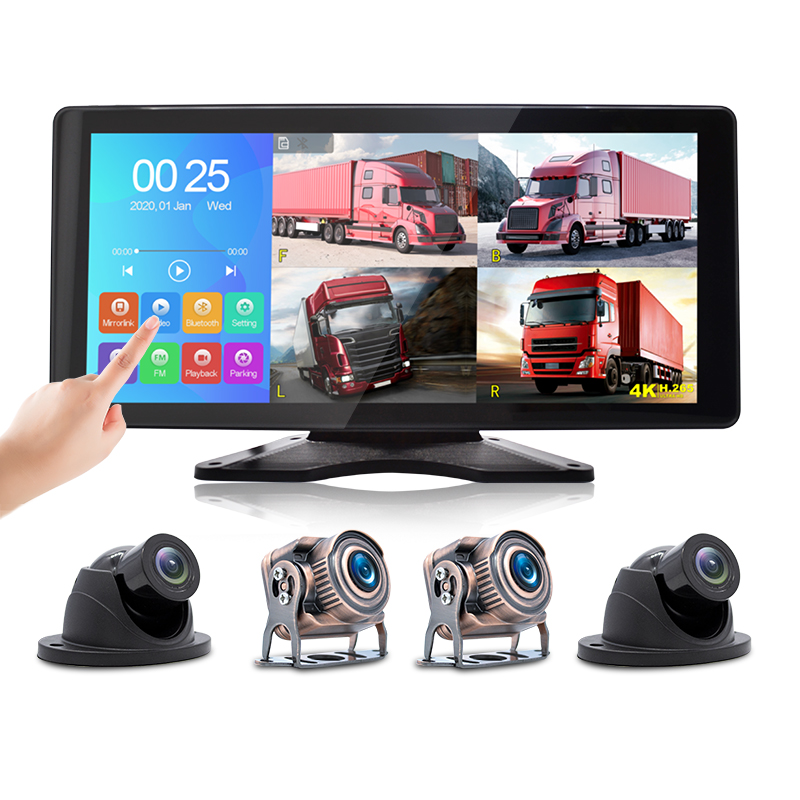
A single semi-trailer bends at one joint. Add a dog trailer or a second semi and the count climbs to three or four, each an independent pivot the cab cannot see, strung out over thirty meters or more. The last page kept one stitched bowl alive across a single articulation joint by re-warping the trailer panel. That trick does not scale. No single overhead image can hold a thirty-meter combination with several joints turning at once. A multi-trailer system gives up the single bowl and shows the segment that matters for the move at hand, switching between segments as the job changes.
The earlier pages built up to this. The bird’s-eye, the calibration, the math and the single articulation joint all assumed a vehicle you could draw as one overhead picture. A drawbar road train is a chain of bodies, each hinged to the next, each swinging on its own as the rig works through a corner. The longer the rig, the less of it the driver sees from the cab. On a fifty-meter road train the tail of the load sits well past anything the mirrors reach. The camera view is the only window onto the rest.
One number sets the whole problem, the count of joints between the cab and the back of the load. A rigid truck has none, a semi one, a B-double two, a dog trailer three, a long road train more, each joint adding a pivot no camera rides and a body that moves on its own. Past the first joint, the question becomes which part of the vehicle to put on the screen.
The bowl is gone past the first joint. Choosing among the views that replace it is the whole task.
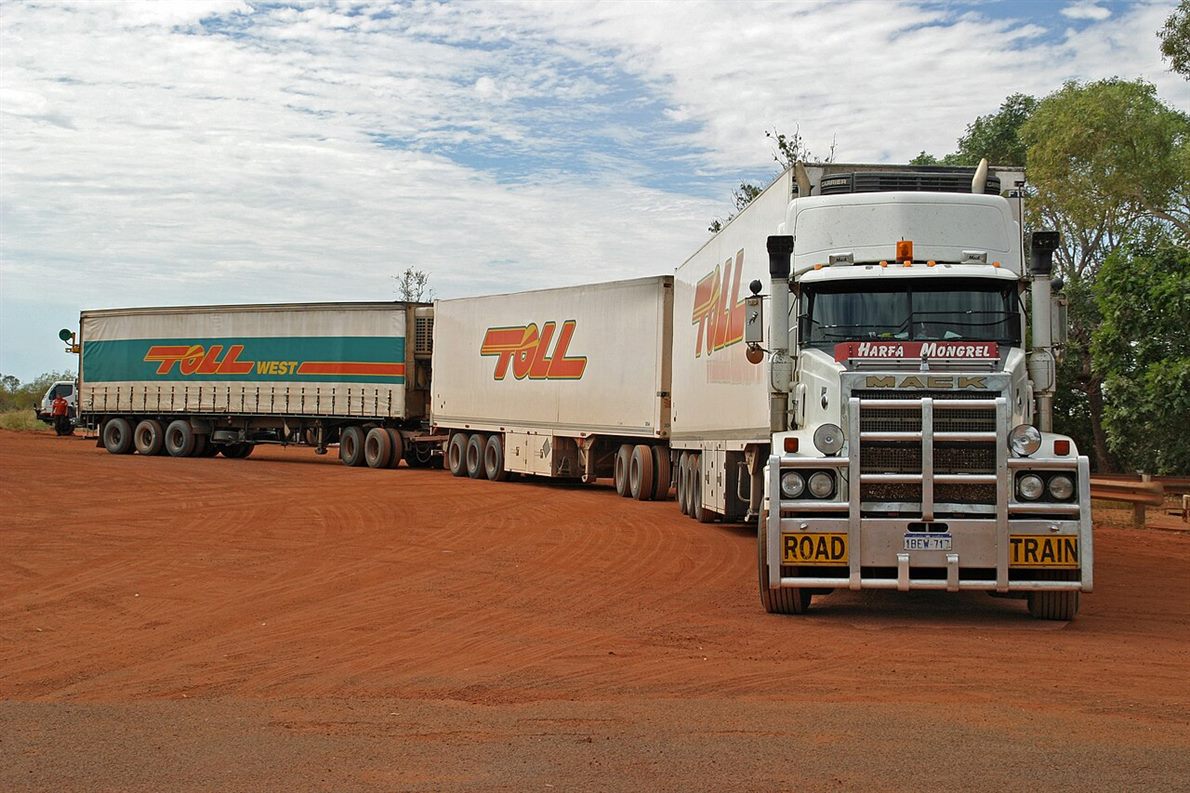
A surround view problem is set by its joints. A multi-trailer rig has them in series. A prime mover with one semi-trailer turns about a single kingpin, the case the last page took apart. Couple a second trailer behind the first and a second joint appears. A third trailer adds a third joint. Each one is the same problem the single articulation joint posed, a body rotating about a pivot no camera sits on, repeated down the length of the rig. These rigs run from a B-double’s two trailers at around twenty-six meters to an outback road train past fifty, three trailers and a pair of dollies in a line.
How the trailers couple decides how many pivots there are and how steady they sit. A B-double carries its second trailer on a fifth wheel bolted to the rigid frame of the first, one clean pivot per joint, the steadier arrangement. A drawbar or dog combination couples through a converter dolly, a short wheeled frame with its own fifth wheel, towed on a drawbar. That adds two pivots close together, the drawbar hitch and the dolly’s turntable, both free to swing and neither under a cab camera. The A-coupled joint is the looser one, the dolly free to yaw about its hitch on its own. Each free hitch the A-coupling adds is one more degree of freedom the rig has to control. The looser the chain, the more the tail wanders behind the cab.
The joints do not move together. As a road train works through a bend, the front trailer takes the corner first, the rear ones still tracking straight. The bend then passes down the chain. At any instant the segments sit at different angles to one another, the front already swung, the middle part way, the tail barely turned. There is no single articulation angle for the rig, only one per joint, each on its own clock. A camera on the second trailer and a camera on the third point along axes that no longer line up. Even those two panels would not stitch to each other, far less to the cab.
This is why the single-joint fix does not carry over on its own. Re-warping one panel about one pivot works when there is one pivot. With three joints at three angles, there are three corrections to make and three segments competing for the screen at once. The math does not break. The picture does.
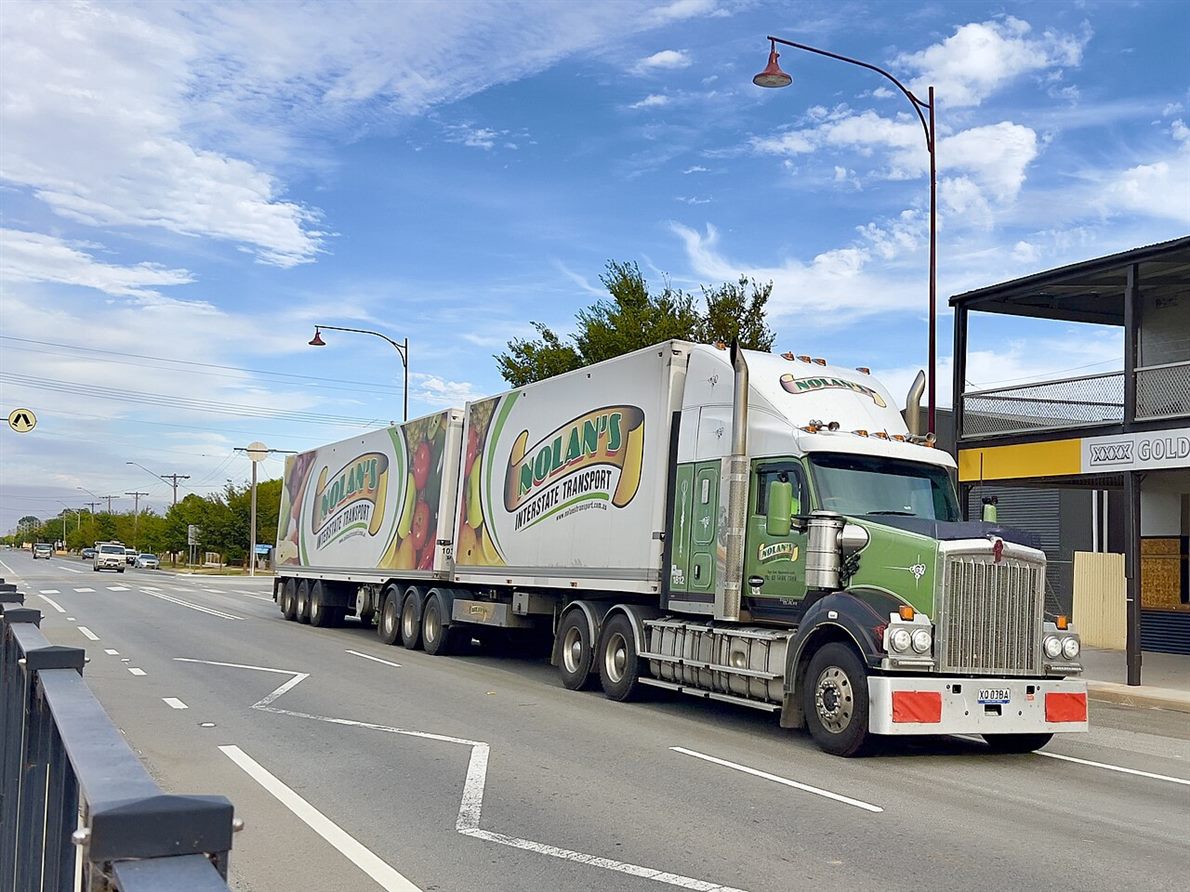
The tidy answer would be one big bowl, the whole combination and its surroundings flattened to a single overhead. Three things break it. The first is the independence of the joints. To keep one bowl true, a system would have to re-warp every segment about its own pivot, with every joint angle measured live and every pivot calibrated, all in the same frame. A semi needs one angle and one pivot. A road train needs three of each, three sensors or estimates that all stay current, three calibrations that all stay right. A single missed angle tears its segment out of the whole picture. A wrong angle on a forward joint throws every segment behind it, each one hanging off that joint and inheriting its mistake.
The second is size. A fifty-meter combination drawn to a scale where a curb or a person reads clearly would be a picture meters wide. Shrunk to fit a dash display, the whole rig becomes a thin strip. The detail that matters, a cyclist beside the third trailer, a bollard at the inside of the turn, falls to a few pixels. A bowl that holds the entire combination holds no part of it in useful detail. Holding every segment re-warped and blended at once multiplies the compute the latency page already rationed, three times the work for a picture that helps less than one good segment would. A useful overhead can only ever show a part.
The third is the cameras themselves. Stitching needs overlap, two cameras seeing the same patch of ground from different sides. The cab cameras see the ground around the cab. The third trailer’s cameras see the ground around the third trailer, fifty meters back. Between them lies a long stretch of vehicle no camera covers, with no shared ground to stitch through. The segments are separate islands of vision strung along the rig. A single bowl would have to draw vehicle it cannot see, the long unviewed stretch between the islands filled by guesswork or left blank.
The design gives up the single bowl. A multi-trailer system carries a set of views, one or two per segment. It shows the driver the one that fits the moment. The picture on the screen stays true and detailed because it is only ever of one part of the rig. The work moves from stitching a whole to choosing a part.
With one bowl off the table, the system’s real work is a decision made many times a second, which segment of the rig to put on the screen right now. The inputs are the signals the rest of the vehicle already produces. The gear is the strongest. Reverse selects the rear, the coupling and the back of the last trailer, the view a driver backing a long combination cannot get from any mirror. Road speed sorts the rest. At a crawl, in a yard or a loading bay, the close segment views matter. At highway speed the overhead gives little. The screen can rest or show a lane-side strip. The steering and articulation sensors say which joint is working. The segment swinging through that joint is the one to bring up, because a trailer cutting across its inner radius is where a person gets caught. Pulling away from a stop calls for the nearside and the front, the ground a moving cab is about to cross. A tight turn calls for the segment that off-tracks hardest, usually the rearmost, the tail that swings widest and reaches furthest inside the corner. The box folds these signals into one choice through a small priority logic, a state machine that ranks reverse over turn over cruise and settles on a single segment each frame. The danger lives in that logic, because a wrong choice hides a hazard as completely as a torn seam does. A switch to the front as the driver pulls away can drop a cyclist beside the rear trailer, there from the turn just finished, off the screen at the moment they are closest. A view that flips twice in a second loses the driver the thread of what they are looking at, the picture changing faster than it can be read. A switching system has to be calmer than the events it watches. It holds a view through brief noise, smoothing the flicker of the articulation signal with a hysteresis that keeps the picture from strobing between segments. It changes on clear, predictable triggers a driver learns, the gear above all. The view that appears is then the one the hands were already reaching for. It labels the segment on screen, a small marker of which part of the rig this is, because an unlabeled overhead of the third trailer looks much like one of the first. The arbitration decides whether the driver is shown the danger or shown away from it. It carries the weight a single stitched bowl carried on a rigid truck.
The segment that matters moves along the rig as the maneuver runs. The system has to follow it. The rule behind every case is the same, to show the part of the combination closest to doing harm right now. Where that part sits changes from one moment to the next. Holding one segment for a whole maneuver leaves the driver watching the wrong part for the rest of the move.
A turn is the hardest case. As the cab comes round, the trailers off-track, each cutting inside the path of the one ahead. Early in the turn the cab’s own tail swings out too, the tractor’s back end stepping wide as the nose tucks in, a hazard before the trailers have even answered. The rearmost trailer cuts the tightest line of all, swinging furthest inside the corner, the place a cyclist waiting at the inside is caught. The effect grows down the chain. Quick steering inputs reach the tail amplified, the back of a long combination swinging wider than the cab ever did, a behavior the trade calls rearward amplification. The view to show through a turn is the inner side of the rearmost segment. It has to stay there as the bend works back along the rig, the hazard riding the chain from front to tail.
Pulling away from a stop is a different need. The trailers behind are still straight, settled where they were parked, the risk concentrated at the front and nearside of the cab as it begins to move and swing. The view here is the cab’s own surroundings, the ground it is about to roll over, a pedestrian stepping off a curb into the path of a truck just starting to move. The long body behind matters less in this instant, because it has not begun to move.
A lane change on the highway calls up the same rearward amplification in a faster, flatter form, the tail stepping into the next lane more than the cab did, the segment to watch the road-side of the last trailer. Backing to a dock turns the need around entirely, the rearmost coupling and the tail of the last trailer becoming the whole game. In every case the test is the same, the part of the rig about to touch something is the part that belongs on the screen.
Reversing turns the whole problem inside out. Going forward, a combination follows the cab and trails into line on its own. Going backward, push the cab back and the first trailer folds to one side. The driver corrects by steering the cab the other way to bring it straight. Every joint behind the first inverts the logic again.
One trailer backs in a mirror of the wheel. Two is another order of difficulty. The second trailer answers the first. The first answers the cab. The driver is steering a chain three links long by its front end, each link reacting late and backward. The A-coupling makes it worse, the dolly free to swing about its hitch with nothing to limit it, folding fast once it starts. A dog trailer folds at two points at once, the drawbar hitch and the dolly turntable, each going its own way. A small backward push can buckle the joint in two places before the driver reads it. This is why a road train is rarely reversed whole. Crews uncouple and back the trailers one at a time.
The rig does not straighten itself in reverse. Forward motion pulls the trailers into line and forgives a wandering hand. In reverse that pull is gone. A small angle at a joint grows on its own into a fold, the combination diverging toward a jackknife unless the driver catches it early. The window to correct is short, shorter with every trailer added.
The view that helps in reverse is the rearmost coupling and the tail of the last trailer, the joint the driver is trying to hold straight and the ground it is backing onto. A driver reversing a dog trailer watches for the fold starting at the dolly, the first sign the chain is going over, with enough warning to pull forward and straighten before the angle passes the point of return. Backing a long rig, the mirrors show the side of the lead trailer and nothing past it, the rear hidden behind the combination’s own body. In reverse the camera is the only view of where the tail is going. The camera shows the fold while it is still small.
No screen makes backing a road train easy. The view does one thing well: it shows the fold developing in time to undo it. That early warning is the whole value of a camera on a reversing combination.
Every segment that needs a view needs its own cameras. The cab cannot see the second trailer, far less the third. Each body carries its own set. Their feeds have to reach the cab display at the front. On a road train that means video traveling the length of the rig, across every coupling, through a connector that mates and breaks every time a trailer is hooked or dropped. The link has to survive the coupling, carry the picture without lag and come up cleanly when a fresh trailer joins. The standard trailer connectors were built for brakes and lights, with no room for video. A camera trailer carries a dedicated video line, a scheme that pushes data over the existing wiring, or a wireless link to the cab. Wireless skips the connector problem and adds a radio hop’s delay and a link that can drop. Power is its own thread, each trailer’s cameras drawing from the trailer or the tractor, one more load the coupling has to carry.
The identification problem from a single trailer multiplies down the chain. A box has to know which trailers are coupled and in what order, because a trailer that runs second today may run third tomorrow, its cameras pointing at a different stretch of ground each time. A road train is rebuilt on many trips from whatever trailers the yard has, each with its own cameras, its own calibration, its own place in the order to be worked out fresh. The system has to map the chain before it can label a view. The distance tells on the picture too. Video from the third trailer crosses meters of cable and a coupling or two before it reaches the screen, the rear segment’s view arriving last of the set, slowest exactly when a reversing driver leans on it.
A multi-trailer view is only as complete as its trailers are equipped. A trailer coupled in with no cameras goes dark, a length of the rig the cab has no eyes on and no way to light from the front. The system can show the segments it has and flag the one it does not, the same honesty the single-joint fallback called for. What it cannot do is see a trailer that was never fitted to be seen.
Automatic switching handles the common cases, the gear and the steering telling the box what the driver is doing. The driver knows things the box does not. A reversing plan, a hazard out of the sensors’ reach, a reason to hold one segment the logic would switch away from. A multi-trailer system has to let the driver take the view, a manual override sitting on top of the automatic choice. Reverse is the case the override is built for. The automatic choice points at the rear, the right default for backing onto a dock. A driver holding the fold at the first coupling may want that joint on the screen, a call only the person doing the backing can make.
The control has to sit where a busy hand reaches it without a glance, a button on the wheel or the stalk ahead of a menu buried in a touchscreen. Once the driver picks a segment, the view holds there and does not snap back to automatic in the middle of a maneuver. A clear, quick path returns to auto when the move is done. There is a gentler move than switching. A system can leave the current view in place and raise a marker that another segment has something in it, a prompt the driver can act on while the current view stays in place. Two segments can share the screen when both matter at once, each smaller, the resolution traded for the second view.
The deeper requirement is that the driver can predict the automatic behavior. A switching logic a driver learns becomes a tool the hand reaches for ahead of the eye. One that switches on its own reasoning, changing views the driver did not expect, loses their trust. A screen the driver has stopped believing is worse than no screen, because it still takes the glance. Predictable beats clever. The view that comes up when the gear goes to reverse should be the same one every time.
Four questions put a multi-trailer view on an order sheet. The first is whether it switches segments automatically, on what triggers, the gear and the articulation above all. The second is whether the driver can override and hold a segment through a control reached without a glance. The third is the reverse behavior, what comes up when the gear goes back, with the coupling the driver is steering among the choices. The fourth is the unequipped trailer, whether the system maps the chain and flags a segment it has no cameras for.
The proof is on the move. A combination the system was never calibrated on, a trailer it has not seen, worked through a tight turn and then backed up: the view should follow the hazard down the rig and name which segment it shows. A system built for one fixed trailer handles none of this. With a road train, the surround view is a set of views the box has to choose between.
Three things stop it. The joints move independently. Keeping one bowl true would need every joint angle measured live and every pivot calibrated at once, three or more of each on a road train, a single missed angle tearing the whole picture. Size defeats it next: a fifty-meter combination shrunk to a dash screen leaves a cyclist beside the third trailer a few pixels wide. The cameras cannot see across the gaps either, the cab’s set and the tail’s set looking at ground fifty meters apart with nothing shared to stitch through. The combination reads as separate islands of vision with no continuous field between them.
It reads the signals the vehicle already produces and picks one segment each moment. The gear is the strongest cue: reverse brings up the rear. Road speed sorts the rest, close segment views at a crawl in a yard, little at highway speed. The steering and articulation sensors say which joint is bending. The segment swinging through it is the one to show, because that is where a person gets caught. A small priority logic folds these into one choice, ranking reverse over turning over cruising. The risk is a wrong choice that hides a hazard as completely as a torn seam. The logic switches on clear triggers and holds steady through noise.
The rearmost one. As the cab comes round, each trailer off-tracks, cutting inside the path of the one ahead. The last trailer cuts the tightest line of all, swinging furthest inside the corner where a cyclist waits. Quick steering reaches the tail amplified, the back of a long rig swinging wider than the cab ever did, an effect called rearward amplification. The view to hold through a turn is the inner side of the rearmost segment. It travels back along the rig as the bend passes down the chain, the hazard moving from the cab’s own tail-swing at the start to the last trailer as the corner completes.
The rearmost coupling and the tail of the last trailer. Reverse inverts the steering: push back and the first trailer folds to one side. The driver corrects by steering the cab the other way, each joint behind inverting the logic again. The rig does not pull itself straight in reverse. A small angle grows on its own toward a jackknife unless the driver catches it early. The camera’s job is to show the fold as it begins, at the dolly or the coupling, with enough warning to pull forward and straighten. No screen makes backing a long combination easy. Early sight of the fold is the whole of what it offers.
Each trailer carries its own cameras, with calibration that can travel on the trailer’s own electronics and load when the units couple. A box has to know which trailers are coupled and in what order, because a trailer that runs second one trip may run third the next, its cameras covering different ground. On an unknown trailer the system maps the chain, loads or re-derives the calibration and shows the segments it can. A trailer with no cameras goes dark, a length of the rig the cab cannot light from the front. The honest move is to flag that blind segment and show only what the cameras can see.
Both. Automatic switching handles the common cases from the gear and the steering. A manual override lets the driver take a segment the logic would switch away from, a reversing plan or a hazard the sensors miss. The control has to sit where a busy hand reaches it without a glance, a wheel or stalk button ahead of a buried menu. Once chosen, the view holds and does not snap back mid-maneuver. The deeper need is that the automatic behavior stays predictable, because a driver who cannot anticipate the view stops trusting the screen. An untrusted screen still takes the glance and gives nothing back for it.