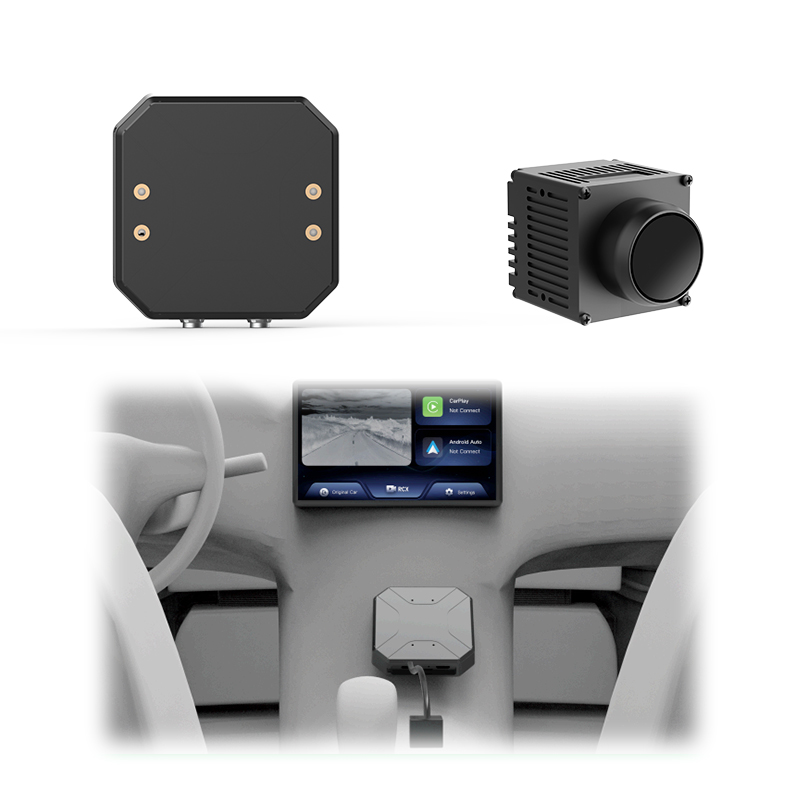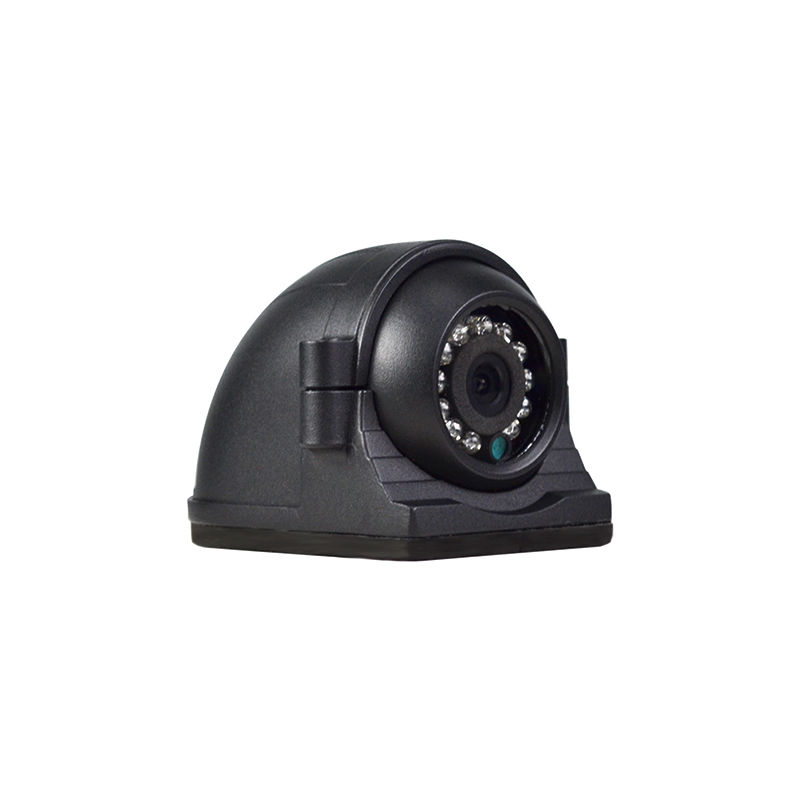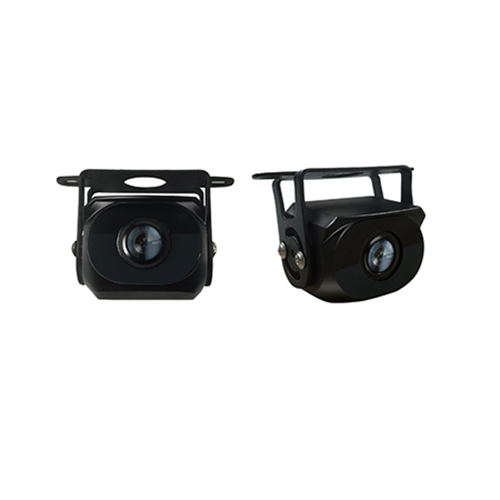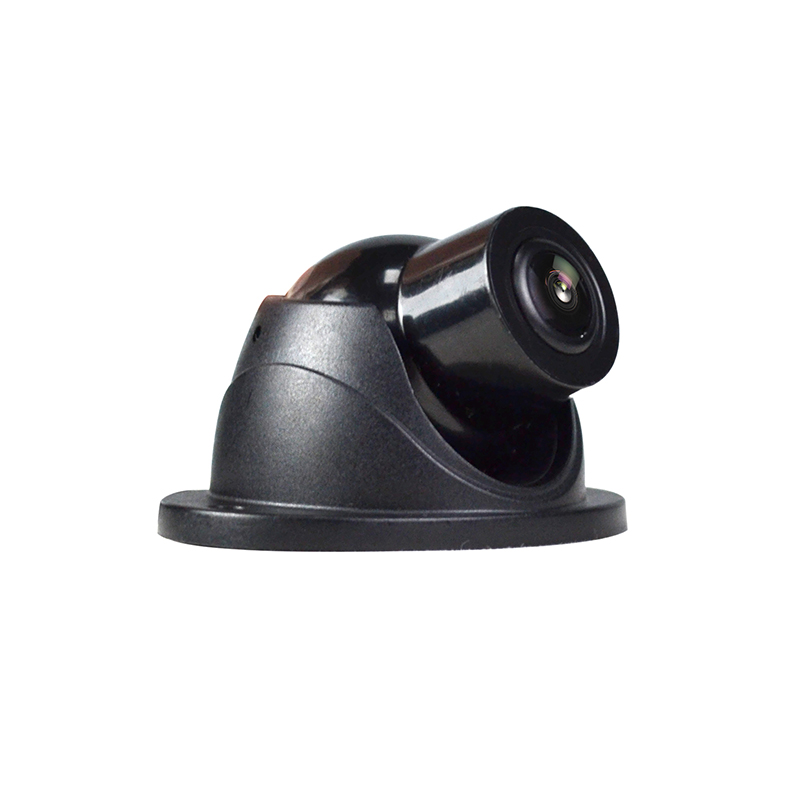




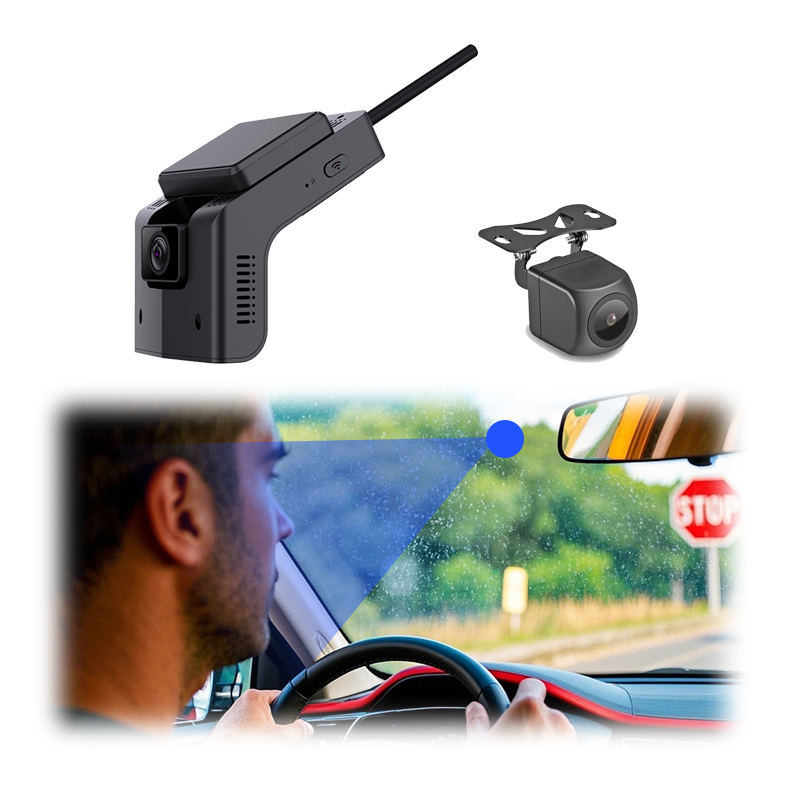
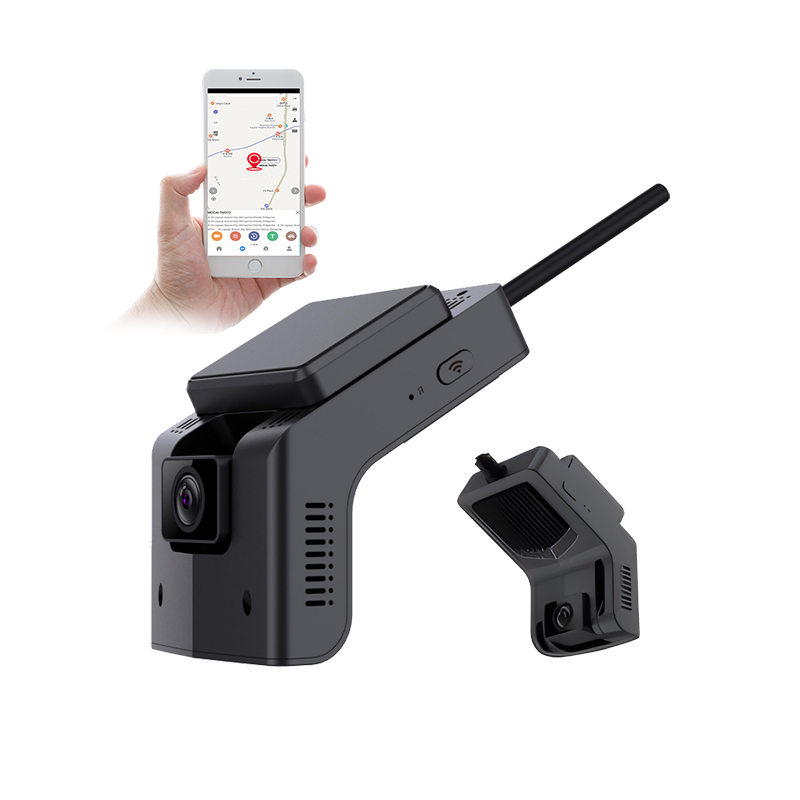
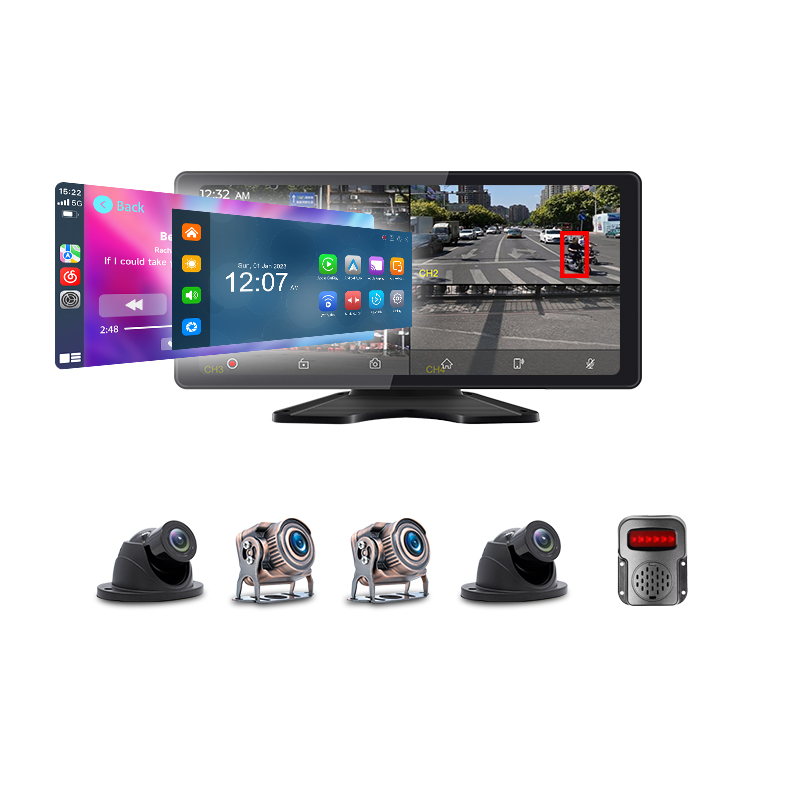

Rain and snow attack a surround view in three places at once: on the glass in front of each lens, in the air the light crosses, on the ground the picture is built from. The lens surface is the hardest of the three, because a camera cannot see its own dirt and a driver never looks at it. A bird eye view can fail in foul weather with every part of it still reporting healthy. The vehicles that carry these systems, the tippers and coaches and depot trucks, work through that weather as a matter of trade. The foul-weather case is their working case, the exception only on a brochure.
The earlier pages set the table. The night page handed rain its overlap, the wet dark where low light and water stack. The seam page warned that a fouled lens feeds the color loop poison, dragging a clean camera toward a dirty one. The calibration pages lean on ground features a snowfall erases. Each of those threads runs into the weather, the chapter the series kept deferring.
One distinction runs through all of it. The geometry the mathematics page froze does not care about weather. A wet composite keeps its straight lines and true distances even as it grows unreadable. What the weather destroys is the light reaching the sensor and the ground the projection trusts. The failures are optical and they are real. None of them is the geometry going wrong, the reason the cures are lens hardware and honest limits, with recalibration beside the point. A clean picture in the wet is bought at the glass and on the dimension sheet. Re-solving the math cannot win it back.
The clean lens is the whole game. Everything else is what to do once it is wet.
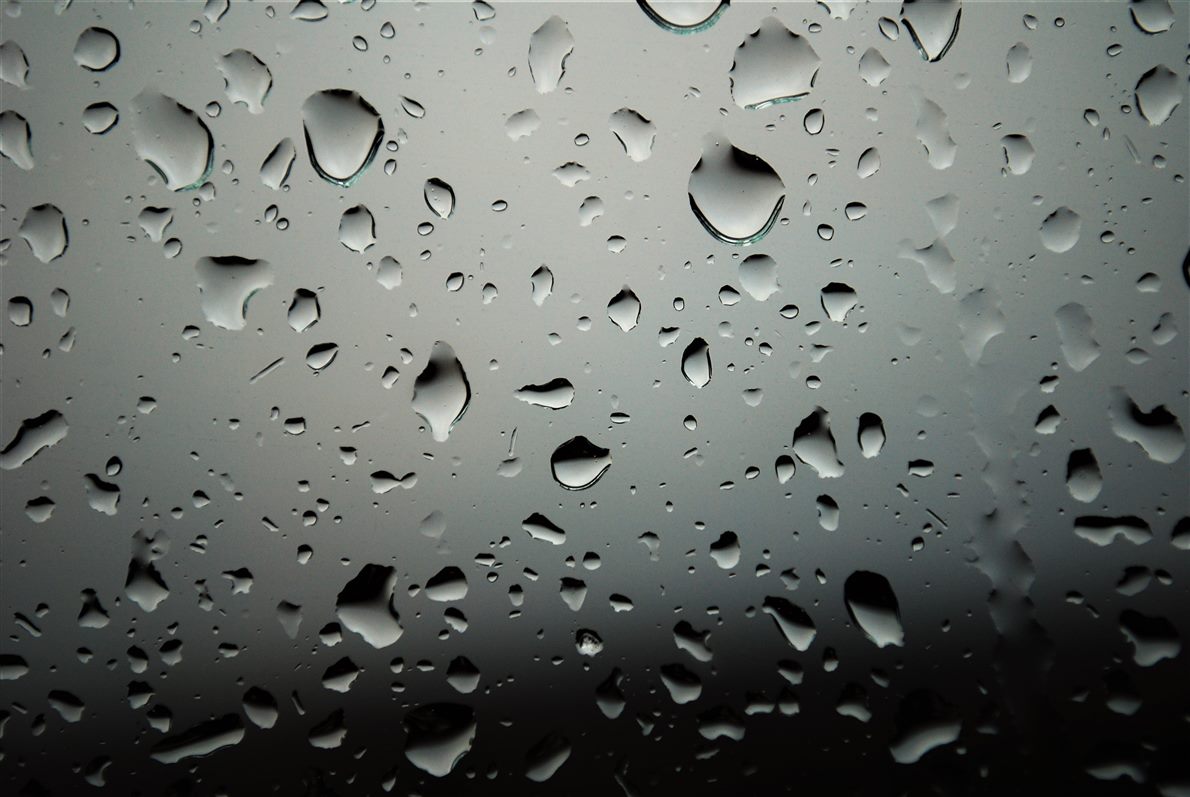
Weather hits the surround view at three depths. The cures differ by depth. The first is the lens surface, the glass in front of each camera. A drop of water, a film of mud, a cap of snow sits a few millimeters from the sensor and does what any object that close does: it fills part of the frame completely. The lens cannot focus on its own surface. The contamination is a patch of the view gone outright, replaced by whatever the drop or the mud passes through, beyond any sharpening the chip can apply.
The second layer is the air the light crosses. Rain falls as a curtain between the ground and the lens, snow as a thicker one, fog as a wall. Each scatters the light on its way in. The scattering steals contrast: distant detail fades into a milky haze, the far apron grays out before the near one, headlights bloom into halos. This layer degrades gently with distance, worst at the rim the composite already drew softest, gentlest on the close ground a parking maneuver leans on.
The third layer is the ground itself, the surface the projection trusts as a matte plane. Wet tarmac stops being matte. It turns into a mirror that throws lamps and sky back at the cameras. A puddle reads as a bright hole in the ground. A wet lane returns the headlights as a false glare. Snow buries the painted lines and the surface texture under a blank white sheet, taking away the same marks the ground projection and the calibration checks read. The plane is still geometrically true, flat where the math expects flat, its surface no longer telling the truth about what sits on it.
The three layers fail in different currencies, each answered with a different tool. The lens surface wants physical removal, a coating or a heater or a jet. The air wants honest limits, a system that admits the far ring has gone soft and says so on the screen. The ground wants the geometry’s own defenses, the flat-plane assumption holding even as the surface lies about its brightness. A drop of rain meets the glass first, the air next, the ground last.
The four cameras do not get dirty together. Each faces a different part of the vehicle’s weather, collecting its own contamination at its own rate. The rear camera sits in the spray thrown up by the wheels, the dirtiest air the vehicle makes, filming over with road grime within a wet mile. On an unsealed depot yard or a gravel site the grime arrives faster still, the fouling rate set by the surface a vehicle works each day. The front meets clean rain and the odd splash. The mirror-arm cameras catch side spray and the wash off the body. By the end of a wet shift the rear lens can be opaque, the front merely beaded, the reason rear and side cameras take the first call on whatever cleaning the fit provides.
The blind spot this creates is the dangerous one, because nobody is looking at the lens. A driver watches the screen. The lens itself goes unwatched. The screen of a fouled rear camera does not announce its blindness: it shows a confident dark smear that reads as shadow, or a frozen frame that reads as still ground. A reversing driver relies on exactly the quadrant likeliest to be caked. The fouling hides behind the display meant to reveal the surroundings.
Contamination sorts by kind. The kinds clear differently. Water beads and runs, clearing itself in seconds once the rain eases or a coating sheds it. Mud is the hard case: it dries opaque, sticks and stays until something wipes it. A single splash through a puddle can blind a camera for the rest of a job. Snow packs and caps, freezing locks it on, the case a coating alone never beats. The cure has to match the contaminant, the reason a weather fit carries more than one tool.
The composite degrades unevenly because the fouling is uneven. One blind quadrant sits beside three clear ones, the bird eye view healthy on three sides and lying on the fourth, a failure mode no single-camera system has. A surround system that cannot tell which of its four eyes has gone dark will average the dirty one into the picture and call the result a view. Knowing which lens is blind is the first thing a weather-ready system owes its driver, ahead of any attempt to clean it.
A single droplet takes the long paragraph because its damage is geometric, a small wrong lens stuck to the front of the right one. The lookup table the mathematics page froze has no idea it is there. The table was built on clean optics, every output pixel pointed at the raw camera position a straight ray from the ground would land on, the whole projection trusting that the light arrives undeviated. A droplet breaks that trust locally. Light passing through the bead refracts and bends off its straight path. The ground point that should have reached a given pixel arrives at a different one, a neighbor’s light landing in its place. The table reads the bent ray as straight and maps it to the ground cell a straight ray would have come from, placing a patch of wrong world onto the composite with full confidence. The result is a hard local warp, the kind no filter lifts: curbs kink, a line jumps sideways, a fixed feature swims as the droplet trembles, all inside one small region, the rest of the frame staying true. Put that droplet on a corner overlap and it lands on the one zone the series has flagged hardest, the seam, where two cameras already strain to agree and now one of them is lying about a patch of ground through a lens of water. The poison spreads past geometry into the color loop the seam page built, because that loop samples block averages from the overlap to match the cameras. A block sampled through a droplet feeds it a refracted, displaced reading. The harmonization drifts on the strength of a raindrop. None of this announces itself as contamination. The pixels look like confident scene, the warp like real motion. The system has no way to know a drop sits on the glass unless it is built to look for one. That is the case for dirty-lens detection: a layer that watches each camera for the statistical signature of a stuck droplet or a mud film. On finding one it down-weights or flags that region, leaving its fiction out of the bird eye view. The cure is to know the droplet is there and refuse to trust what it shows, since sharpening it away cannot be done. A coating that keeps the bead from forming beats the cleverest detector that finds it after it has landed.
The night page handed on its hardest overlap, the wet dark, where low light and water stack their costs on the same frame. Each problem feeds the other. The gain a night scene forces up, the photon-budget lever the night page set out, amplifies the grain and the noise around every droplet edge together. A bead that was a minor warp by day becomes a sparkling smear after dark. The water and the darkness multiply each other’s cost.
The wet ground turns the night’s few lights into weapons. A dry night gives the cameras a handful of bright sources in a sea of dark, the divergence the night page described. Wet tarmac mirrors each of those sources straight back. A single street lamp becomes a long glaring streak across the composite, a passing headlight blooming into a wash that blinds a whole quadrant. The high gain that found the dark verge now has a mirror-bright puddle in the same frame, the dynamic range stretched past breaking, the split scene the high-dynamic-range trick of the night page exists to hold and now meets at its limit.
Infrared lighting, the night page’s quiet tool, turns against itself in rain. An infrared lamp throws invisible light forward to reveal the dark ground. Falling rain scatters that light straight back into the lens as a field of bright specks, the backscatter that fogs a night-vision view in a downpour. The illuminator built to help the dark now lights up the weather between the lens and the ground, the near air glowing, the surface it meant to show left dim. Snow does the same in daylight, every flake a moving white speck the camera cannot tell from the ground.
The wet dark is the surround view’s worst single condition. It is a common one: the dawn depot, the night delivery, the rain-slicked yard at the end of a winter shift. A system specified only for a dry showroom meets none of this until the first wet night, when the gain, the glare and the backscatter arrive together. The defenses that matter here are lens-clearing and the plain honesty of a screen that dims the quadrant it cannot trust, ahead of any brightened guess dressed as a view.
The clearing tools stack from passive to active, cheapest first. Lens placement is the free one: a camera recessed under a lip, tucked out of the direct spray line, set where the body shelters it, collects far less than one hung in the wheel wash. A few centimeters of position, decided at the design stage, save more contamination than any later gadget removes. The placement costs nothing to run and is the first thing a buyer should ask about, because it is the only defense that works while the vehicle is parked and unpowered.
Coatings come next, in two opposite philosophies. A hydrophobic coating raises the contact angle past ninety degrees so water beads up and the airflow or gravity sheds the beads, the surface staying clear in rain. A hydrophilic coating spreads water into a uniform thin film with no beads at all. A flat film refracts evenly. A bead refracts wildly. The image stays undistorted under the film even wet. Both are real production choices. Both wear with time and need renewing. Neither sheds mud, neither melts a snow cap.
The active tools handle what coatings cannot. A heater behind the lens de-ices the glass, clears fog and melts the snow cap that no coating beats, drawing power whenever the temperature drops, a real line on an electric vehicle’s energy budget. An air jet or a washer nozzle blasts the mud a coating only watches dry, the active answer to the rear camera’s worst case, needing plumbing, fluid and a place on the body to mount it. Sealing closes the set: a lens rated to survive a high-pressure hot-water jet, the IP6K9K class the standards page covered, takes the depot wash that would flood an unsealed camera.
Software is the last line. When the placement, the coating and the jet have done what they can, dirty-lens detection watches for the contamination that got through and flags the region it fouls. A study of camera rain dynamics found droplet contamination cutting small-object detection by up to ninety percent, the measure of what a blocked lens costs and why catching it matters. Software cannot make a blind lens see. It can keep a blind lens from being trusted, the difference that counts on a safety display.
The toolkit reads as a checklist a buyer can run down. Where does each camera sit relative to the spray. What coating, which philosophy. Is there a heater for ice and snow, a jet for mud, a seal for the wash. Does the system detect a fouled lens and tell the driver. A fit that answers all four spends its money where the weather lands. A fit that answers none has a fair-weather toy on a foul-weather truck.
Weather repeats the night’s lesson with new weapons: the geometry survives, the photometry and the feature reading do not. A wet composite holds its straight lines and true distances, the frozen lookup table indifferent to how much light or water the scene carries. What fails is the picture poured into that true frame. The failures gather at the seams and on the ground the stitch trusts, in three weather-specific ways the dry system never met.
Wet ground breaks the flat-plane trust by lying about brightness. The projection assumes the ground is a matte surface that scatters light evenly. A puddle is a mirror, throwing a lamp or a patch of sky back as a bright shape lying flat on the grid. The composite renders that reflection as if it were paint on the road, a false bright feature exactly where the surface went wet, the reason a driver learns to read a wet night composite’s bright patches with suspicion. Across a seam the trouble doubles: one camera catches the reflection at its angle, the neighbor at another. The blend tries to reconcile two mirror images of the same lamp that never agreed in the first place.
Snow attacks the feature reading the calibration leans on. The online-calibration methods the regimes page weighed track lane lines and ground texture to check the poses in service. A snowfall erases both under a blank sheet, starving them as surely as the dark did. The self-checking layer goes quiet under snow, the frozen calibration carrying the system through on geometry that needs no texture to stay true. The flat-plane assumption survives the snow too, the buried ground still flat, the marks that proved it gone, the plane itself unmoved.
The per-camera fouling of the lenses poisons the color loop the seam page built. A camera filmed with grime reads dim and flat, its block statistics dragging the shared ring of gains toward a correction the clean cameras never needed. A little mud on one lens shifts the color of the whole composite. The weather degrades the stitch through the same two doors the night used, the photometric loop and the feature detector, with rain and snow supplying their own keys. The geometry, here as there, is the part that holds, the one reassurance a driver can keep when the picture turns foul.
A weather system has to be accepted in weather, because a dry bay proves only the dry case. The test wets the vehicle the way the route will: a hose or a spray rig run over the cameras during the standard acceptance walk, a walker lapping the body while the screen is read at every corner under live water. The question is whether the coating sheds the rain fast enough to keep the walker visible through each seam, or whether the beads pile up and swallow them. The seam to watch hardest is the rear-to-side pairing, the dirtiest lens meeting its neighbor over the least clean data a blend has to work with. A pass means the walker holds in the picture through every seam for the length of the lap, a single frame where they drop out failing the wet case.
The mud test proves the part a hose cannot. A handful of mud thrown at the rear lens, the dirtiest camera’s worst case, settles the two checks that matter: whether the jet or the wiper clears it and whether the dirty-lens detection raises a flag while it is still caked. A system that clears the mud passes the first. A system that flags the blind camera, keeping its smear out of the picture, passes the second, the check that stops a fouled quadrant from reading as clear ground.
The wash and the cold close the list. A jet-wash to the lens’s IP rating proves the seal survives the depot’s high-pressure hose, the test the standards page set out for IP6K9K. A freeze or a snow lap, on routes that see them, proves the heater clears the cap and the system says so when it cannot. The certificate records the conditions of the pass, the rainfall, the mud, the wash pressure, the temperature, naming the weather the screen was proven against, the conditions a dry bay cannot show.
Five lines carry the weather into a purchase document. The placement line states where each camera sits relative to the spray, the free defense decided at design time. The coating line names the type and philosophy, hydrophobic or hydrophilic, with its renewal interval. The clearing line states the active tools, heater for ice and snow, jet or wiper for mud, with the power and plumbing they need. The sealing line states the IP rating against the depot wash. The detection line states whether the system flags a fouled lens and how it tells the driver.
A surround view bought for the showroom fails on the first wet night, the first muddy site, the first snowfall, in the exact quarter the driver needed. A surround view bought for the weather shows a clear eye on the clean quadrants and raises an honest flag on the blind ones. That honest flag, more than any clever picture, is what the weather fit is for.
They attack at three depths at once. On the lens surface a droplet, a mud film or a snow cap sits millimeters from the sensor and blanks part of the frame, a patch no focus recovers. In the air the rain or snow scatters the light crossing it, draining contrast and graying the far ground first. On the ground itself wet tarmac turns mirror, throwing lights back as false bright shapes. Snow buries the markings the projection reads. The geometry stays true through all of it. The light reaching the sensor and the surface it trusts are what fall apart.
It sits in the spray the wheels throw up, the dirtiest air the vehicle makes, filming over with road grime within a wet mile. The front meets only clean rain. The danger is that nobody watches the lens. A driver reads the screen. A fouled rear camera shows a confident dark smear that reads as shadow, in the exact quadrant a reversing driver relies on. Rear and side cameras get cleaning priority for this reason. A weather-ready system flags the blind one, keeping its smear out of the picture.
It helps with water and does little else. A hydrophobic coating beads the rain and lets airflow or gravity shed it, keeping the glass clear in a shower. A hydrophilic coating spreads water into a uniform film that refracts evenly with no distorting beads. Both wear and need renewing. Neither sheds mud or melts a snow cap, the jobs a washer jet and a heater do. The coating is one tool in a kit that needs good lens placement too, with active clearing for the hard cases and a seal against the wash.
It acts as a small wrong lens stuck to the right one. Light through the bead bends off its straight path. The ground point that should reach a pixel lands elsewhere. The lookup table, built for clean optics, maps the bent ray as if it were straight. The result is a hard local warp: curbs kink and lines jump inside that patch, the rest of the frame staying true. On a seam it corrupts the overlap two cameras stitch through. The honest answer is dirty-lens detection that flags the region as unreliable.
Low light and water compound each other. The high gain a night scene forces up amplifies the noise around every droplet, turning a minor bead into a sparkling smear. Wet tarmac mirrors the few night lights straight back. A street lamp becomes a glaring streak and a headlight blooms across a quadrant. Infrared lighting backfires, the falling rain scattering it into the lens as bright specks. The dawn depot and the night delivery meet all of this together. The wet dark is the condition a weather-ready fit is judged on.
In weather. A dry bay hides the only faults that matter. Run a hose or spray rig over the cameras during the acceptance walk and read whether a walker stays visible through each seam under live water. Throw mud at the rear lens and check both that the jet clears it and that the detector flags it as caked. Jet-wash to the lens IP rating to prove the seal. On cold routes confirm the heater clears a snow cap. The certificate records the rainfall, mud, wash pressure and temperature the pass covered.