







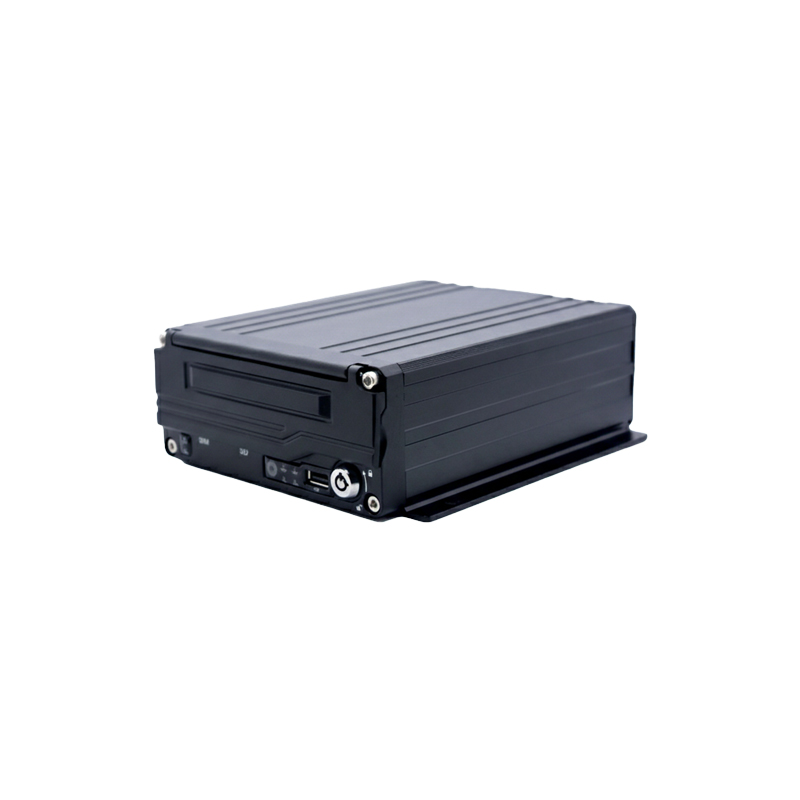
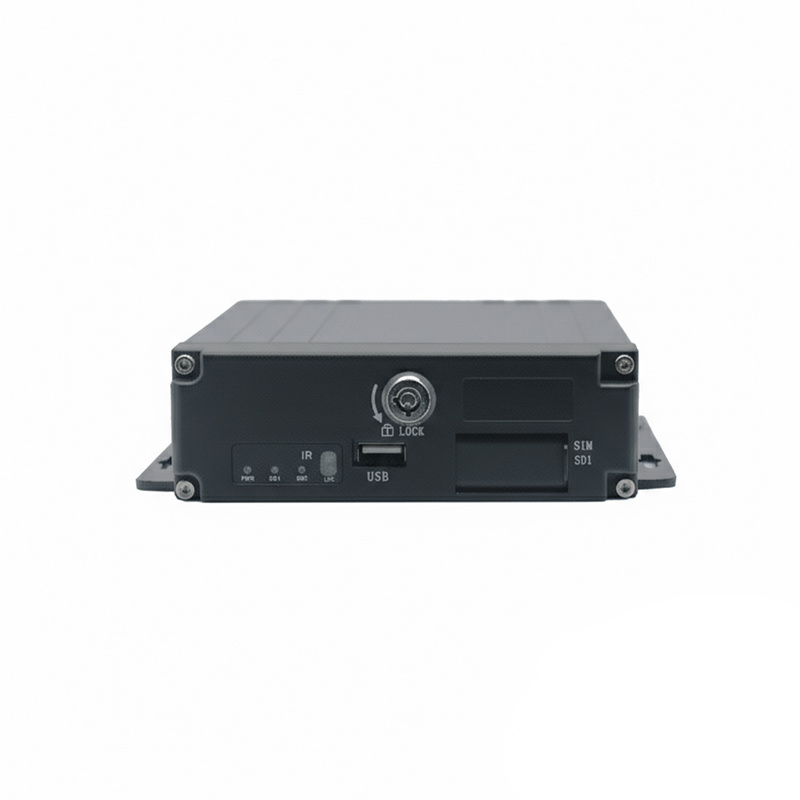
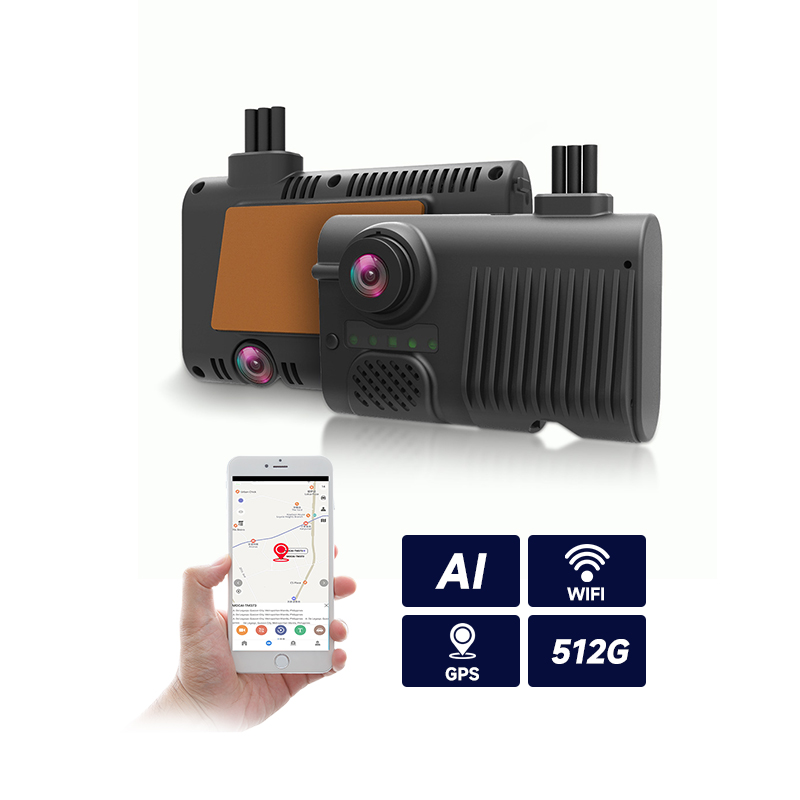

A chip gets trusted in a vehicle by surviving the vehicle’s whole life on a bench first. AEC-Q100 is the name of that test battery. It is a battery of stress tests that proves an integrated circuit survives the heat, the vibration and the years a vehicle demands. Whether a device fitted to a commercial vehicle lasts is set by the chips inside it meeting this bar.
Grade choice happens at chip purchase, years before any roadside failure.
AEC-Q100 is the stress-test qualification for an integrated circuit meant to work in a vehicle. It was written by the Automotive Electronics Council, a body the big American carmakers formed to set a common bar for the parts that go into a car. The qualification puts a chip through a defined battery of tests for heat, for humidity, for the wear of a long life, for the integrity of its package and its silicon. A chip that passes the battery for its grade carries the label automotive qualified.
The reason this matters to a vehicle monitoring system is direct. A video terminal, a positioning unit, an active-safety module: each is a box of chips bolted to a vehicle, living the vehicle’s life of heat and cold and vibration for years on end. A chip inside that was qualified only for a desk fails early in a cab, taking the device down with it. AEC-Q100 is the standard that separates a chip built to survive a vehicle from one that merely works on a bench, the bar a serious automotive device holds its silicon to.
What AEC-Q100 demands explains why it matters: the demands answer how hard a vehicle is on a chip, the temperature grades split the qualification by where the silicon sits, the seven test groups wear a chip out on the bench before the road can. All of it is decided quietly, before any device is sold, which is why a buyer rarely sees the qualification working.

A vehicle is one of the harshest places a chip can be asked to work. The temperature range alone is severe. A device near the engine sees heat that would cook a consumer part, then the same vehicle on a winter night drops far below freezing, so a chip has to work across a range no desktop device ever meets. The swing between the two, hot to cold and back, day after day, stresses the materials in the chip and its package until a weak one cracks.
Heat is only the start. A vehicle vibrates constantly, the chassis shaking the electronics over every mile of rough road, working at solder joints and bond wires until a poor one fails. The power is dirty, the supply sagging and spiking as the engine cranks and the load changes, hitting the chip with conditions a clean bench supply never produces. Moisture creeps in, dust settles, the years pile up, a vehicle expected to run for a decade or more, its electronics kept working the whole time. A chip that meets all of this has to be built and proven for it, which is exactly what AEC-Q100 sets out to do.
Each of these stresses attacks the chip a different way. The heat ages the silicon and drives its chemistry faster. The cold makes materials brittle and shrinks them against each other. The vibration fatigues the physical joints, the solder and the bond wires, until a weak one breaks. The dirty power hits the chip with voltage spikes a clean supply never delivers. A chip built only for the gentle life of a desk has defences against none of these, the reason a consumer part dropped into a vehicle fails in ways its maker never tested for.
The cost of getting this wrong is not abstract. A fleet that fits a device built on consumer chips can see it work fine through a mild spring, then fail in the first heatwave of summer, a whole batch of units dying within weeks of each other as the heat finds the weakness the qualification would have caught. The failures cluster because the cause is shared, the same under-qualified chip in every unit reaching its limit at the same temperature. This is the pattern AEC-Q100 exists to prevent, the fleet-wide failure that starts at a chip never proven for the heat.
AEC-Q100 is a failure-mechanism-based stress test qualification. The phrase describes the method exactly. It tests for the specific ways a chip can fail in a vehicle, subjecting samples to stresses that accelerate each failure mechanism until the qualification can say, with confidence, that the part will survive its intended life. The Automotive Electronics Council wrote it, the body the American carmakers set up to agree a common standard so a chip qualified once could be trusted by any of them, sparing each carmaker its own separate test run.
The qualification is a whole battery. No single test settles it. A chip is put through groups of tests, each group attacking a different family of failure. Only a part that survives all of them for its grade is qualified. This is the key thing a buyer grasps about AEC-Q100: the label has to be obtained by surviving a defined battery of stress. A maker cannot apply it by choice. The label automotive qualified is shorthand for having passed that battery. A chip that has not been through it has no claim to the label whatever its datasheet says.
The council’s origin explains the standard’s reach. Formed by the major carmakers to pool their qualification requirements, the AEC produced a standard any of them, with the suppliers below them, could rely on. A chip qualified to AEC-Q100 is accepted across the industry with no re-testing by each buyer, the shared bar saving the whole supply chain the cost of duplicated testing. This common acceptance is part of why the qualification carries the weight it does, a single recognised proof that a chip is fit for a vehicle.
AEC-Q100 sorts its qualification by temperature grade, four of them, numbered 0 to 3. The grade fixes the temperature range the chip is qualified across. The lower the number, the hotter and harsher the range. Grade 0 is the harshest, qualifying a chip across roughly minus 40 to plus 150 degrees Celsius, the range of the harshest under-hood locations near the engine. Grade 1 covers roughly minus 40 to 125, Grade 2 minus 40 to 105 and Grade 3 minus 40 to 85, each step easing the upper limit as the location moves away from the engine’s heat.
The grade matters because it has to match where the chip will sit. A chip qualified to Grade 3 is fine in a mild cabin location. It has no business near a heat source that a Grade 0 or Grade 1 part is built for. A buyer reading a chip’s grade is reading the temperature range it was proven across. A device meant for a hot location needs chips graded for that heat. The lower grades carry more qualification weight, the harsher range demanding the chip prove itself across a wider and hotter span than a higher-numbered grade ever faces.
Choosing the grade is a design decision with a cost attached. A Grade 0 part, proven to the hottest range, generally costs more than a Grade 3 part that need only survive a mild range. A designer matches the grade to the location, putting Grade 0 silicon where the heat demands it and a lower grade where the environment is kinder. A buyer rarely sees this choice directly. It shapes whether a device will survive the spot it is fitted to, the grade quietly deciding the device’s fate in a hot install.
The grades also shape what a chip costs and where it can go. A Grade 0 part is the hardest to make and qualify, so it commands the highest price, reserved for the places that need it. The bulk of vehicle electronics live in milder spots a Grade 1 part handles well. A designer who reaches for Grade 0 everywhere pays for headroom the location never uses. One who reaches too low fits a part that cooks in its install. The grade is a deliberate match of silicon to environment, sized to what the spot demands.
For a commercial vehicle device, the grade question turns on where the box sits. A unit mounted in the cab, in the cooled and sheltered space a driver occupies, faces a milder range than one mounted near the engine or outside the body. A maker who knows the install picks the grade to suit it. A buyer can ask what grade the key chips carry and judge it against where the device will live, a Grade 1 part in a cab being a sound match, a Grade 3 part near heat being a worry.
The qualification organises its tests into seven groups, labelled A through G. Each group attacks a different family of failure. Group A runs the accelerated environmental stresses, the heat and humidity tests that age the chip in conditions far harsher than daily life. Group B simulates the wear of a long lifetime, the slow mechanisms that degrade a chip over years compressed into the test. Group C checks the integrity of the package and its assembly, the physical soundness of how the chip is built and connected. Group D checks the reliability of the silicon itself, the die fabrication and its inherent soundness.
The remaining groups round out the battery. Group E verifies the chip’s electrical behaviour at the extremes of its temperature range, confirming it still works correctly when hot or cold, beyond merely surviving. Group F screens for defects, the burn-in and screening that catch a weak part before it ships. Group G covers cavity-package integrity for the package types that need it. Together the seven groups form a comprehensive attack on every way a chip might fail in a vehicle. A part has to come through all of the ones that apply to it before it is qualified.
The grouping is not arbitrary. Each group gathers the tests that attack one kind of weakness, so a failure in a group points to a specific flaw, with no vague unreliability left to guess at. A part failing the environmental group has a problem with heat or moisture. A part failing the package group has a problem with how it is built. This structure lets an engineer read a failure and know what went wrong, the groups turning a pass-or-fail into a diagnosis. A chip that comes through every applicable group has been cleared on every front the qualification examines.
The environmental group is where the qualification’s severity shows at its plainest. One core test, high-temperature operating life, runs the chip at a high junction temperature for a thousand hours, around 150 degrees Celsius, driving it hard and hot for the equivalent of years of operation compressed into weeks. Another, temperature cycling, swings the chip between the cold and hot extremes of its range, around minus 40 to plus 150 for a Grade 0 part, for a thousand cycles, working the materials through the expansion and contraction that opens cracks in a weak joint. The logic of high-temperature operating life is acceleration. A chip ages faster when it runs hot, the chemical processes that degrade silicon speeding up with every degree. By running the chip at 150 degrees for a thousand hours, the test compresses years of normal ageing into weeks, so a weakness that would surface after a decade in the field surfaces in the lab instead. The thousand hours is chosen to stand in for the chip’s intended life at its normal operating temperature, the acceleration factor worked out from the physics of how the failure mechanism speeds up with heat. A chip that runs the full thousand hours without drifting out of spec has shown it will last its design life in service. The same logic drives the cycling and the humidity, each test accelerating a real mechanism by a known factor so a manageable span of testing stands in for a decade of survival. A thousand hours at 150 degrees is calculated, through the physics of temperature-driven ageing, to represent the chip’s full service life at the temperature it will run. A thousand temperature cycles is the count judged to fatigue a joint as many years of real heating and cooling would. The ninety-six hours of HAST at 130 degrees and 85 percent humidity is set to force as much moisture stress as years in a humid climate. Each figure is an acceleration of reality by a known, defensible factor, the testing standing in for time. This is what lets a qualification completed in months promise a chip will survive a decade, the compression of years into weeks done with enough rigour that a regulator, a carmaker, a fleet all trust the result it finally produces at the end of the run, a chip proven to last its years. The acceleration factors come from published reliability physics, the same models the chip industry uses to project lifetime from stress data across every product line it runs.
Humidity gets its own test. Highly accelerated stress, known as HAST, holds the chip in heat and high humidity under pressure, around 130 degrees and 85 percent relative humidity, forcing moisture into the package to see whether it corrodes or fails. These figures are not arbitrary. Each is set to accelerate a real failure mechanism, the high temperature ageing the silicon, the cycling fatiguing the joints, the humidity attacking the package, so that weeks of testing stand in for the years a vehicle will run. A chip that comes through these tests has shown it can take the environment a vehicle subjects it to.
Beyond the environmental stresses, the qualification probes the slow ways a chip wears out over a long life. Electromigration is one, the gradual movement of metal atoms in the chip’s tiny conductors under the push of current, which over years can thin a track until it fails. The qualification accelerates it with high current and temperature, measuring how long the conductors last and projecting that out to the chip’s intended lifetime.
Another is time-dependent dielectric breakdown, the slow degradation of the thin insulating layers inside the chip under the steady stress of voltage, which can eventually break down and short. The qualification stresses these layers to measure their lifetime too. These wear mechanisms are invisible on a bench, where a chip works perfectly for the hours of a test, only to fail years later in a vehicle if the silicon was not built to last. By accelerating them, the qualification catches a chip that would work at first and fail in service, the worst kind of failure for a device a fleet depends on.
These slow mechanisms are why a chip cannot be qualified by a quick test. A part can pass every functional check on day one, every output correct, every spec met, then fail two years later once electromigration has thinned a conductor past its limit. Only by accelerating the wear can a qualification see that future failure in the present. This is the deepest reason consumer testing does not suffice for a vehicle: a consumer test asks whether the chip works now, never whether it will still work after the years a vehicle demands.
The qualification also checks that the chip is physically sound, both in how it is packaged and in the silicon itself. The package and assembly tests pull on the bond wires to measure their strength, shear the solder balls to test their attachment and check that the part can be soldered reliably onto a board. A chip with a weak bond or a poor solder joint may work at first, then fail under the vibration of a vehicle, so these tests confirm the physical build can take the shaking.
The silicon tests reach into the die itself. Gate oxide integrity checks the thin insulating layers that the transistors depend on, confirming they are sound and free of the weaknesses that let a chip fail early. Other tests probe the effects that degrade silicon over time, such as the damage done by high-energy carriers inside the transistors. These die-level checks confirm the chip was fabricated to a standard that will hold up, the foundation under everything the package protects, so that a sound package is not wasted on weak silicon.
The vibration test marks the clearest gap between a vehicle and a desk. A chip in a truck is shaken constantly, every mile of rough road working at the joints that hold it to the board. The package and assembly tests, the bond pull and the ball shear, measure whether those joints can take years of that shaking. A joint that fails in the test would have failed on the road. The lab catches it first.
Behind the tests sits a philosophy that sets automotive apart, the pursuit of zero defects. A consumer chip maker accepts a small rate of failures as the cost of volume, since a phone that fails is replaced under warranty. The automotive industry cannot accept that trade, because a chip that fails in a safety system can cost a life, far past the warranty claim a consumer failure costs. So automotive qualification chases failure rates measured in parts per million and beyond, a standard of near-perfection that the testing and screening are built to deliver.
This mindset runs through the whole qualification. The burn-in and screening of Group F exist to catch the weak parts that slip through, the early failures weeded out before they ship. The statistical demands of the qualification, the sample sizes and the pass criteria, are set to give confidence at the parts-per-million level, far past the looser consumer bar. A buyer who understands AEC-Q100 understands that it is a different mindset from consumer testing, one that treats a single field failure as a problem to be engineered out at the root.
The zero-defect standard reaches back into how the chip is made. A maker chasing parts-per-million failure rates controls its fabrication tightly, screens its output hard, traces every lot so a problem can be found and contained. The qualification is the visible part of a discipline that runs through the whole production, the testing confirming what the process was built to deliver. A buyer gets the benefit of that discipline in a chip far less likely to fail in the field than a consumer part ever offers.
A qualified chip is necessary. A reliable device needs more steps beyond it. The family reaches past integrated circuits too: AEC-Q101 qualifies discrete semiconductors, AEC-Q200 the passive components, so every part class on a board has its own automotive bar. AEC-Q100 qualifies the individual integrated circuit, leaving the finished product it sits in to a separate test. A video terminal built from AEC-Q100 chips still has to be designed, built and tested as a whole to survive a vehicle, the qualified chips a foundation only. A maker can fit qualified silicon and still produce a poor device through bad design or bad assembly.
The point for a buyer is that AEC-Q100 on the parts list is necessary. Sufficiency arrives only with the device-level pass. A device whose maker uses automotive-qualified silicon has cleared the first bar, showing the components were chosen to survive a vehicle. The device still has to prove itself as a whole. A device built on consumer chips has failed the first test before the others begin. The qualified chip is the foundation a reliable automotive device is built on. A device that skips it starts from an unproven base whatever care goes into the rest.
The whole-device testing goes beyond the chips. A finished terminal faces its own qualification of sorts, the maker subjecting the assembled product to heat, cold and vibration to confirm the design holds together. The enclosure has to seal, the connectors have to hold, the board has to survive the shaking with all its qualified chips aboard. A device built on automotive silicon and then tested as a whole is one a fleet can trust.
For a fleet buying electronics for its vehicles, AEC-Q100 is a question to ask about the chips inside. A device that will live in a cab for years, through heat and vibration, needs silicon proven for that life. The qualification is the proof. A buyer is right to ask whether a device’s key chips are automotive-qualified, then to read a vague answer as a warning that the maker may have reached for cheaper consumer parts.
The qualification works as a floor for anything that has to last in a vehicle. Confirm the device is built on automotive-grade silicon, graded for the temperatures the location will see. Read the absence of any automotive qualification as a sign the device was built for a milder life than a vehicle offers. A buyer who asks about the chips inside, past the features on the outside, buys a device that survives the vehicle.
Ask whether a device’s key chips are AEC-Q100 qualified and graded for the heat of the spot they sit in. A vehicle device built on consumer silicon is built to fail early.
AEC-Q100 is the stress-test qualification for an integrated circuit meant to work in a vehicle, written by the Automotive Electronics Council. It puts a chip through a battery of tests for heat, humidity, lifetime wear, and package and silicon integrity. A chip that passes the battery for its temperature grade carries the label automotive qualified.
There are four, numbered 0 to 3. Grade 0 covers roughly minus 40 to plus 150 degrees Celsius, the harshest under-hood range. Grade 1 covers to 125, Grade 2 to 105 and Grade 3 to 85, each easing as the location moves from the engine’s heat. The lower the number, the hotter and harsher the qualified range.
Group A runs environmental stresses like high-temperature life, temperature cycling and humidity. Group B simulates lifetime wear such as electromigration. Group C checks package and assembly integrity. Group D checks silicon reliability. Group E verifies electrical behaviour at temperature extremes. Group F screens for defects through burn-in. Group G covers cavity-package integrity.
No. AEC-Q100 qualifies the individual integrated circuit. The finished product is a separate question. A device built from qualified chips still has to be designed, built and tested as a whole to survive a vehicle. The qualified chip is a necessary foundation. The device around it still has to prove its own reliability.
A vehicle subjects electronics to heat, cold, vibration, dirty power and years of service that a consumer chip is not built to survive. A device fitted with consumer-grade chips can fail early in a cab. AEC-Q100 silicon is proven for that environment, so a device built on it stands a far better chance of lasting the life a fleet needs.
It is necessary on its own terms. Sufficiency needs the assembled device proven too. Automotive-qualified chips show the components were chosen to survive a vehicle, clearing the first bar. The device still has to prove itself as a whole through its design and build. The qualification also has companion documents for the rest of the board: AEC-Q101 covers discrete semiconductors, AEC-Q200 the passive components, so a fully automotive-grade assembly cites three documents, never just one. A device on consumer chips has failed the first test. A device on qualified chips has passed it, with the rest still to prove.