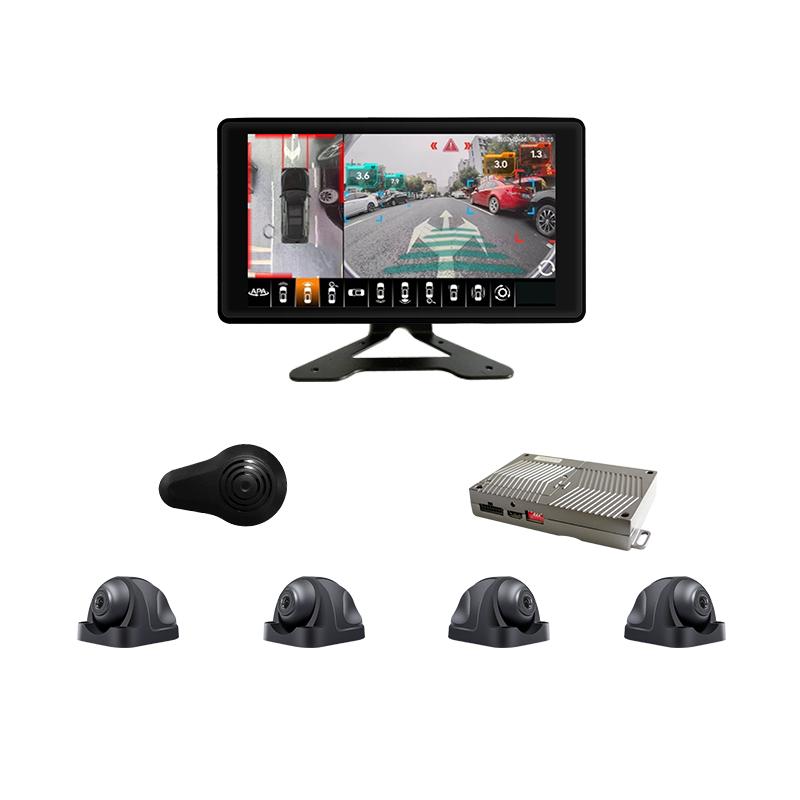
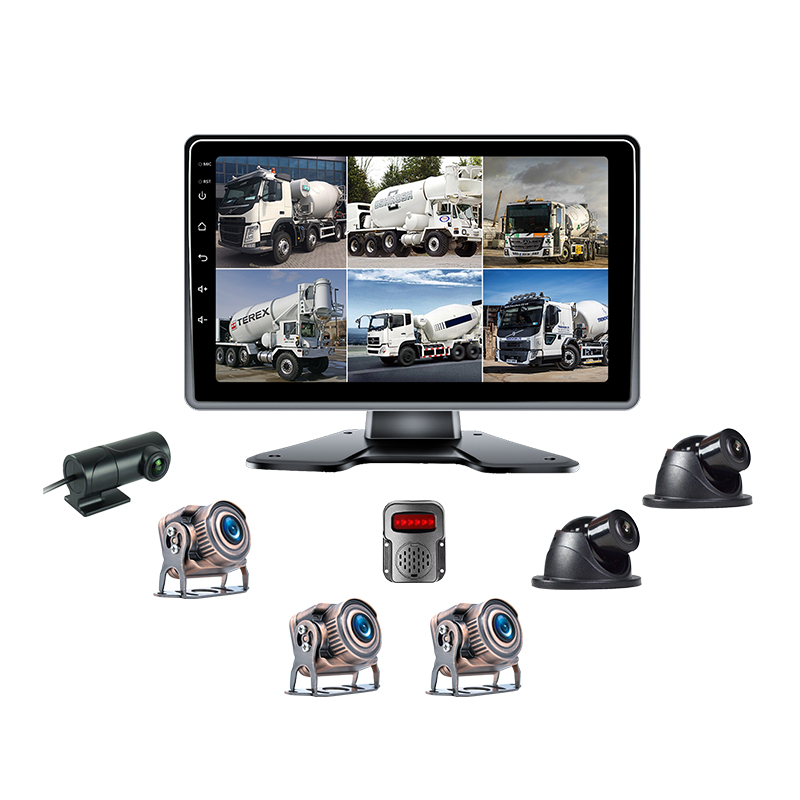
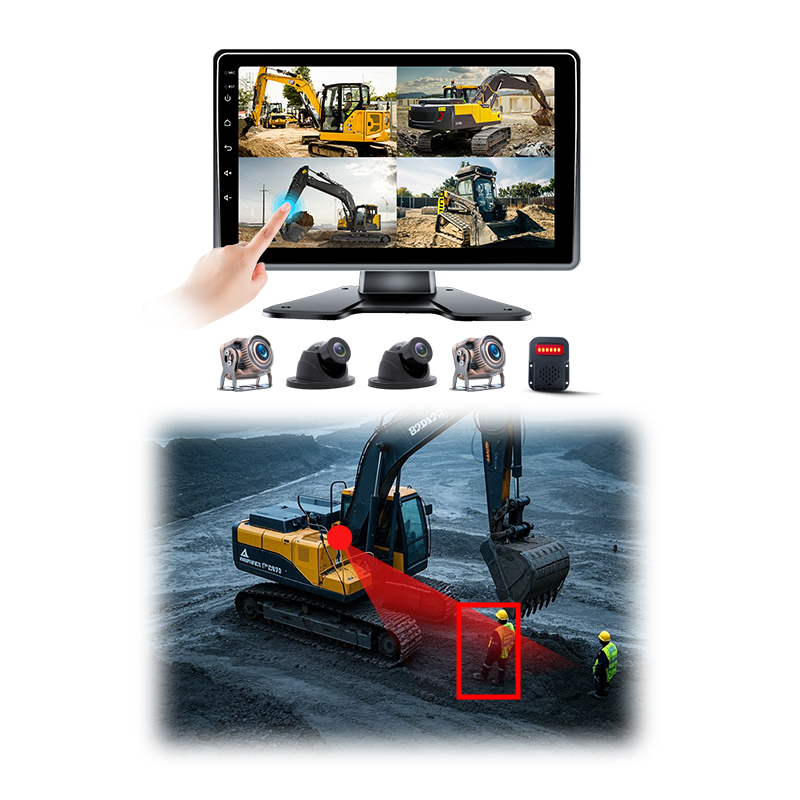
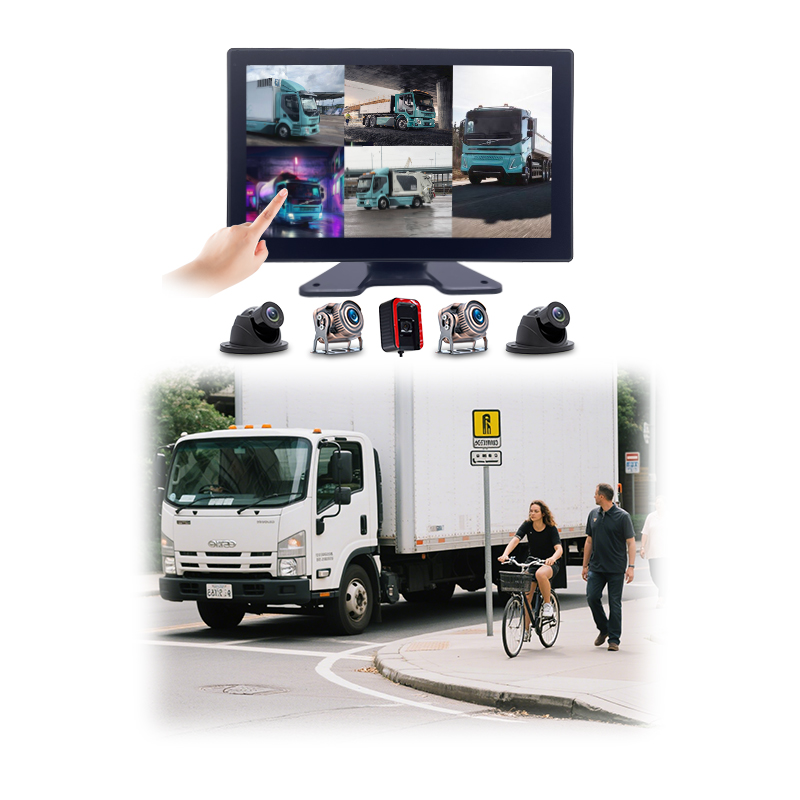
Heavy rain works against every sensor a truck’s ADAS carries. Rain cuts the camera’s contrast behind a film of water on the glass. Rain also cuts the radar’s range and adds false echoes from the drops. The two sensors lose performance in different ways. A single storm can degrade both at the same time.
The test numbers are sobering. In simulated rain, the American Automobile Association found automatic emergency braking at 35 miles per hour struck a stopped car about a third of the time. Lane keeping drifted out of lane in roughly seven runs out of ten. Rain and poor light make these systems miss the things they exist to catch. A truck needs them most in bad weather. Wet roads stretch the stopping distance well past the dry figure. Spray and gloom cut how far the driver can see unaided. Rain degrades the assistance and raises the cost of every missed hazard at the same time.
The damage runs along two separate paths. The camera is an optical sensor. Rain takes the clear view and the contrast it needs. The radar is a radio sensor. Rain bleeds off some of its range and fills its picture with returns from the drops. Rain leaves the camera half-blinded and the radar dulled and distracted. Neither sensor performs as it would on a clear afternoon. The two paths call for two different fixes. Sharper optics do nothing for radar clutter, and a better antenna does nothing for the camera’s lens. A system serious about rain has to treat both kinds of damage by their own means.
The usable question is not whether ADAS works in the rain. It does work, up to a point that shifts with the weather. The question that matters is whether the system knows when it has crossed that point, and whether it says so. That is where the real limit lives, well ahead of any number on a data sheet. A system with the finest camera and radar on the market can still be dangerous in rain if it cannot tell when its sensors have stopped working. Honest monitoring matters more than sensor grade.
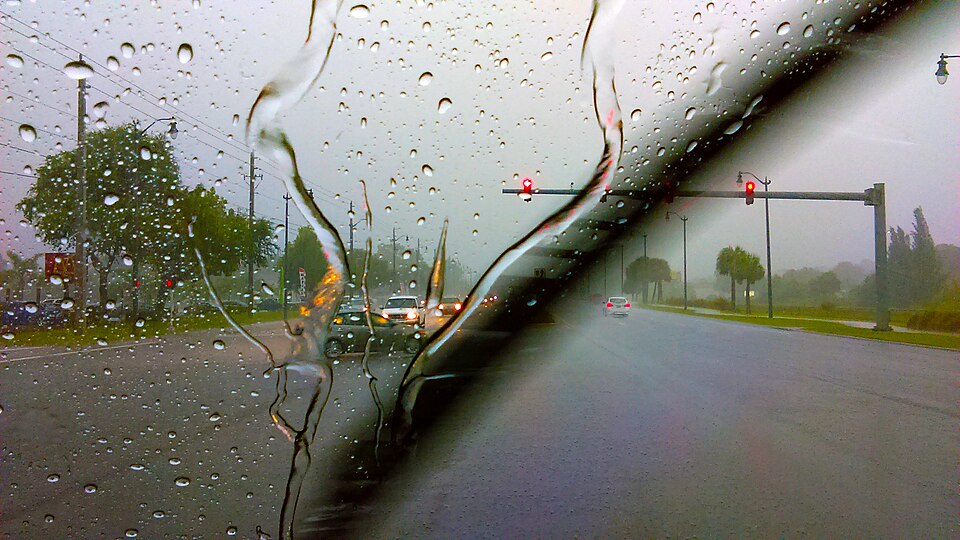
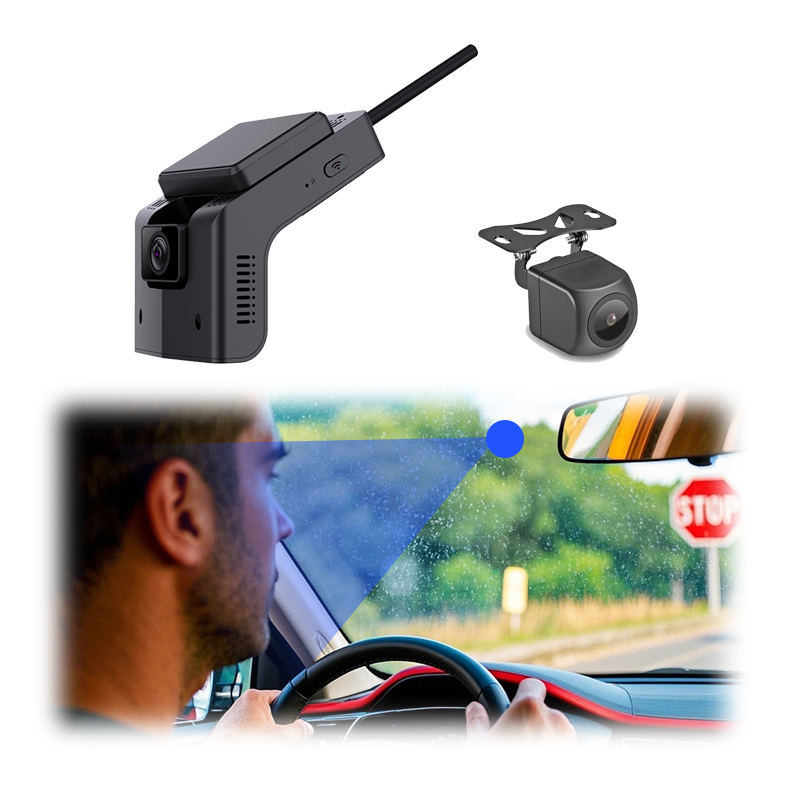
A forward camera looks at the road through the windscreen. Rain attacks that view from several directions at once. Drops cling to the glass and bend the light passing through them. A sharp scene arrives at the sensor warped and smeared. Rain falling between the truck and the road lowers contrast across the whole frame. The far edge of the scene, where a warning needs to reach farthest, fades into gray.
The wiper deals with the clinging drops. It also blanks the camera on every pass. Each pass clears the drops for a moment and sweeps a blade straight across the camera’s field of view, blanking it for a fraction of a second. A vision system reading the road many times a second meets a dark bar crossing the frame on every wipe. It has to know to ignore that bar. A system that does not can read the wiper itself as an object, or lose the lane line for the instant the blade is in the way.
Wet ground is a problem of its own for the camera. A road that scatters light harmlessly when dry reflects it like a mirror once it is wet. Headlights, street lamps and a low sun bounce off the standing water straight into the lens. The camera’s exposure swings to cope and darkens everything around the bright patch. A pedestrian or a lane line next to that glare drops into the shadow the exposure just deepened. A brighter reflection blinds the camera over a wider area around it.
Spray is the last problem. A truck ploughs through standing water and throws up its own cloud behind the wheels. Every vehicle ahead does the same. On a busy wet motorway the air itself fills with suspended water. A camera tuned to read fine detail at a distance has to read it through a haze of road spray. The detail it was counting on is no longer there to read.
None of this is a fault in the software. The ablest pedestrian detector ever written still has to work from the frame the lens hands it. To pull a usable image from a dim, wet scene the camera lifts its gain. Higher gain means more noise. Holding the shutter open longer smears anything that moves. In heavy rain the frame is dim, warped, glare-streaked and interrupted. The detector does its best with a picture that has lost much of what it needed.
Cold glass adds one more trouble. In a heated cab on a cold wet day the inside of the windscreen fogs over. The camera then looks through that inner haze as much as through the rain outside. Demisting clears it slowly. For the minutes that takes, the camera reads the road through a film the wiper can never reach, because the film sits on the inner face of the glass.
Radar is the sensor that holds up best in rain. A serious system leans on it when the weather turns for that reason. Radar works by radio waves. Rain is far more transparent to radio than to light. The advantage is genuine and limited at the same time. A fleet should understand how it weakens in heavy rain.
Rain attenuates the radar signal. At 77 gigahertz the raindrops are close enough to the wavelength to scatter the beam. Some of the energy that should reach a target and return is lost along the path. In heavy rain, around twenty-five millimeters an hour, the loss runs to something on the order of ten decibels per kilometer. A harder downpour pushes it higher still. The loss eats into the margin for a distant target, or for a weak reflector such as a pedestrian.
The drops send back echoes of their own. A radar in heavy rain sees the car ahead, plus a haze of weak returns from the rain filling the space in between. This rain clutter raises the noise floor of the whole picture. A faint return from a pedestrian in a downpour is the first to sink into the clutter and be lost.
The radar separates targets by direction on top of distance. Clutter crowds that job too. A scene scattered with rain returns is a harder scene to pick a real target out of than clean air. So the radar keeps working when the camera has given up, in a weakened form. It loses its margin on small reflectors. It also carries a layer of false detections it has to reason away. Heavy rain leaves the radar shorter-sighted and noisier than usual, strongest on the targets that were never the hard ones. A wet road adds a problem of its own. Standing water turns the surface into a strong reflector of radio energy, the way it turns into a mirror for light. The radar can pick up multipath returns bouncing off the wet surface, ghost targets that were absent from the dry road. A real target has to stand out from all this noise. Rain hits the radar’s resolution on top of its range. To place a target in angle, the radar compares faint phase differences across its antennas. Clutter and a weaker return blur those differences. In a downpour the radar may merge two close vehicles into one, or split one into two. The picture coarsens as well as dims. All of this lands hardest on the smallest targets. A pedestrian throws only a faint radar return. The weather lets go of these fragile targets first. This is what makes rain here genuinely dangerous. The targets it strips from the radar are the soft, slow, low-reflection ones a safety system exists to protect: a person, a cyclist, a child stepping off a verge.
The usual answer to a weak sensor is fusion. Combine the camera and the radar. Let each one cover for the other. In clear weather that works beautifully. The camera reports what a thing is. The radar reports where it is and how fast it is closing. Each sensor covers the other’s weak point. The arrangement assumes the two never go down at once. Through a dry journey one sensor leads and the other backs it up. That assumption fails in rain.
Rain breaks this arrangement. It does not weaken one sensor and leave the other intact to compensate. It weakens both at the same time, in the same storm, for the same reason. Spray and glare take the pedestrian from the camera. Attenuation and clutter take the same pedestrian from the radar. Fusion can only work with what its inputs give it. Once one cause has degraded every input together, no healthy channel is left to lean on. In rain a fusion system has nowhere good to shift its weighting. Leaning harder on the radar brings in the clutter and the lost margin. Leaning harder on the camera brings in the glare and the spray. The weighting that rescues one failed sensor cannot rescue two that failed together for the same reason.
This is correlated failure. It is the quiet danger inside a sensor suite that looks well covered on paper. Two sensors with independent weaknesses are genuinely safer than one. A single downpour pulls both down together and removes that independence. The redundancy thins to almost nothing in the very weather where it is needed the hardest. A spec sheet that lists a camera and a radar cannot show this difference. Only the rain reveals it. The honest fix would be a third channel that rain leaves alone. A thermal camera reads heat through weather that stops the other two. It carries its own cost and its own blind spots, and few trucks have one. The everyday suite stays a camera and a radar.
This is where the usable limit sits. It is not where the discussion usually places it. Sensors have always had limits. A dimmer camera or a shorter-range radar is the expected part. The dangerous failure is a system that has degraded badly and does not register the fact, one that keeps reporting a clear road and a confident lane lock from data that no longer supports either. A driver told for the past hour that the system is watching will trust it at the exact moment it has gone quietly blind. To that driver, a warning that never arrives looks the same as a clear road. That gap is where the harm happens. A system built for the weather watches its own inputs as closely as it watches the road. It tracks how much contrast the camera has left, how far the radar is reaching, how much clutter it is fighting through. None of this is exotic. The signal it needs is already inside the system. The camera knows its own exposure and its own contrast. The radar knows its noise floor and how many returns it is throwing away. A system built to watch those figures can tell a clear scene from a blinded one. A system built only to act on detections cannot, because to that system a blinded sensor and an empty road produce the same quiet output. This is why the failure stays hidden. A detector trained largely on clear-weather data learns what a confident empty road looks like. A blinded sensor in rain can hand back an output that looks just as confident. Without a separate measure of input quality, the system cannot tell the two apart. It reports a clear road, and the driver believes it. The real fix is a second judgment running beside the first, one that asks whether the sensors can still be trusted to speak. A camera that cannot see the lane should not report a confident lane, and a radar lost in clutter should not report a clear path. The honest output, once the inputs are gone, is to say that the inputs are gone. When those measures slip past the point where its judgments can be trusted, it announces the fact. It fades the lane line on the display. It drops adaptive cruise back to plain cruise. It sounds a degraded-performance warning. It hands lane keeping back to the driver before the lane keeping fails on its own. Engineers call this graceful degradation. It is the difference between a tool that fails safe and one that fails silent. A system that keeps issuing confident outputs from blinded sensors is more dangerous than one that switches off and admits the problem. It spends the driver’s trust at the worst possible moment. The limit that counts in heavy rain is whether the system is honest about how much its sensors can still see.
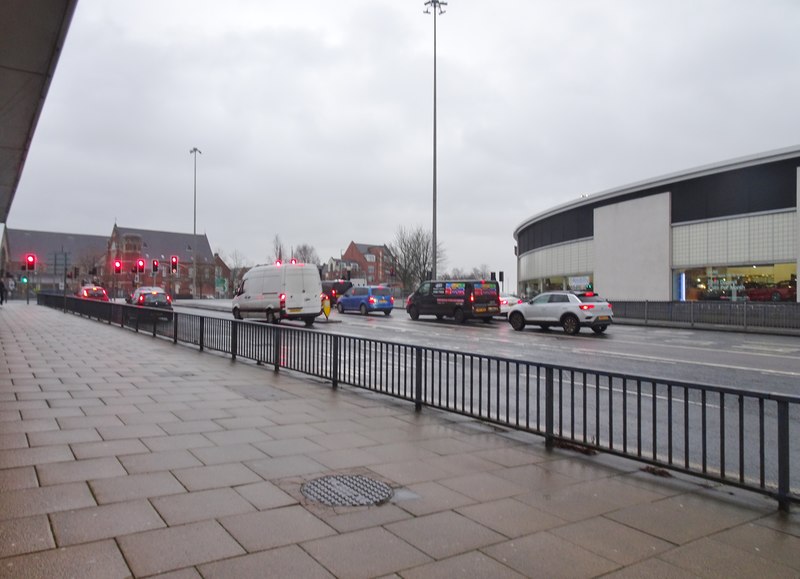
Drawing the edge is harder than it sounds, because rain does not switch on and off. Performance does not hold steady and then cut out at some clean threshold of millimeters per hour. It sags by degrees as the rain builds, faster for some functions than for others. The point where a given system stops being trustworthy depends on its sensors, its mounting, its software and the exact scene in front of it. No single rainfall figure marks the line for every truck. The same storm is not even the same problem twice over. A motorway at speed, a dim dawn, a low sun caught behind the rain, a film of road grime on the lens: each one shifts the line. The limit is a moving combination of all these variables. No fixed figure on a page can capture something that keeps shifting.
Validation makes this harder before it helps. A system is calibrated and signed off in conditions a test can repeat. In practice that means a clear day on a defined track. The rainy edge is the hardest case to reproduce and the easiest to leave under-tested. A system can pass every dry-weather check and still carry an unknown wet-weather limit that surfaces only later, in service, on a motorway, in a storm. The testing has a deeper gap. A dry-track pass never tests what the system does when it cannot see. The specification that quotes a clear-weather range answers only the question that was easy to ask.
For a commercial fleet the pressure runs the wrong way. A truck does not wait for clear skies. It runs the route it is given, in the rain it meets, because the freight has a delivery time on it. The hours of heaviest rain are not hours the vehicle sits out. They are the hours it works, with an assistance system doing its poorest seeing of the week in the conditions that demand it be sharp. The route does not bend to the forecast. A delivery window set in dry planning holds through the storm that turns up on the day. A driver leaning on lane keeping for a long wet motorway stint leans on it across the exact hours it can least hold the lane.
None of this argues for switching ADAS off in the wet. The point is narrower and more practical. A buyer should ask how a system behaves as the rain builds, beyond the question of whether it works when the road is dry. The useful questions are whether it warns when it can no longer see, whether it hands back control cleanly, and whether the specification addresses degraded conditions at all. A clear-weather detection range that stops at the edge of the good news answers none of them. The answer marks out a system designed for the road a truck drives every day from one designed only for the test track.
The honest version of a specification is rarely the loudest one. A long fair-weather range looks better in a brochure than a frank account of where the system steps back. A fleet has to operate on the frank account. A fleet can do its part around that account. It can learn which routes and which seasons bring the heaviest rain. It can brief drivers that the assistance is weakest in exactly those hours. The technology sets the limit. Planning around the limit is the fleet’s own job. It works only when the limit is stated plainly.
Heavy rain does not break ADAS in one clean way. It dims the camera with water, glare and spray. It thins the radar with attenuation and clutter. It degrades the two together. Fusion cannot rescue what the storm has taken from both. The sensors do only what physics allows. Better hardware moves the edge outward, one improvement at a time. Some rain is always heavy enough to overwhelm the sensor anyway. Honesty helps at any sensor grade. A system that reports its own blindness lets the driver take the wheel back in time, even on basic sensors. A strong fair-weather record only makes the driver trust a system more deeply into the storm. The safest system in heavy rain is the one readiest to admit a blank.
What separates a usable system from a dangerous one in the wet is the system’s own honesty about its state. A better lens or a stronger transmitter does not decide it. A truck runs through the storm because it has to, on a delivery schedule the weather does not respect. The system in the middle is the one part of the chain that can choose to be honest about what it can still handle. Its safe move is to tell the truth and step back. A driver-assistance system that works in heavy rain is one that knows when it can no longer help. It says so plainly.
It works in part. In simulated rain, testing by the American Automobile Association found automatic emergency braking at 35 miles per hour struck a stopped car about a third of the time. Lane keeping drifted out of lane in roughly seven runs out of ten. These systems keep working with sharply reduced reliability. Heavy rain is one of the conditions in which a system that performs well on a dry day can quietly miss the hazards it is built to catch.
A camera works by collecting light through the windscreen. Rain attacks that view several ways at once. Drops on the glass bend and smear the image. Rain in the air lowers contrast across the scene. The wiper clears the drops. Each pass blanks the camera for a moment. Wet road surfaces turn into mirrors that throw glare into the lens. Road spray fills the air with suspended water. The detection software is left to work from whatever image survives all of that.
Radar is the stronger sensor in rain. It uses radio waves. It holds long range on strongly reflecting targets such as cars. Rain attenuates the signal on the order of ten decibels per kilometer in heavy rain near twenty-five millimeters an hour, climbing further as the rain intensifies. The drops throw back clutter that raises the noise floor. The targets that suffer are the faint ones, a pedestrian among them, the ones that matter the hardest.
Only when the sensors fail independently. Fusion works in clear weather because the camera and the radar have different strengths and cover for each other. Heavy rain degrades both at the same time and for the same reason. No healthy channel is left to lean on. This is correlated failure. It means the redundancy that looks reassuring on a dry day can thin to almost nothing in the storm where it is needed the hardest.
There is no single figure. Performance does not hold steady and then cut off at a clean threshold. It sags by degrees as the rain builds, faster for some functions than for others. The point of unreliability depends on the sensors, the mounting, the software and the scene. The useful question is whether the system detects its own degradation and tells the driver.
Look past the clear-weather detection range. Ask how the system behaves as rain builds: whether it warns when it can no longer see reliably, whether it hands lane keeping back to the driver cleanly, whether the specification addresses degraded conditions at all. A system that detects its own limits and steps back honestly is safer in the rain than one that keeps reporting confidence after its sensors have lost the road.