

ADAS calibration is not a job done once at the factory. A truck’s collision and lane-departure warnings work only as long as their camera and radar know exactly where they point. That aim drifts over the vehicle’s life. A new windscreen, a wheel alignment, a suspension repair, the ordinary knocks of a working truck, each can push a sensor off true by a fraction of a degree that becomes meters down the road. The drift carries no warning light. Keeping the systems accurate is a cycle: calibrate at the start and recalibrate whenever the aim can have moved.
The word calibration hides a moving target. To calibrate a sensor is to tell it where straight ahead is, where the lane sits, where the road plane lies. Its reading of the world then lines up with the world. That alignment does not stay true. Every change to the vehicle’s structure, along with time itself, nudges the sensor off the mark. Because nothing announces it, a system can run for months pointing slightly wrong and still reporting itself fine.
This is why calibration is better seen as a cycle than a step. Getting a system fitted and compliant in the first place is its own subject, covered where the steps to meet the standard are set out. The concern is narrower and longer: the calibration that starts at the factory, the forces that pull it out of true, the recalibration that has to chase it for as long as the vehicle works. This page is about what recalibration is for and when it falls due. How it is carried out on the shop floor is covered separately.
The stakes sit in how far a confident system can be off. A miscalibrated warning system runs with full confidence and points slightly wrong. On a truck a slight wrong aim at speed is meters of error where it counts. The calibration cycle costs little. Its cost is known in advance. Skipping it carries a cost that stays hidden until the day the system is needed and found wrong.
Calibration is a line that has to be held for the life of the truck.
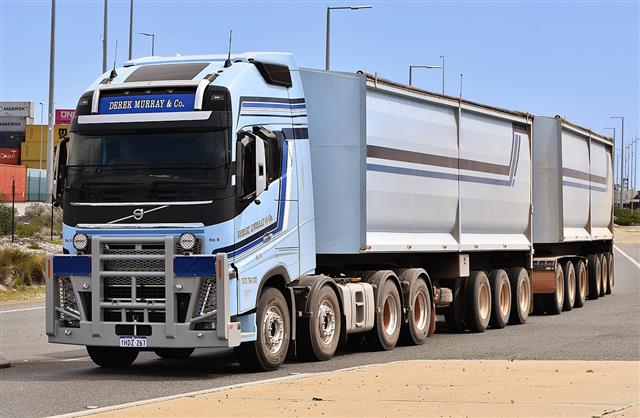
Every ADAS sensor starts its working life with a calibration. When the camera and radar are first fitted, to a new vehicle at the plant or to an older one at an upfitter, they are aligned to that specific vehicle: told where its centerline runs, how high they sit, where the road plane lies ahead. This first alignment sets the zero, the known-good reference everything later is measured against. Get the zero wrong and every reading after carries the same built-in error.
On commercial vehicles the first calibration often happens away from the vehicle maker. A bare chassis is bodied by an upfitter, a camera bracket is added, a radar goes behind a custom bumper; the alignment is set then, on the finished vehicle. Whoever does it works to the sensor maker’s procedure and the standard’s installation rules, on the actual truck as it will run. A calibration done on a generic setup and carried to a vehicle it was never matched to is no calibration at all.
The factory calibration matters out of proportion to the minutes it takes, because everything downstream inherits it. A test later checks the system against the standard. That test can only confirm what the calibration set. A wrong zero can pass the first check unnoticed. The system stays aimed slightly off, with the error riding along unseen. An error in the first alignment runs through every reading that follows.
What the factory cannot do is make the alignment permanent. The zero it sets is true for the vehicle as it leaves, square and unworn. The moment the truck enters service, the world starts moving that zero, slowly and silently. The factory sets the starting point. Holding it is a job that belongs to the years that follow.
On a commercial vehicle the chain of hands makes the first calibration fragile. The chassis maker, the bodybuilder, the sensor supplier, the fleet’s own workshop may each touch the vehicle before it turns a wheel in service. The calibration can fall in the gap between them, each assuming another did it. A clear answer to who owns the first calibration and who signs it was done right is part of specifying the vehicle, never an afterthought once it arrives.
Calibration is done in one of two ways, often in both. A static calibration aligns the sensor with the vehicle standing still, facing a set of targets placed at measured distances and positions. A dynamic calibration aligns it on the move, the technician driving a set route at a set speed as the system reads real lane lines and signs and tunes itself. Some vehicles need only one; many need a static alignment first to get close and a dynamic drive after to settle it.
Static calibration is exacting work. It needs a controlled bay: a flat level floor, even lighting, room to set the targets at the exact distances the procedure calls for. The vehicle has to sit square and at its normal ride height, because a tilt or a soft tire shifts the geometry the targets assume. The targets themselves are precise patterns the camera reads to fix its aim. Done in a cramped or sloping space, with the targets a little out of place, static calibration produces a confident, wrong answer.
Dynamic calibration trades the bay for the road. It needs clear lane markings, decent weather, a stretch where the technician can hold the right speed long enough for the system to learn. Where the markings are poor or the traffic heavy, the drive can fail to complete, taking the calibration down with it. The road gives the system real cues a target cannot, under conditions nobody fully controls.
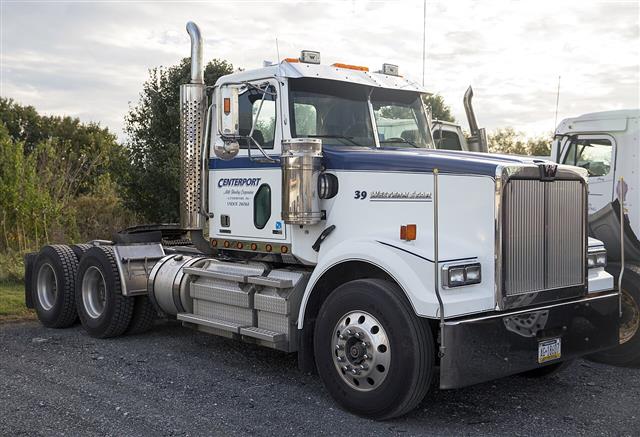
Commercial vehicles complicate both. A high cab puts the camera two or three meters up, needing taller targets and more headroom than a car bay was built for. A mixed fleet brings many shapes, each with its own mounting height and windscreen angle, each calibrated to its own figures. The bay big enough and the procedure flexible enough for a coach, a tractor, a rigid box truck is a different proposition from a car dealer’s alignment rack. Calibrating commercial ADAS is a heavier job before the first target goes up.
The job is not done when the procedure ends. A calibration has to be confirmed, the system checked to read true before the vehicle leaves, because a procedure that ran to completion can still have set the aim wrong if a target was misplaced or the drive was cut short. The output that matters is a verified alignment with a result on record, never a green light at the end of a routine.
The aim wanders for plain mechanical reasons. A sensor is bolted to a structure and aligned to that structure as it stood on the day. Anything that moves the structure, or moves the sensor on it, moves the aim. Some of it is sudden, a repair or a knock; some is slow, the settling and wear of a vehicle that works hard. Either way the zero set at the factory is no longer the zero the vehicle sits at now.
The windscreen is the commonest culprit. On many vehicles the forward camera looks out through the glass, mounted to a bracket on it or just behind it. Replacing the windscreen, after a stone crack or a fleet-wide swap, takes the camera off and puts it back almost in the same place. Almost is the problem. A millimeter of difference in where the bracket sits, or a degree in how the new glass curves, shifts where the camera thinks the road is. A windscreen change is a recalibration, whether anyone books one or not.
Underneath, the chassis moves too. A wheel alignment resets the geometry the radar’s straight-ahead was referenced to. A suspension repair, a replaced spring or airbag, changes the height and rake the sensors sit at. Load does it temporarily: a heavy payload squats the rear, tips the whole vehicle nose-up, aims a forward radar a touch high until the load comes off. In each case the vehicle moved under the sensors. The effect on the aim is the same.
None of this needs a crash to happen. A truck’s life is a steady supply of small disturbances, curb strikes, potholes, vibration over hundreds of thousands of kilometers, any of which can ease a sensor or its mount a hair out of line. A single hard event, a minor front-end bump, can do it in one go. The aim drifts by both routes, the slow accumulation and the sudden shove. A fleet has to assume it is always drifting somewhere.
The dangerous part of drift is that it stays quiet. A sensor knocked off true does not throw a fault code. It still powers up, sees the road, fires its warnings. To the system and the dashboard alike, everything is working. The only thing wrong is that the readings are now measured from a slightly false zero. Nothing in the vehicle is built to notice that.
The reason is built into how calibration works. The system trusts its zero absolutely. It has no independent truth to check it against. A camera told its straight-ahead points a degree left will faithfully report the world a degree left and call that correct. There is no second sensor watching the first, no reference that says the aim has moved. This is the hardest kind of fault to catch, because a wrong aim looks exactly like a healthy one.
Drift surfaces in only a few ways, all of them late. A scheduled recalibration measures the aim and finds it off. A driver notices the lane warning nagging on a straight road, or staying silent when it should speak. Worst of all, the system fails in the moment it was meant to act, missing a real hazard or braking for a shadow, the drift then found in the incident report. By the time drift announces itself through behavior, it has been wrong for some time.
Silent drift settles how a fleet has to manage calibration. If the vehicle cannot tell you the aim has moved, waiting for a symptom is waiting too long. The accuracy has to be checked on purpose, on a schedule and after anything that could have moved it, the same way brakes are inspected before they are heard to fail. A system that cannot report its own drift has to be made to prove its aim, again and again.
A few events should trigger a recalibration every time, no exceptions. They are the moments when the sensor, its mount, or the vehicle’s geometry has demonstrably moved. A fleet that treats these as automatic recalibration triggers catches the bulk of drift at its source, before it has miles to do harm. The list is short. It belongs on the workshop wall.
Any work on the windscreen comes first. Replacing it, or on some vehicles even removing and refitting the same glass, disturbs the forward camera and demands a recalibration. This is the trigger fleets overlook, because a fleet treats a windscreen as glasswork, and the van that fits it may not even own the calibration gear. A cracked screen swapped at the roadside leaves the camera uncalibrated until someone catches the omission.
The chassis triggers come next. A wheel alignment, a suspension repair, a change of tire size, anything that alters the vehicle’s stance or ride height, calls for a recalibration of the forward sensors. These hide even better than glasswork, because the link between a spring job and a camera’s aim is not obvious to the mechanic doing the spring. Suspension work that goes without a recalibration leaves that drift uncaught.
There are the obvious ones and the easy-to-forget ones. Any collision repair near a sensor, any removal of a sensor or its bracket, any time the bumper carrying a radar comes off, the alignment is suspect until proven. A software update can change how the system reads its inputs and call for a fresh calibration too. The rule that covers all of it is simple: if something moved a sensor, its mount, or the vehicle’s geometry, the aim is unproven until it is checked.
How often is the wrong question to ask first. Recalibration is driven by events. It is due whenever something on the trigger list has happened, regardless of how long since the last one. A truck that has a windscreen and two alignments in a year needs three recalibrations that year. A truck with none may need only a routine check. The work follows what was done to the vehicle.
A periodic check still has its place, as a backstop. Because drift can creep in below the threshold of any trigger, through vibration and slow settling, a scheduled verification catches what the event list misses. Many fleets fold an ADAS aim check into an existing service interval, verifying the sensors at the same time as the brakes and the tires. The period backs up the triggers.
Who carries it out is a real fleet decision. Recalibration needs the equipment, the targets or the drive route, a technician trained on the procedure, none of which every workshop has. A fleet either invests in the capability or sends the work to those who have it. Either way it has to track which vehicles are due and which are done. The decision that quietly fails is the one never made, leaving recalibration to whoever happens to notice.
Knowing what is due is its own task. A fleet of any size cannot hold the recalibration status of every vehicle in someone’s head. It needs a record: which vehicle had what done, when it was last calibrated, what is now due. The maintenance system that already tracks oil changes and brake inspections can carry the ADAS aim checks, flagging a vehicle for recalibration when a trigger is logged against it. A fleet without that tracking finds out what was missed only when something goes wrong.
Commercial vehicles need the loop tighter than cars do. They run longer distances, carry heavier and shifting loads, meet more of the maintenance, the alignments and suspension work and glass damage, that knocks an aim out. A high-mileage truck can take on the disturbances of a car’s decade in a single year. The harder a vehicle works, the faster its calibration ages and the more often the loop has to come round.
Put the pieces together and the cycle is the whole story. A sensor is calibrated once at the start, to a true zero. From that moment the zero is under attack: a windscreen here, an alignment there, the slow grind of vibration and load, each nudging the aim off true. The standard’s performance limits set how far off is too far. They mark the point by which a warning should fire and the band within which a lane alert should trigger. Drift matters once it pushes the system past those limits. A degree of aim error grows from nothing at ten meters to a wide miss of the warning point at a hundred, the range where a heavy truck needs every meter of warning it can get. Because nobody can see by eye when that line is crossed, the only safe assumption is that any disturbance may have crossed it. Because the drift is silent, with no light and no fault code, the system goes on insisting it is right. The vehicle will not leave the calibration set. The only defense is to keep checking the aim by a plan. The plan has two halves that cover each other. The trigger list catches the known disturbances, the moments a sensor demonstrably moved, forcing a recalibration each time. The periodic check catches the rest, the drift that crept in under everything, by verifying the aim on a schedule whether or not anything was logged. Together they turn an invisible, continuous problem into a managed, repeating task. The data a fleet already gathers can help close it further. The same telematics platform a commercial vehicle reports to can flag a system behaving oddly, a lane warning that has started firing on straight roads or falling silent on curves, the behavioral hint that an aim has drifted before a test confirms it. None of that replaces the calibration check, because the platform cannot measure the aim. It only points a fleet at the vehicles likeliest to need a check next. None of this is exotic. It is the same logic a fleet already applies to brakes and tires, parts that wear silently and are inspected on a schedule. What makes ADAS different is where the wear sits, in an aim that nothing squeals to announce. The commercial vehicle makes the loop tighter still: more miles and load and maintenance, more chances to knock the aim, all compressing the interval between one calibration and the next it needs. A fleet that grasps this asks when each system was last proven and when it is due again. Factory calibration sets the zero. Everything after is the work of holding it. The calibration is the discipline of keeping the aim true.
Keeping calibration true costs money. The cost is why it gets skipped. Each recalibration takes a vehicle off the road for the time it sits in the bay, lost revenue on a truck that makes money only when it rolls. It takes equipment a workshop had to buy and a technician trained to use it. A static calibration needs the bay and the targets. A dynamic one needs a driver and a route and clear weather. For a fleet running on thin margins, the temptation to defer the next recalibration is real and constant.
Each recalibration produces a record. Logged against the vehicle with its date and result, it builds the proof that the system is aimed true, the same evidence trail that compliance rests on. How the recalibration is performed on the floor, the setup, the targets, the drive, the sign-off, is its own piece of work taken up elsewhere. What matters is that it happened, that it was recorded, that the next one is scheduled. A recalibration nobody logged is a cost paid with nothing to show for it.
The cost of skipping it comes later and runs larger. A system left uncalibrated does not fail loudly. It waits for the one moment its aim is needed and finds it wrong. The price of a recalibration is a known, bounded number, a few hours and a fee. The crash a drifted system lets through has no such limit. A fleet that prices only the recalibration has done half the sum. The risk it buys down belongs in the total too.
Seen across the life of a vehicle, ADAS calibration runs the length of its service. It is set true at the factory and pulled out of true a little at a time by everything the vehicle goes through. The factory sets it once. Keeping it true is the work of every year after, a recalibration each time the vehicle is touched in a way that could have moved the aim, a check on a schedule to catch what slipped through. A warning system is only as accurate as its last calibration. On a working truck the last one is never the only one needed.
The factory only starts the calibration.
ADAS calibration aligns a vehicle’s driver-assistance sensors, the forward camera and radar, to the vehicle and the road. It tells each sensor where straight ahead is, where the lane sits, where the road plane lies. Its reading of the world then matches reality. Without it, a system misjudges where things are, firing warnings late, early, or not at all. Calibration is what makes the readings trustworthy.
Whenever something has moved a sensor, its mount, or the vehicle’s geometry. The common triggers are a windscreen replacement, a wheel alignment, a suspension repair, a change of tire size, a collision repair near a sensor, or the removal of a sensor or its bracket. A software update can call for one too. On top of these event triggers, a periodic check catches the slow drift that no single event explains. The rule of thumb: if the vehicle was touched in a way that could move the aim, recalibrate.
Yes, on any vehicle whose forward camera looks through or mounts to the windscreen, which covers nearly all of them. Taking the glass out and putting new glass in moves the camera, even by the fraction of a millimeter or degree that throws its aim off down the road. The recalibration is part of the windscreen job. The risk is that glass is often replaced by someone who books it as glasswork and has no calibration gear, leaving the camera out of true until a recalibration is arranged.
Static calibration is done with the vehicle stationary in a workshop, aligned to physical targets set at measured distances in a controlled bay. Dynamic calibration is done by driving the vehicle on well-marked roads at a set speed, letting the system tune itself against real lane lines and signs. Some vehicles need one, some the other, many a static alignment to get close and a dynamic drive to finish. The method is set by the vehicle maker. The goal is always the same, a sensor aimed true to the vehicle.
There is no single mileage or time figure that fits every vehicle, because recalibration is event-driven first. A vehicle is recalibrated each time a trigger occurs, a windscreen, an alignment, a suspension job, a collision, regardless of how long since the last one. A periodic check, often folded into a regular service, sits underneath as a backstop for slow drift. A high-mileage commercial vehicle, with more triggers and more wear, comes round the loop more often than a lightly used one. The honest answer is as often as the vehicle’s events and a sensible safety margin demand.
Because the system has no way to know its own aim has moved. It works from its calibrated zero and trusts that zero completely, with no independent reference to check it against. A camera aimed slightly wrong reports the world slightly wrong and believes itself correct. Nothing in the vehicle watches the sensor to report a drift. No fault is raised. This is why drift has to be caught by deliberate checking, since the vehicle will not volunteer that its calibration has slipped.