A forward collision warning does not measure distance. Distance alone says nothing. A truck thirty meters behind a vehicle moving at the same speed is safe. The same gap to a stopped vehicle is seconds from a crash. What the system measures is closing, how fast the gap is shrinking. From that it computes the time left before impact. The warning fires when that time drops below what the driver needs to react and the truck needs to stop. Telling a real collision course from the dozens of harmless ways a gap closes is the whole of the problem.
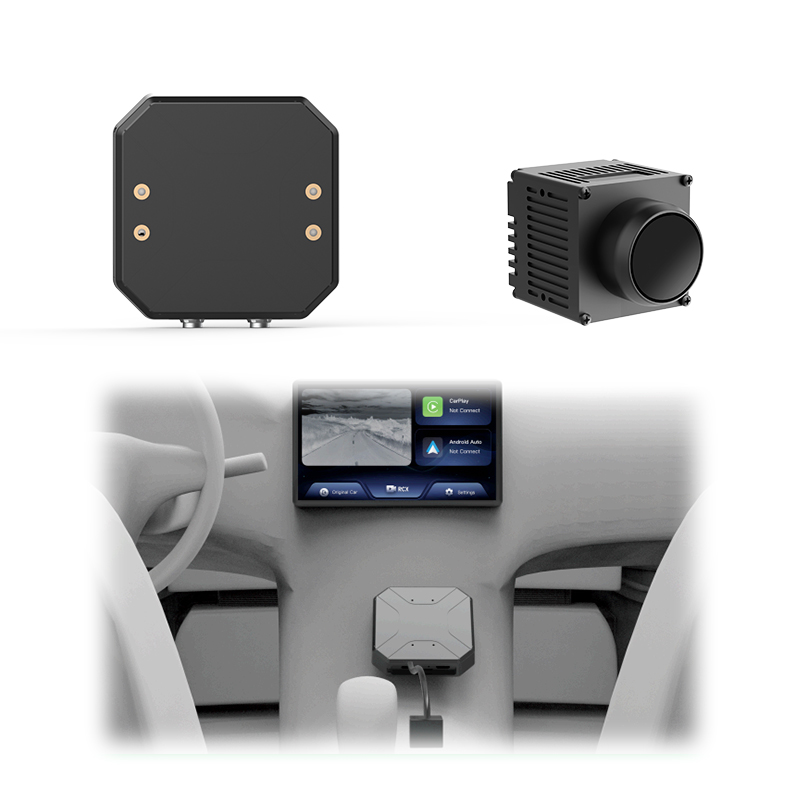
The fusion page showed how warnings reach the driver. How they are detected is a separate question. Forward collision is the first detector, the one watching the road straight ahead and calling the moment a crash turns likely. It runs on the forward camera and radar a truck already carries, reading the vehicle in front many times a second. A loaded truck running into stopped or slowing traffic is among the worst crashes a fleet sees, the mass and the speed leaving the vehicle ahead no room. On heavy vehicles the function is not optional in many markets, with forward warning and emergency braking written into the rules.
The judgment rests on one quantity, the time to collision. Everything the system does serves to estimate that time and act on it early enough to matter. A warning that arrives when the crash is already unavoidable is noise. A warning that fires for closings that were never going to hit gets switched off within a week. The value sits in a narrow window, late enough to be real and early enough to use.
The whole job is to find those seconds before they run out.
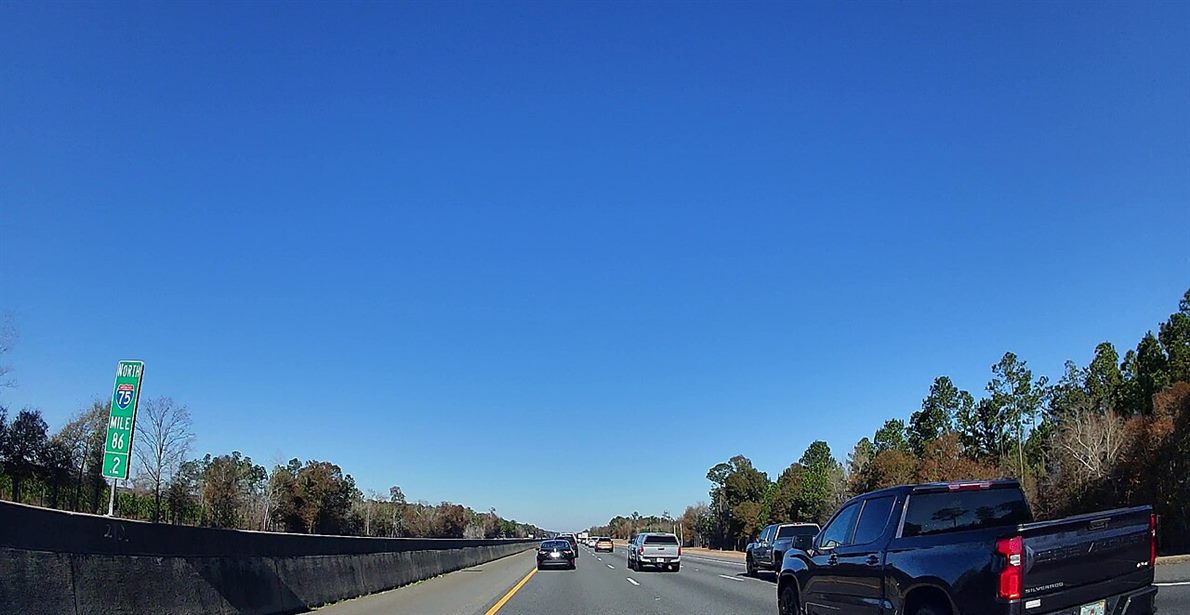
Distance is a snapshot. It says how far the vehicle ahead sits at one instant, with nothing about where the gap goes next. A warning built on distance alone would be worse than useless. It would sound in every stop-and-go queue, where vehicles sit a meter apart at walking pace in no danger at all. It would stay silent as a truck bore down on a stopped car from a hundred meters back, the gap still wide the instant before the crash. The danger is in what the gap is doing.
The quantity that carries the danger is closing, the rate the gap shrinks. Two vehicles holding the same speed never touch, a meter apart or a hundred meters apart. A gap that closes ends in contact. The only open question is how soon. The system has to read the change in the gap, the speed at which the truck is gaining on whatever sits ahead, weighed against how far there is left to go. Closing can run the other way too. A lead vehicle pulling ahead opens the gap, a negative closing the system sets aside, because only a shrinking gap is a threat. Closing is never fixed either. The car in front brakes and the closing jumps in an instant. It speeds up and the closing falls away. The system tracks a moving pair, the gap and the rate it changes, both shifting as the two vehicles drive.
The numbers make it plain. A truck at eighty kilometers an hour, with the car ahead at the same eighty, holds a steady gap. Twenty meters there is comfortable. The same truck at eighty closing on a car stopped a hundred meters ahead is closing at the full eighty, about four and a half seconds from hitting it. The bigger gap is the dangerous one. Distance alone ranks the two backward, calling the safe queue an emergency and the real threat clear road. What counts is the relative speed, the truck’s own reading aside. The same eighty behind a lead at seventy-eight gains at two, a gap of meters lasting many seconds. Behind a stopped lead it gains at the full eighty.
Both numbers come off the sensors at the front of the truck, the range to the vehicle ahead and the rate the gap is closing. The judgment runs on that pair and treats nothing else as the danger.
Time to collision turns the two numbers into one. In its plainest form it is the range divided by the closing speed, the seconds left until the gap reaches zero if both vehicles hold their course. A hundred meters closing at twenty meters a second is five seconds. The same hundred meters closing at forty is two and a half. The system computes this every frame, watching the figure fall as the truck gains.
The warning is set on that figure of time, leaving distance out of the trigger. When the time to collision drops below a threshold, the system speaks. The threshold leaves the driver room to react and the truck room to stop. It is counted in seconds. A fixed distance would mean nothing across speeds. Three seconds means the same thing at twenty as at eighty, where the ground covered runs four times as long. The same seconds buy widely different distances. A three-second warning reaches a few car lengths in town and the better part of a football field at highway speed, the count fixed, the meters growing with the closing speed.
The warning usually comes in stages. A first, gentle alert fires at a longer time to collision, a caution that a gap is closing faster than it should. A harder, louder one fires as the time runs down toward the point of no return. One production car system marks the steps plainly, a warning around two and a half seconds out, partial braking around a second and a half, full braking under a second. The earlier step asks the driver to act. The later ones act in the driver’s place.
The simple division hides one thing. If the vehicle ahead is braking, the gap closes faster every moment. A time to collision figured from the current speed alone reads too long. A careful system folds in the lead vehicle’s deceleration, shortening the estimate when the car in front is slowing hard. The figure is recomputed constantly because the inputs move, the lead braking, the truck lifting off, the gap and the closing both alive.
Time to collision assumes both vehicles keep their lanes and their speeds long enough for the figure to mean something. When the lead changes lane or the road bends away, the straight-line estimate weakens, the gap the math is closing on no longer the gap that matters. The plain figure is a one-dimensional read of a road that bends and forks. The hard part of detection is knowing when to trust it.
Two sensors feed the judgment. They see different things. Radar measures the gap and the closing rate directly. A pulse goes out. The return gives the range, the frequency shift in it the closing speed, in one reading, with no waiting to watch the gap change. Radar holds up in the dark, in rain, in glare, the conditions that blind a camera. What radar cannot do is say what it has found. A strong return is a strong return, off the back of a truck or off a steel bridge alike.
The camera starts from the image. It reads what the object is, a car, a truck, a person, a lane line, the things a trained eye picks out of an image. From the size and place of a vehicle in the frame it estimates range. From how that image swells frame to frame it estimates closing. The classifying is its strength. The ranging is rougher than radar’s. The dark and the downpour cut into it.
Forward collision wants both. Radar carries the kinematics, the range and closing the time to collision is built from. The camera carries the meaning, the answer to whether the closing thing is a vehicle in the lane or scenery beside it. Put together, a radar return that something solid is closing fast and a camera read that it is a car square in the path make a warning the system can trust. The trade-off between the two sensors is a separate question, taken up on another page.
A sensor does not hand the judgment one clean object. Radar returns a clutter of them, vehicles, barriers, signs, the road itself. The system has to pick out the one that matters, the nearest thing genuinely in the truck’s path. It predicts that path from the truck’s own speed and steering and asks which return sits inside it. It watches each candidate across many frames, building enough history to trust the closing it reads and to throw out a ghost that flickers for one instant. The target the warning watches is one the system chose out of many.
The two work as a sequence. Radar flags that something in the path is closing fast enough to matter. The camera checks what it is, a real vehicle or a roadside object the radar cannot tell apart. A warning fires when both agree. Radar on its own often discards stationary returns to keep from false-alarming on signs. A stopped car is a stationary return. The camera is what puts the stopped vehicle back among the things to fear. This pairing lets the system warn on a stopped car ahead and still ignore the overhead signs. That agreement is the hard center of forward collision detection.
The whole difficulty of forward collision is telling a real imminent crash from the many harmless ways the road looks like one. The worst of them is the stationary object. Radar reads a strong return dead ahead and cannot say whether it is a car stopped in the lane, a steel sign over the road, a bridge the truck is about to pass under, or a manhole cover in the surface. All four sit ahead and close at the truck’s full speed. A system that warned on every stationary return would fire under every gantry and beside every guardrail. Radar-only designs learn to throw stationary returns away. That habit is exactly why a radar-only warning can stay silent as the truck bears down on a stopped car. The camera is what breaks the tie, classifying the return as a vehicle in the lane or as scenery to set aside. A bend makes it harder. On a curve a sign on the outside of the turn, or a car in the next lane, sits geometrically straight ahead of a truck pointed down the tangent. Only a path prediction built from the truck’s own steering and yaw can place that object to the side where it belongs. A wrong path prediction brakes the truck for a car that was never in the way. The cut-in is the other trap, a vehicle swerving into the lane a few meters ahead, dropping the time to collision in an instant, demanding a fast warning, held back only when the cut-in is already accelerating clear. The lead that brakes for a turn and carries on, the car that lifts off and coasts, the truck cresting a rise that points its radar for a moment at an overhead structure, each is a closing that resolves on its own. A warning spent on it is a warning the driver learns to ignore. That learning is the real cost. A system that cries wolf at signs and slowing traffic gets muted within the week. The one true warning then lands in a channel the driver has already tuned out. The other failure is quieter and worse, the real stopped car filtered away with the signs, the warning that never comes. The judgment lives in the narrow space between those two. A commercial vehicle sits deeper in the hard part than a car does, meeting more roadside clutter on rural routes, more stop-start at depots and yards, more stationary plant beside the road, with a false hard warning in moving traffic a danger of its own to the vehicles behind a truck that cannot stop short. This is settled by fusing the radar kinematics with camera classification, tracking each target long enough to read what it is doing, predicting the truck’s own path to decide what is in it, leaning conservative on the targets that stay ambiguous. How those knobs are turned is a tuning question for another page. Why the turning is so delicate is the center of forward collision detection.
A car and a loaded truck do not stop alike. A forty-tonne combination at eighty carries many times the kinetic energy of a car at the same speed. Its brakes have to shed all of it through eight or more tires before the vehicle halts. The distance it needs runs far longer than a car’s, growing with the square of the speed. A warning timed to serve a car would reach a truck too late to use. The rough numbers are stark. A laden truck at eighty can need well over twice the forty-odd meters a car takes, before the driver’s own reaction time, another second or more of travel, is added in. The warning has to cover both the thinking and the stopping. On a truck the stopping is the larger share by far.
A truck’s warning is timed further out. The threshold in seconds that gives a car driver room to brake leaves a truck driver short. A system built for heavy vehicles pushes the warning to a longer time to collision, handing back the distance the truck will eat up stopping. The heavier the vehicle, the earlier it has to be told.
Load moves the line again. An empty truck stops far shorter than a laden one, the same brakes acting on a fraction of the weight. A threshold fixed for one is wrong for the other, too eager empty, too late loaded. The better systems read the axle weight and slide the warning with it, earlier as the trailer fills, the timing tracking the mass the brakes have to fight. A line set for the laden case leaves the empty truck warning early and often, a nagging that gets the system muted. A downgrade tilts it again, the loaded truck carrying more speed into brakes that warm and fade on a long descent, needing the earliest call exactly where a flat-road threshold comes late. Wet or icy tarmac stretches it once more, the same brakes finding less grip, a margin the system has to add when the road turns slick.
The timing reaches past the one truck. A truck that brakes hard, or has its brakes applied for it, can be struck from behind by another that cannot stop short either. A warning that fires too late or too falsely is a danger to the whole line behind it, the lead truck the least of it. This is why heavy-vehicle forward warning is held to its own standard, written for the physics of mass and distance a car never faces. The warning has done its job when it comes early enough for the truck to use. A step beyond the warning, the system can brake on its own.
A warning is the first step. Automatic braking is the last. When the time to collision crosses the warning threshold, the system tells the driver and waits for a human response. If the gap keeps closing and no response comes, the time runs down to a second threshold where waiting is over. The system then brakes the truck itself. The same time-to-collision figure drives both, one value to warn, a shorter one to act. The space between the two thresholds is the driver’s window, sized to the time a person needs to notice, decide and move. A driver who brakes or steers inside it closes the matter. The system stands down. The warning works best when the brake never has to come at all.
The braking comes in two forms. When the driver has done nothing and a crash is imminent, the system applies the brakes from cold, the crash-imminent step. When the driver is on the brakes without enough force to stop in time, the system adds to the pedal, the brake-support step. Either way the automatic brake is a last resort, held back until the moment a human could no longer manage alone, because a heavy truck braking hard on its own carries risks of its own, a load shifting, a vehicle behind closing on a rig that has suddenly slowed. Even when a crash can no longer be avoided, the automatic brake still does work, bleeding off speed so the impact lands softer and the energy left to be survived is less. A needless hard stop being a hazard in itself, the braking threshold sits tighter than the warning’s, firing only when the driver’s window has fully closed.
The warning is the cheaper intervention, the reason the system leans on it first. A driver who lifts off or brakes at the first alert resolves the threat with no drama and no hard stop. The automatic brake is there for the case the human misses, the distracted second, the closing the driver never saw. The system yields to a driver who is acting. Hard acceleration or a deliberate steer reads as intent. The brake stays its hand for a driver threading past the hazard under control. How a truck’s automatic braking is tuned against a car’s, the weights and the margins a heavier vehicle forces, is a question of its own. What forward collision does first, before any of that, is find the moment and tell the driver with time still left to use.
Early enough is not a fixed number. The threshold is a sum, the time the driver needs to take in the warning and respond, a second or more for a person, plus the time the truck needs to stop from its current speed under its current load, plus a margin for the road being wet or the driver slow. The warning fires that whole budget ahead of the predicted impact. A system that computes the budget live, from speed and load and grade, places the warning where it belongs at each moment. A fixed time to collision, the same in town and on a wet downgrade at speed, places it well in only one of them. The braking part of the budget is the truck’s, falling out of its weight, its brakes, the road’s grip. The reaction part is the driver’s. A tired or distracted driver needs more of it. A system that reads the driver stretches the warning earlier when attention has wandered.
The window has a near edge and a far edge. A warning pushed too early fires for closings the driver would have handled, the gap that was always going to open, the lead that was only easing off. A driver who hears those soon stops listening. A warning that comes too late leaves no budget to spend, arriving as a statement of what is about to happen. The useful moment is the latest one that still leaves the driver and the truck their full time to act. A warning timed into that window is one a driver comes to trust, acted on the first time because it has been right before. The forward case is the first of the active warnings a commercial vehicle carries. The lane, the blind spot, the pedestrian ahead each pose the same shape of problem, a threat to detect, an imminence to judge, a driver to reach in time. Everything in forward collision detection, the closing read off the sensors, the target picked from the clutter, the real threat sorted from the false, serves to find that one moment and name it with the seconds still there to use.
Closing, the rate the gap to the vehicle ahead is shrinking, paired with how far that gap still is. Distance on its own tells the system nothing useful. A truck a hundred meters behind a vehicle at the same speed is safe forever. The same hundred meters to a stopped vehicle is a few seconds from a crash. From the gap and its closing rate the system computes the time to collision and watches that figure fall toward the point where a warning is due. Distance never trips it.
The seconds left before the truck reaches the vehicle ahead if both hold their course. In its simplest form it is the gap divided by the closing speed, a hundred meters closing at twenty meters a second giving five seconds. The system recomputes it every frame as the figures move. The warning is set on it: when the time drops below a threshold, the alert fires. Counting in seconds lets one threshold mean the same thing at any speed, where the same three seconds covers four times the ground at eighty as at twenty.
Because radar struggles to tell a stopped car from roadside metal. A radar return off a stationary object looks the same whether it comes from a car halted in the lane or from a sign, a bridge, a guardrail beside the road. A system that warned on every stationary return would fire constantly. Radar-only designs tend to discard them. A stopped car is a stationary return. The fix is a camera that classifies the object, confirming a vehicle in the lane before the warning fires. On a bend the trouble sharpens, a roadside sign sitting straight ahead of a truck pointed down the tangent.
Because it takes far longer to stop. A laden truck at speed carries enormous kinetic energy, needing well over twice the distance a car does to halt. The warning has to come early enough to give that distance back. A heavy-vehicle system fires at a longer time to collision than a car’s. The threshold moves with the load as well, earlier when the trailer is full, since an empty truck stops far shorter. A warning timed for a car would reach a loaded truck with no room left to use it.
One warns, the other brakes. Forward collision warning alerts the driver and leaves the response to the human. Automatic emergency braking is the next step, applying the brakes itself when the time to collision runs down past the point a driver could still act and no action has come. The warning fires first, at a longer time to collision, giving the driver the chance to resolve it. The braking is held back as a last resort, because a heavy truck stopping itself carries hazards of its own. The two run off the same closing measurement, set to different thresholds.
Because some harmless closings look like dangerous ones. A stationary object the radar cannot classify, a sign or a bridge, can read as an obstacle in the path. A car in the next lane on a bend can sit geometrically ahead of a truck pointed down the tangent. A vehicle cutting in drops the time to collision in an instant. A lead easing off for a turn closes the gap and opens it again moments later. Each can trip a warning that was not needed. Sorting these from a real threat, with camera classification and a prediction of the truck’s own path, is the hardest part of the job. Too many false alarms get the system muted.