

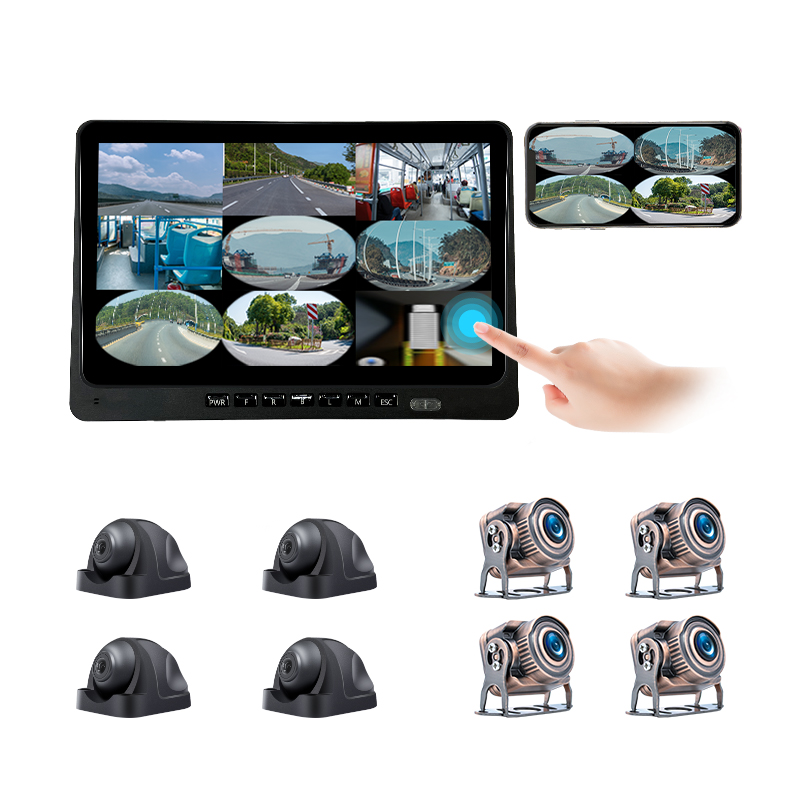
H.265 carries the same picture as H.264 at a far lower bitrate. Published comparisons put the saving between 40 and 52 percent at matched visual quality. On a vehicle, the lower bitrate cuts two costs at once, the billed 4G data and the storage card’s turnover. The saving has conditions attached, in silicon, in decoding support and in licensing. A fleet collects it only after those conditions clear.
A video codec is a set of agreed methods for describing pictures in fewer bits. H.264 standardised one generation of those methods in 2003. H.265 standardised a deeper generation of the same ideas in 2013, under the formal names ITU-T H.265 and MPEG-H HEVC. Either format can run at any configured bitrate. The difference between them is how much picture survives at a given number of bits. On a metered mobile link, that difference sets the bill. On a finite storage card, the same difference sets how many days of footage fit before the oldest recording is overwritten.
The vehicle context makes the question concrete. A vehicle camera writes to a finite card all day. The same camera crosses a billed 4G link whenever the platform watches it or an alarm uploads its clip. Both ends of that chain pay per bit. A codec that delivers the same evidence in half the bits cuts the cost at the card and at the SIM together.
The figures in this subject are checkable. The percentage band comes from formal codec comparisons. The bitrate pairs come from terminal configuration menus. The arithmetic from bitrate to gigabytes follows one fixed conversion. A fleet can verify every step on its own vehicles.
Half the bitrate halves both meters at once, the data bill and the card’s turnover.
The claim has a precise form. At matched visual quality, H.265 needs roughly half the bitrate of H.264. Formal comparisons land the figure between 40 and 52 percent, depending on the content, the resolution and the encoder effort. A common working pair for 1080p runs 4,500 to 6,000 kilobits per second in H.264 against 2,250 to 3,000 in H.265.
The saving is measured at matched quality. An encoder left at the same bitrate in both codecs produces a better H.265 picture and an unchanged stream size. A fleet collects the saving by lowering the configured bitrate after the codec switch, or banks it as picture quality by leaving the bitrate in place.
The saving describes the format’s ceiling. The implementation decides how close a device gets to that ceiling. A poor H.265 encoder wastes the format’s tools. The published band of 40 to 52 percent comes from encoders working the format properly, the level a buyer should expect from a current vehicle terminal.
The percentage also moves with resolution. The newer format was designed with large pictures in mind. Its advantage widens with picture size, largest at 1080p and beyond, smallest at the sizes a supervisory sub stream uses. A vehicle system runs both sizes at once, a large recording tier and a small viewing tier. The two tiers collect different shares of the saving.
The two formats sit a decade apart. The calendar explains the hardware picture. H.264 reached publication in 2003 and spent twenty years accumulating decoder support in every phone, browser and screen made since. H.265 reached publication in 2013. Its hardware spread followed the usual curve, premium chips first, mainstream silicon later, vehicle-grade platforms after that. A third generation exists on paper, H.266, published in 2020 with a further saving target of similar size over H.265. Vehicle terminals do not carry it yet. The practical codec choice on a commercial vehicle today runs between the 2003 format and the 2013 format. The decade between them carries the whole saving in question.
The saving comes from named engineering changes. Each one can be stated plainly. H.264 divides every frame into fixed blocks of 16 by 16 pixels, called macroblocks. The encoder describes the motion and texture of each block separately. That granularity suited the silicon of 2003. H.265 replaces the fixed grid with coding tree units of up to 64 by 64 pixels. Each unit splits recursively into smaller blocks where the picture holds detail. The split stops early where the picture is flat. Fine description gets spent only where fine description changes the result. A vehicle frame shows the effect directly. The sky above the road is one large flat region. The side of the trailer ahead is another. The bonnet across the frame’s lower band is a third. The new format covers each of these with a few large units, saving the dozens of identically described squares the old grid would have spent before motion enters the calculation. The prediction tools add the next layer of saving. H.265 offers thirty-five directions for predicting a block from its neighbours within a frame, against the nine in H.264. More directions mean the encoder guesses more of each frame correctly and spends bits only on the remainder. The motion partitions also shape themselves more closely to objects. A block that tracks a car cleanly costs a fraction of a block that misses it. A new filtering stage, sample adaptive offset, corrects small prediction errors inside the coding loop. The filter lets the encoder predict aggressively without leaving visible damage. Each tool on its own shaves a few percent. Stacked together, the tools compound into the published 40 to 52. The same tools set the cost. Choosing how to split each tree, which of thirty-five directions to predict from and which partition to give each moving object is a search several times larger than the old one. Encoding complexity runs three to ten times H.264’s level. The saving arrives only on silicon built to afford that search. The half is real. A chip pays for it on every frame. The format also separates prediction blocks from transform blocks, two partitions chosen on their own trees. The encoder matches the prediction to the object in the scene. It matches the transform to the texture under it. The extra freedom costs more search. It returns more compression, the same trade as every other tool above.
Vehicle footage favours the new format in one specific way. Cameras bolted to a vehicle stare at compositions that change predictably. The road flows in one steady direction. The cab interior barely moves. A parked vehicle’s frame is nearly still. Predictable change is the input that stronger prediction converts into saved bits. Long motorway stretches and depot idling compress at the generous end of the band.
The saving shrinks where the picture stops being predictable. Night footage carries sensor grain. Grain is randomness no predictor can guess. Both codecs spend bits encoding that noise. The gap between them narrows on those hours. Heavy rain fills the frame with uncorrelated motion. Vibration smears detail from frame to frame. A working fleet should expect a blended figure: generous savings on the daytime motorway hours, thinner savings on the night and weather hours. The blend across a normal duty cycle still lands above a third.
The parked hours push the blend upward. Vehicles that record while parked spend long stretches on a nearly static scene, the easiest content a codec ever meets. A fleet with overnight yard recording collects savings near the top of the published band on exactly those hours. The hours are many and the scene is still. The storage those hours would have consumed shrinks the furthest.
The bitrate mode decides how the scene savings get banked. A variable-bitrate setting lets the encoder spend less on still scenes and more on busy ones, so the saved bits show up directly as smaller files and lighter streams. A constant-bitrate setting holds the stream at its configured figure through every scene, easier for network planning, blind to the easy hours. Vehicle terminals commonly offer both modes per stream. A recording tier on variable bitrate collects the codec’s full scene-by-scene advantage. A live tier on constant bitrate keeps the control room’s bandwidth predictable. The mode line sits beside the codec line in the same configuration menu. The two lines together decide what the card and the SIM see.
The interval between full frames sets one more dial. A codec sends a complete frame at intervals and predicts the frames between them. Longer intervals save bits. They also make seeking coarser, because playback lands on complete frames. Vehicle terminals commonly run intervals of one to a few seconds, a band that suits both codecs. An alarm clip carries a complete frame at its start for the same reason. This dial moves the saving by single percents, far below the codec step itself, a tuning detail behind the main decision.
The encoder’s effort setting moves the figure inside the band. Every encoder trades search depth against speed: the more depth it spends, the nearer it lands to the published ceiling. Vehicle terminals run fixed hardware pipelines tuned by the maker, so this question arrives settled in the chip. The 40-to-52 band already spans that spread across real encoders. That spread is the reason the published figure is a band.
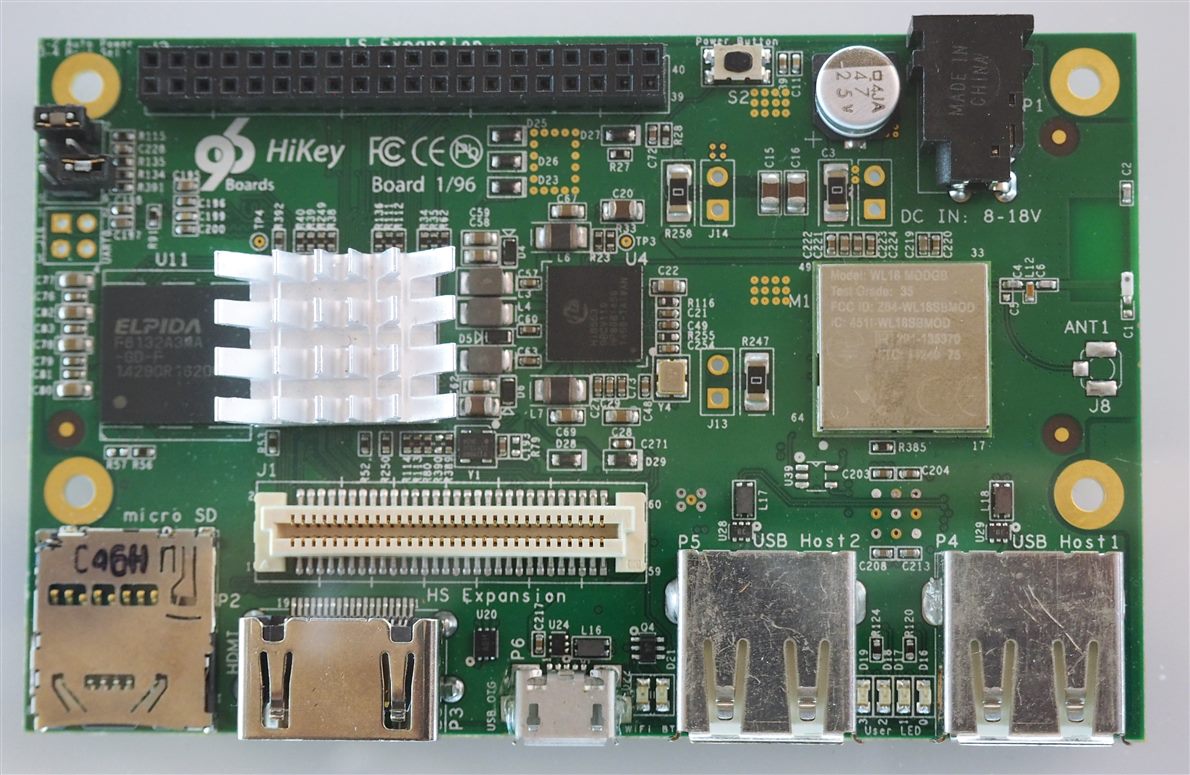
The first cost is silicon. The encoder search that produces the saving runs three to ten times the computation of H.264. The capability lives in a hardware encoder block inside the terminal’s chip. A chip without that block cannot gain H.265 from a firmware update. On vehicle terminals the codec line works as a generation marker, present in current platforms.
The second cost sits at the far end of the link. Every player of the stream has to decode it: the platform’s live wall, the playback clients, the clip viewers an insurer or a regulator opens. The transport standards name H.264 and H.265 alike, so the protocol allows either. The open question is decode support at each platform in the chain. A fleet’s own platform usually decodes both. The provincial platform and the third-party reviewers each need a confirmed answer before the switch.
The decode side carries far less weight than the encode side. The asymmetry favours the migration. Decoding a stream is a fraction of the work of encoding one. Phones have decoded H.265 routinely for years. Desktop players follow with software updates where the hardware lacks a block. The heavy three-to-ten-times cost sits entirely at the camera end, inside the terminal’s encoder, leaving the platform end needing mostly current player software. This is the reason the decode checks usually come back positive on current systems. The same asymmetry concentrates the silicon question on the vehicle.
The third cost is licensing. H.265 royalties spread across several pools, against the single long-settled pool H.264 ships under. The complexity lands on the device maker and reaches the buyer as a share of the device price. It explains part of the price difference between otherwise similar terminals. It changes nothing in operation. The fee sits per device, settled at manufacture, invisible on the data bill and on the card.
The fourth cost is heat. An encoder working several times harder dissipates more power inside the same sealed housing. The housing already sits in a cab that bakes in summer. Vehicle-grade terminals carry thermal designs sized for the load. The point matters at purchase: codec capability and thermal design meet inside one enclosure. The datasheet for one should be read beside the other.
The saving clears these four costs in almost every current purchase. The silicon cost disappears when the terminal generation already carries the encoder block. The decode cost disappears once the platform chain confirms support. The licensing cost arrives pre-paid inside the device price. The heat cost is the device maker’s design work. A fleet buying current equipment collects the saving without engineering any of this itself.

Halving the bitrate halves both meters at once. The storage meter: a main stream at 4 megabits writes about 43 gigabytes a day per channel, near 21 in H.265 at matched quality. A card that held two weeks of H.264 recording holds about a month of H.265. The retention the recorder rules price in days doubles on the same hardware. The data meter: every watched minute and every alarm clip crosses the 4G link at the stream’s bitrate. The halved stream halves the billed bytes for the same viewing habits.
The conversion rule prices it exactly. A stream of 1 megabit per second held for an hour moves 0.45 gigabytes, in either codec. The codec decides how many megabits the same picture needs. A sub-stream viewing hour that cost a quarter of a gigabyte in H.264 costs near an eighth in H.265 at matched quality. A composite vehicle that spent seven gigabytes a month spends proportionally less, with the discretionary viewing line shrinking the furthest. One ratio applies across the whole sheet.
A worked month shows the scale. The companion page on 4G consumption builds a composite vehicle at about seven gigabytes a month: a tenth of a gigabyte of telemetry, around one and a half of alarm parcels, four and a half of sub-stream viewing, one of playback. The codec ratio touches every video line and leaves the telemetry alone. At matched quality in H.265 the same habits price out near three and a half to four gigabytes: the telemetry tenth unchanged, alarms near 0.8, viewing near 2.3, playback near 0.5. The same habits now fit a lower contract tier.
The retention rules give the doubling a regulatory reading. The recorder requirements price storage in days of held footage. A card that doubles its days clears the same retention requirement with half the hardware. A fleet specifying new vehicles can hold the card budget level and bank the margin as retention beyond the minimum. The figure an inspection asks about doubles on the same purchase order, with no line added to it.
The same ratio also reads as headroom. A card that carried four channels of H.264 recording carries eight channels of H.265 at matched quality and equal retention. A fleet adding cameras, a second interior view, a cargo door, a reversing channel, can add them inside the existing storage and data budget. The choice between collecting the ratio as lower cost or as added coverage belongs to the fleet. Both readings come from the same halving.
Real fleets migrate vehicle by vehicle. The standards anticipate that. The codec is a per-stream property in the transport protocol family, declared when each stream opens. An H.265 vehicle and an H.264 vehicle report to the same platform side by side. Nothing forces a single switch-over day. The new codec arrives as terminals renew on their own replacement cycle.
The sequencing starts at the decoding end. Confirm the platform chain decodes H.265 first: the fleet’s own platform, the provincial docking, the clip-review paths. A stream nobody downstream can open is a saving nobody collects. Switch the recording tier next, because storage collects the saving on every recorded hour with no dependence on anyone’s habits. Switch the live tier last, after the control room confirms its wall renders the new streams cleanly.
An audit habit keeps the migration honest. The card-day and data figures of converted vehicles should step down visibly against unconverted vehicles doing the same work. A converted vehicle whose numbers did not move is a configuration still encoding the old format. The per-vehicle spread surfaces that finding within one billing cycle.
The per-stream property also makes the migration reversible. A vehicle whose new streams give trouble on some reviewer’s player goes back to H.264 with a configuration push, with no hardware touched and no visit to the vehicle. The low cost of reverting takes the risk out of trying. A fleet can convert a pilot group, watch the card-day and billing figures for a cycle, then roll the change wide on its own evidence.
The older codec keeps real ground at the small end. A supervisory sub stream runs at a few hundred kilobits. Half of a small number is a small saving, set against the large convenience of universal compatibility with every screen that might open the stream. Many fleets run the recording tier in H.265 for the storage gain, keeping the sub stream in H.264 for frictionless viewing. The per-stream codec property makes that split a routine configuration.
Footage handed to third parties follows the same logic. Lawyers, insurers and counterparties open clips on unknown players. H.264 opens everywhere. An export path that hands over raw files is a reason to keep the export tier in the older format.
Transcoding settles the export question where it appears. A platform that converts clips to H.264 on the way out hands every recipient a file that opens anywhere. The conversion runs once per exported clip at the platform, a light job at clip length. A fleet with that export path can move every vehicle tier to the newer format. The recipient never meets it.
Archived evidence follows the export rule with extra years on it. A clip stored for a legal hold may be opened long after the fleet’s systems have changed, on whatever player that later year runs. H.264 carries the safest long-horizon compatibility today. A fleet that archives in the newer format keeps a known player beside the archive. The choice costs one line in the archive procedure, written once and applied to every clip that enters the hold.
The decision is a per-stream table. Each format takes the tiers where its strength is the deciding cost, the bit-saver where bits cost most, the universal opener where friction does. A fleet fills in the table once and revisits it as platforms and players catch up.
Resolution growth pushes the table toward the newer format over time. Fleets are adding higher-resolution forward cameras, 4-megapixel and 4K units whose plates and faces read at distances the older sensors missed. The codec advantage widens exactly at those large picture sizes. The storage cost of 4K in H.264 is heavy enough to decide the question alone. A fleet planning a resolution step is planning an H.265 recording tier with it. The two upgrades arrive as one decision.
The published percentages came from test content. A fleet can measure its own. Take one vehicle. Record a representative day in each codec at matched quality settings. Read two numbers the system already keeps: the recording’s size on the card and the data the SIM spent on a fixed viewing script. The ratio between the pairs is the fleet’s own saving, blended across its real scenes.
The check costs one technician-day. It settles the argument a brochure starts. A fleet that measures 42 percent on its own footage sizes its cards and contracts on 42, with no further interest in the 52 a laboratory measured on cinema content. The measured number is the one the budget can rely on. The same test run twice a year also tracks drift, because camera changes, route changes and firmware updates each move the blend a little.
The codec section of a terminal datasheet answers three checks, each one a line a buyer can point at. Hardware H.265 encoding, stated plainly, separates native capability from marketing wording. Per-channel and per-stream codec choice separates a usable migration tool from an all-or-nothing switch. Decode confirmation across the platform chain, requested from the integrator in writing, separates a collectable saving from a stranded stream.
A terminal that passes all three turns the half claim into a configuration decision the fleet controls. The three checks take minutes at the specification stage and replace months of assumptions after delivery.
The naming on the page needs its own check. HEVC and H.265 name the same format, one tag from the MPEG side and one from the ITU side. A datasheet may use either. A line reading H.265 playback or H.265 ready can describe a decoder alone, a device able to display the format it cannot produce. The line that matters for the saving reads H.265 encoding, in hardware, per channel. A buyer who asks the supplier to point at that exact line gets the capability question answered on the spot.
Confirm the terminal encodes H.265 in hardware, offers the codec per stream and reports to a platform chain confirmed to decode it. Collect the saving by lowering the configured bitrate after the switch. The card days and the data bill then move together, by the same ratio the comparisons published.
Between 40 and 52 percent at matched visual quality in published comparisons, with around half as the working figure. For 1080p, configurations that need 4,500 to 6,000 kilobits per second in H.264 land near 2,250 to 3,000 in H.265. A working fleet measures a blend across day, night and weather footage, normally above a third. The saving applies to storage and to transmitted data alike, because both run at the stream’s bitrate.
No. The same gain goes to a smaller stream when the configured bitrate drops after the switch, or to a better picture when it stays. The switch itself takes one configuration push per stream.
Sensor grain is randomness. Prediction cannot guess it. Both codecs spend bits encoding the noise, so the gap between them narrows. Daytime road footage, with predictable motion and large uniform regions, compresses at the generous end of the band. The fleet’s real figure is a blend of the two.
Generally no. The encoding runs three to ten times H.264’s computation and lives in a hardware encoder block inside the chip. Silicon without the block cannot gain it from software. The capability arrives with terminal generations whose chips carry the block natively. A buyer checks the encode line on the chip’s own datasheet where any doubt remains, because the terminal brochure sometimes describes the decoder.
Yes. The vehicle video protocol family names H.264 and H.265 alike, with the codec declared per stream when each stream opens. The practical question is decode support along the platform chain: the fleet’s own platform, the provincial docking and the clip-review paths each need a confirmed answer.
Often last, sometimes never. At sub-stream bitrates the absolute saving is small. Universal H.264 compatibility keeps casual viewing frictionless. A common split runs the recording tier in H.265 for storage and the sub stream in H.264 for reach, using the per-stream choice the standards provide. The split costs nothing to hold and nothing to change later, so it suits a fleet that wants the storage gain now and the viewing change on its own schedule.