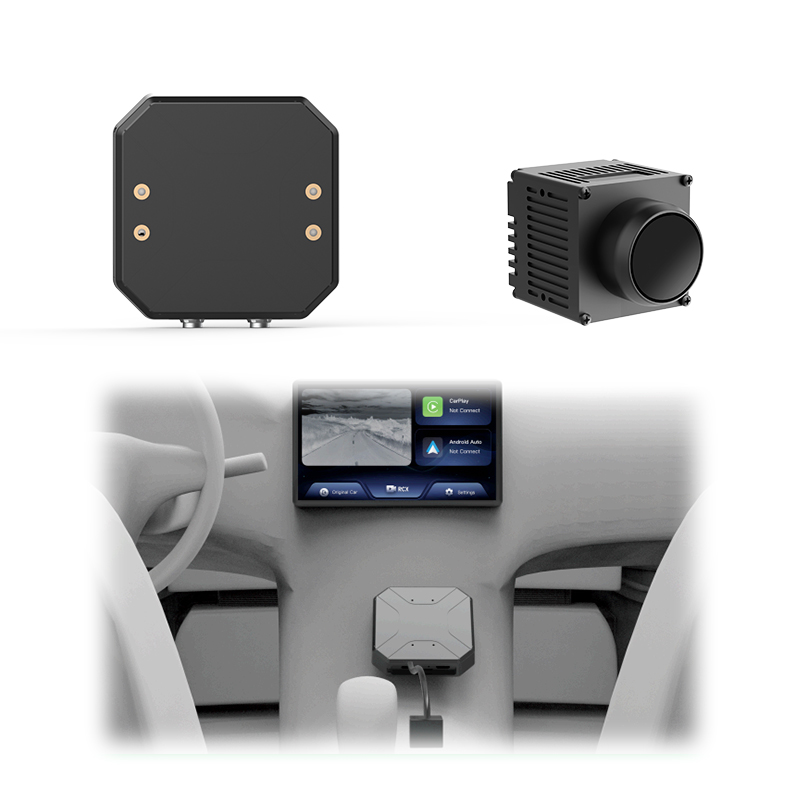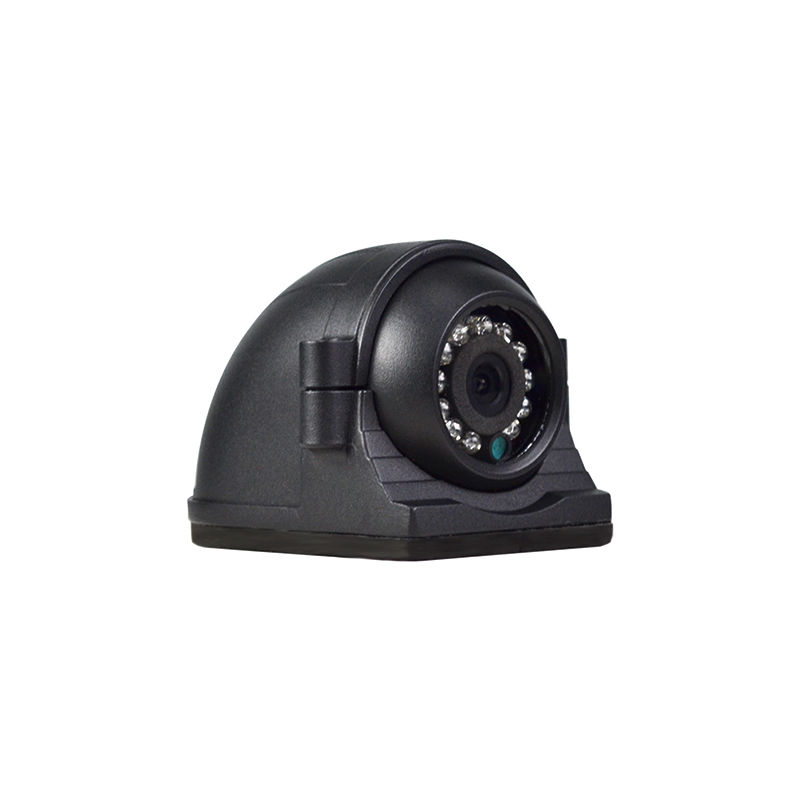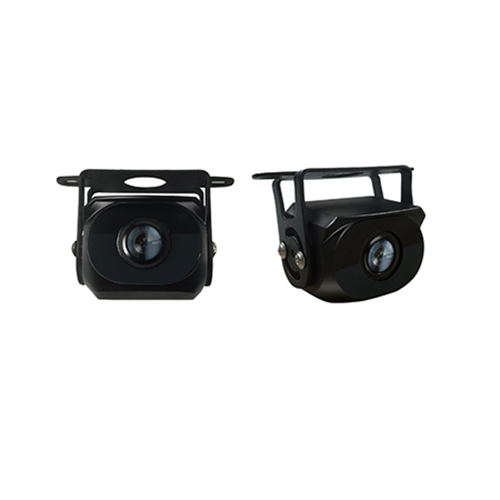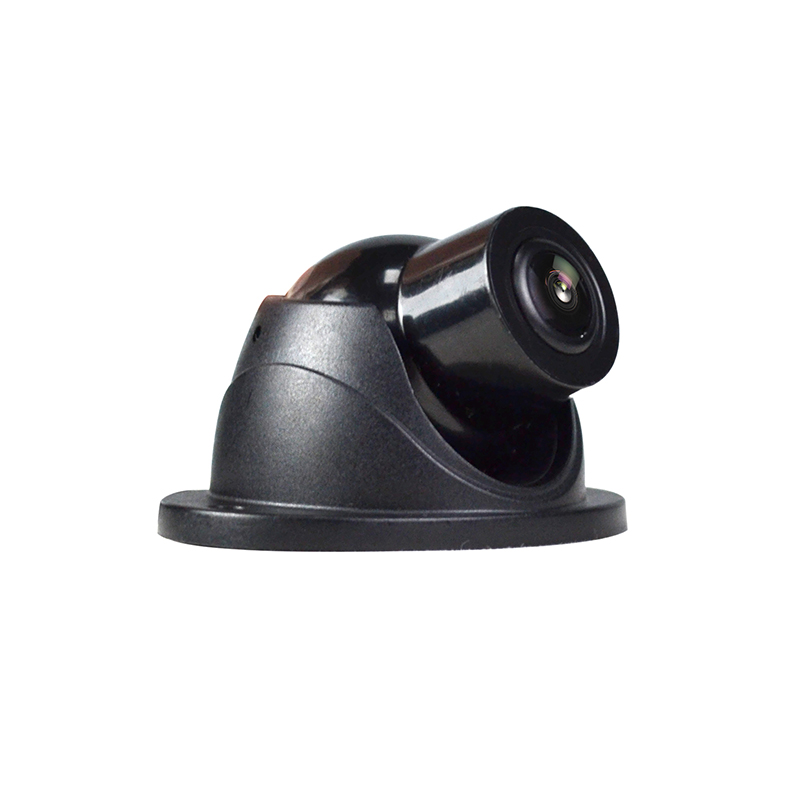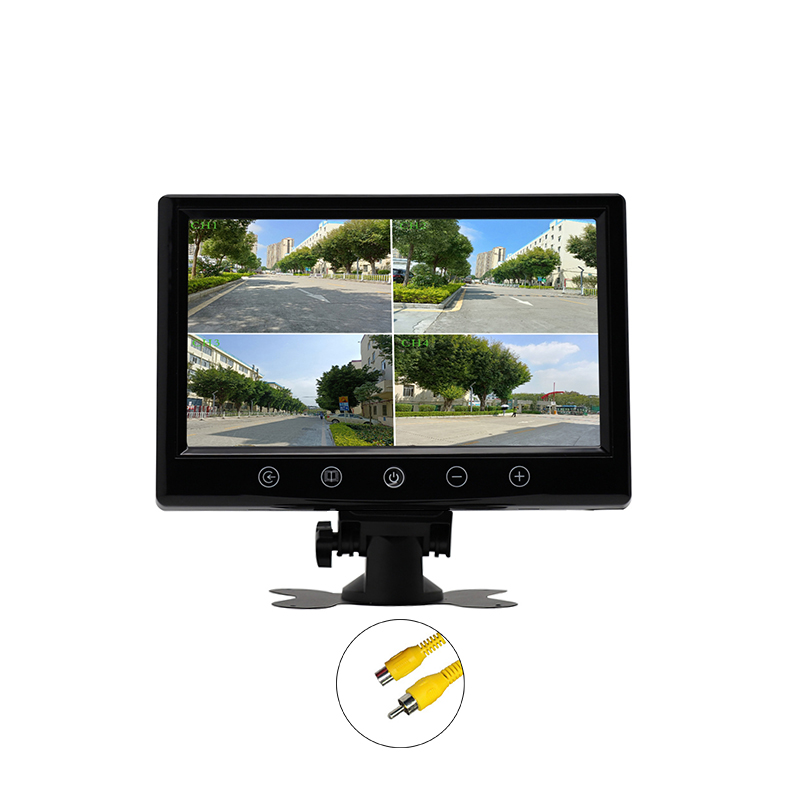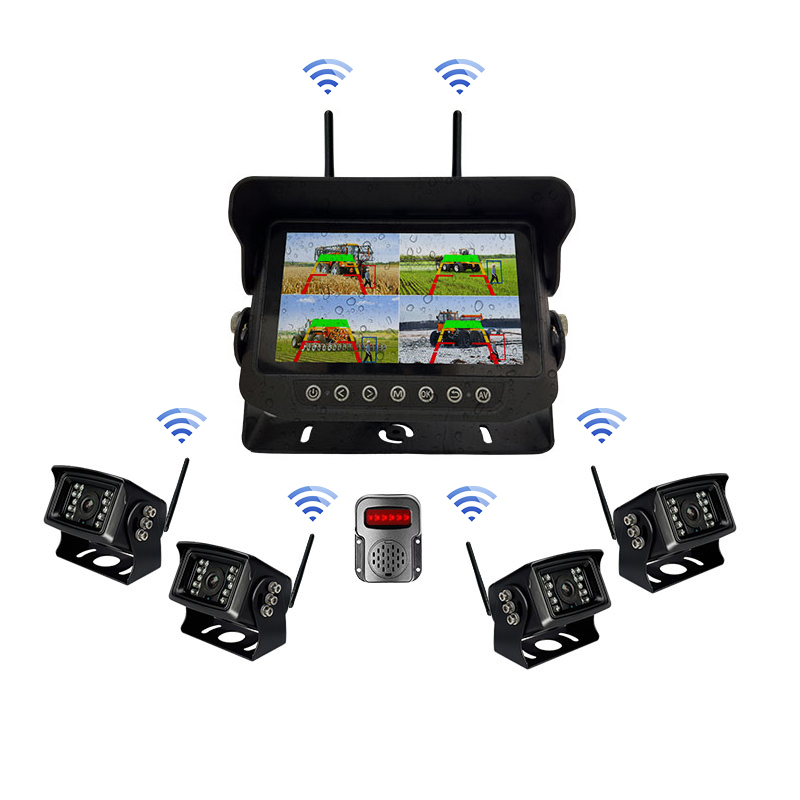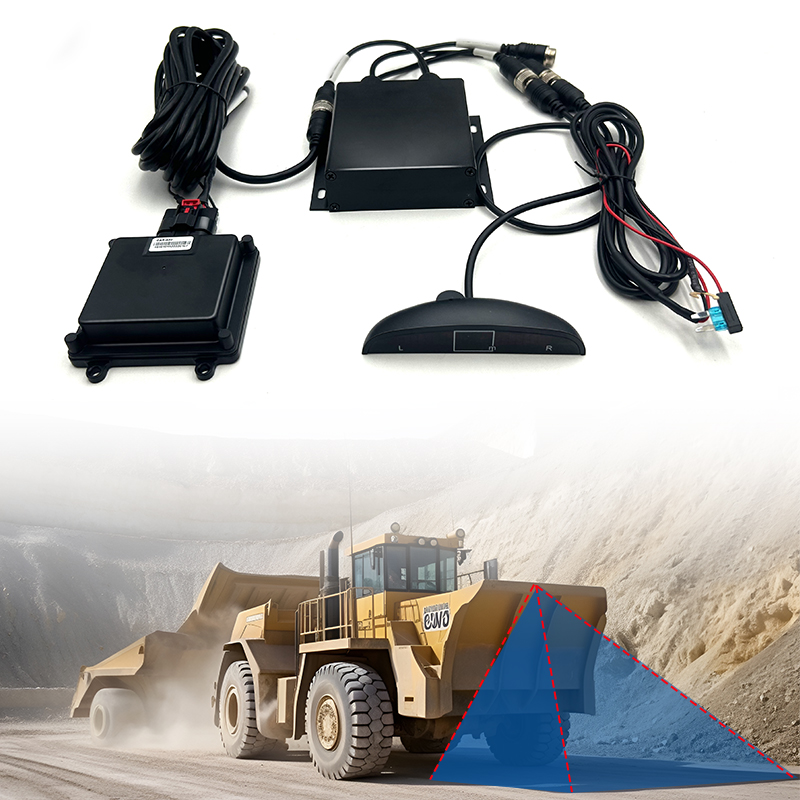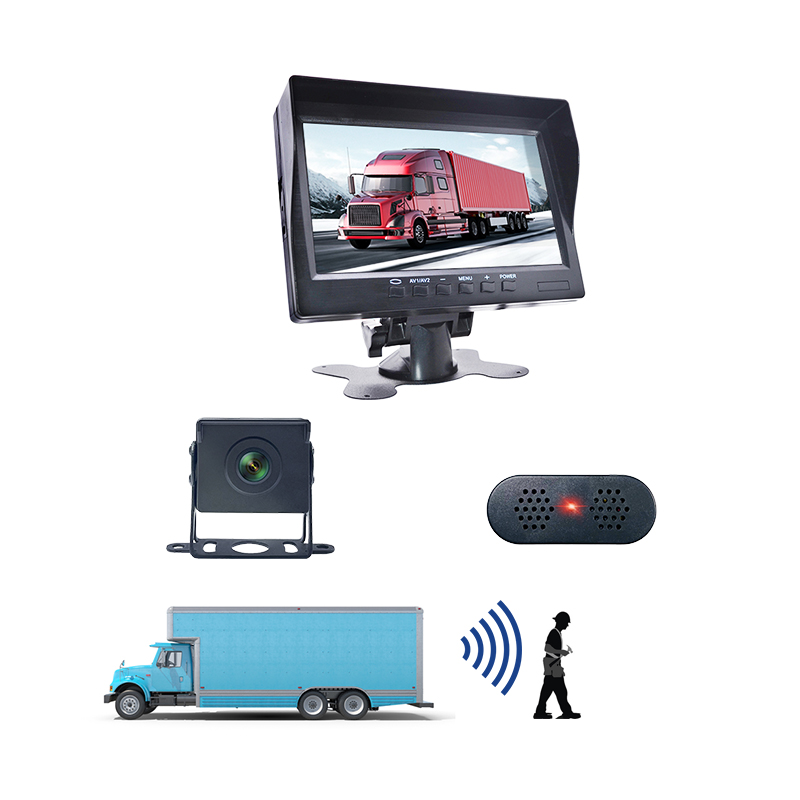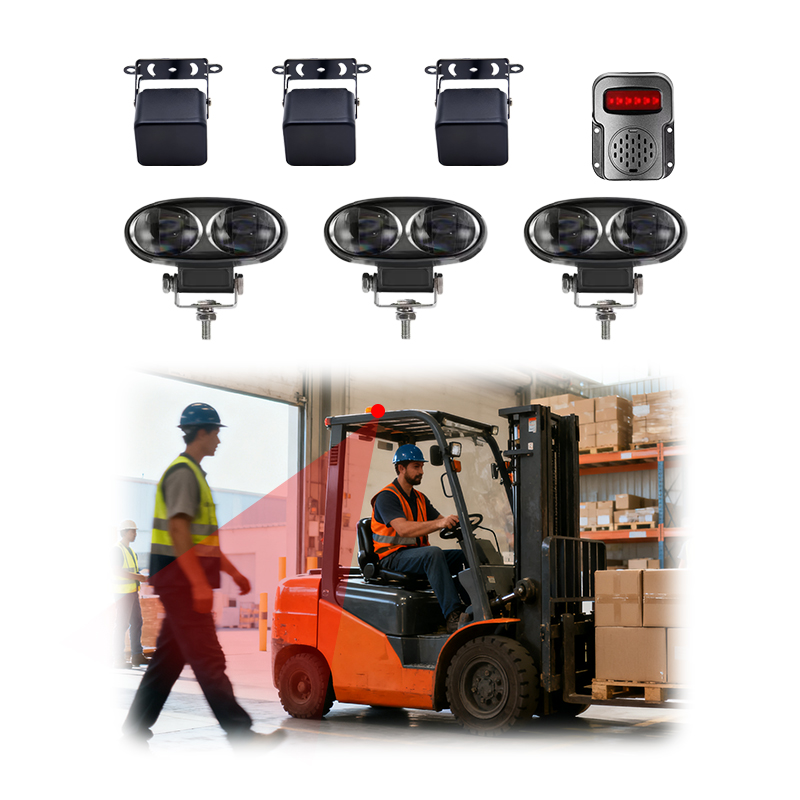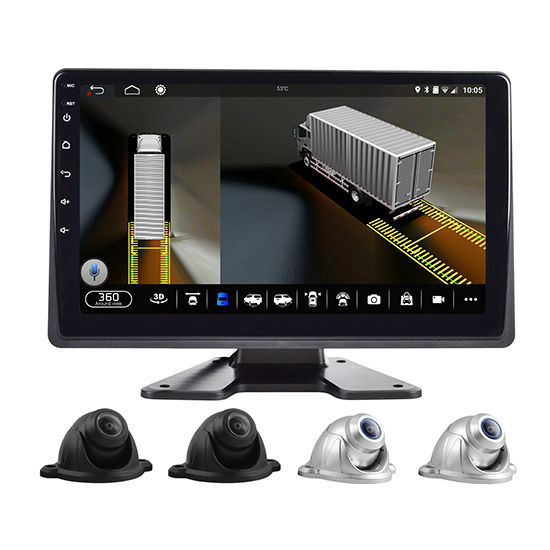
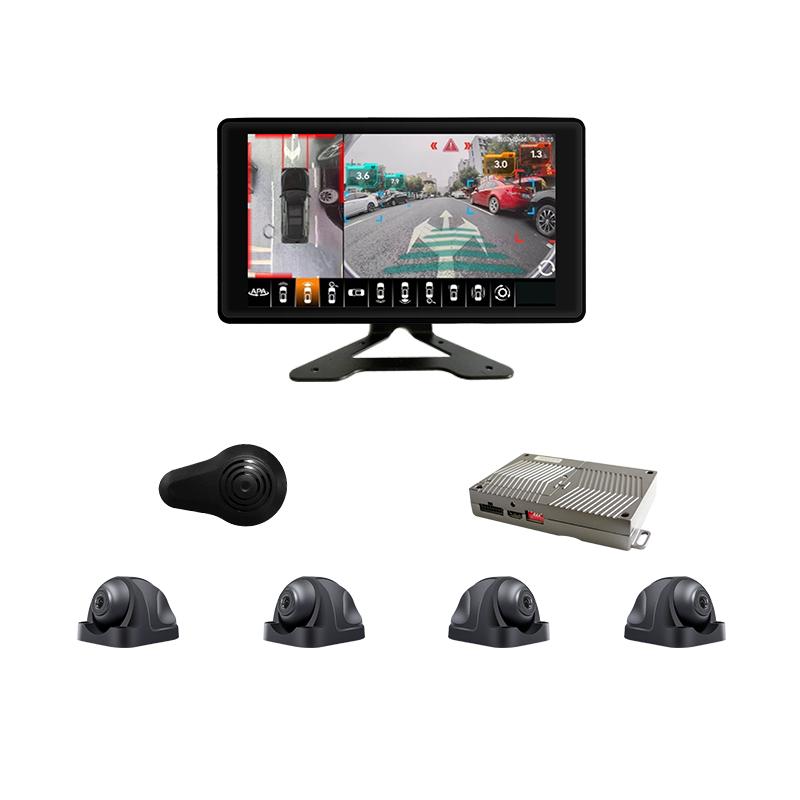
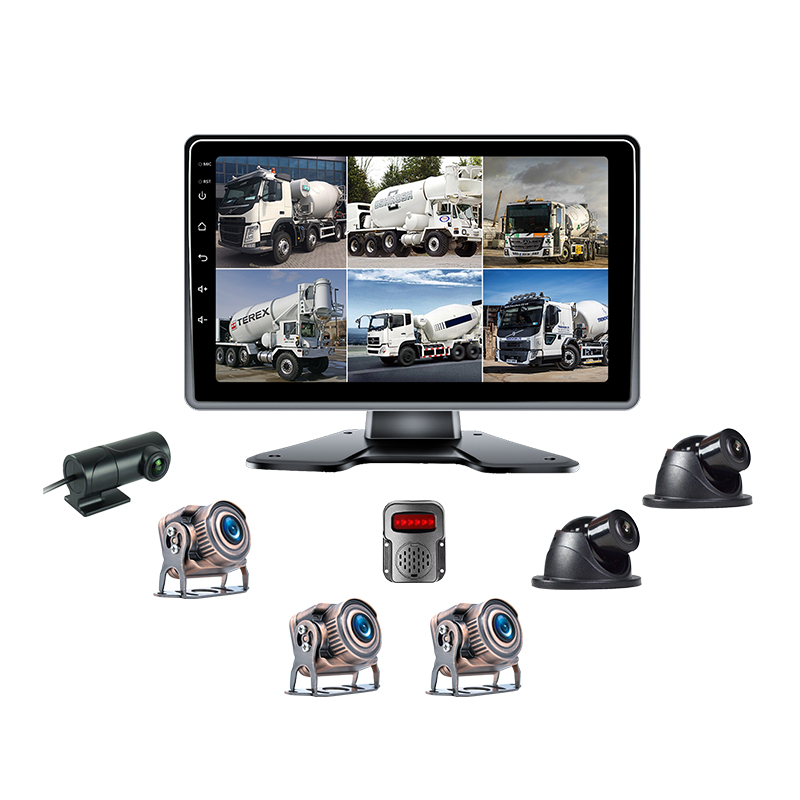
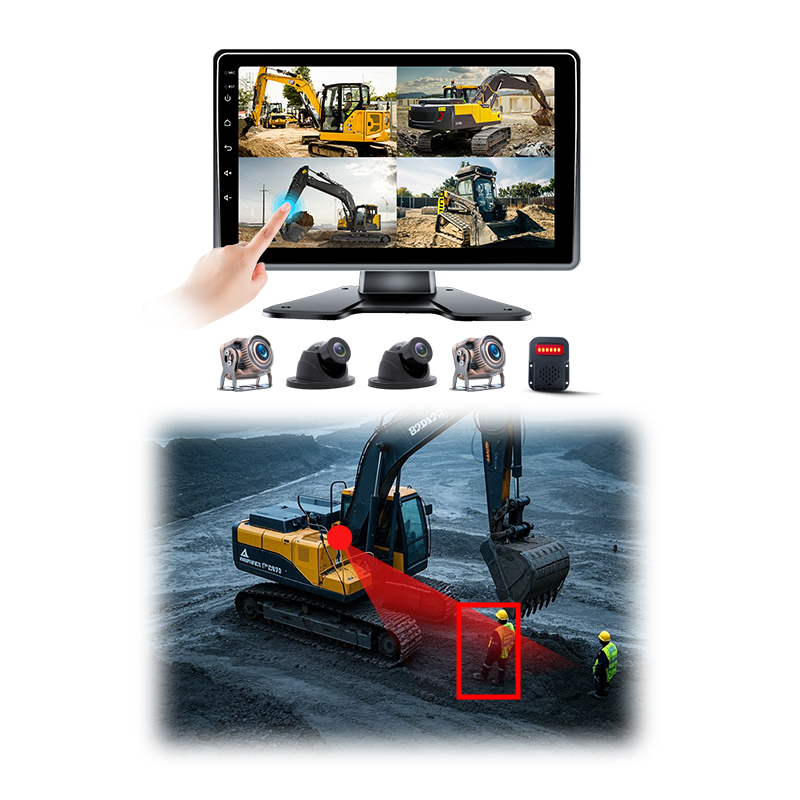
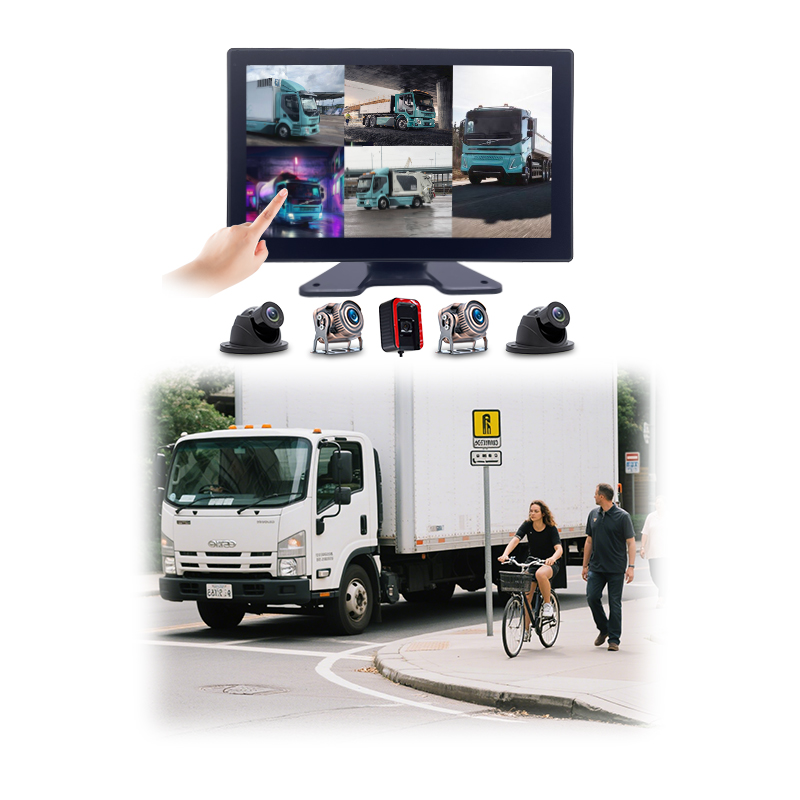
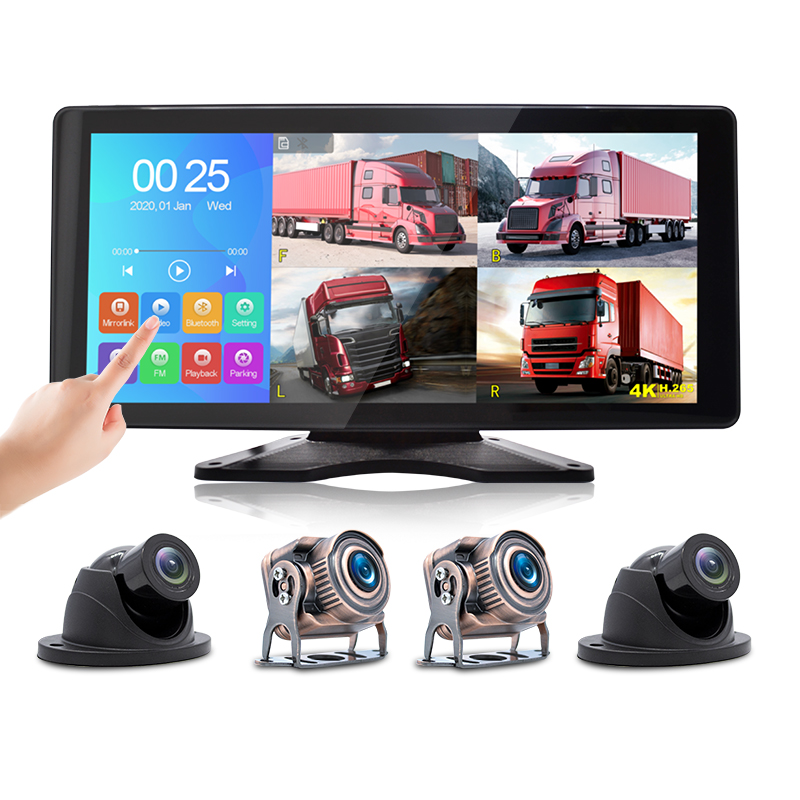
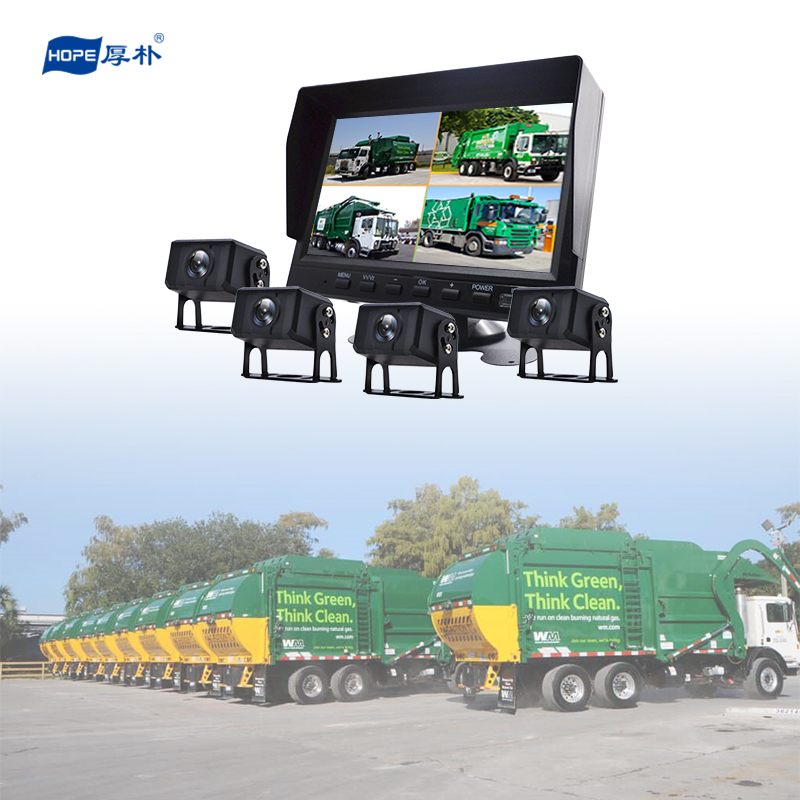
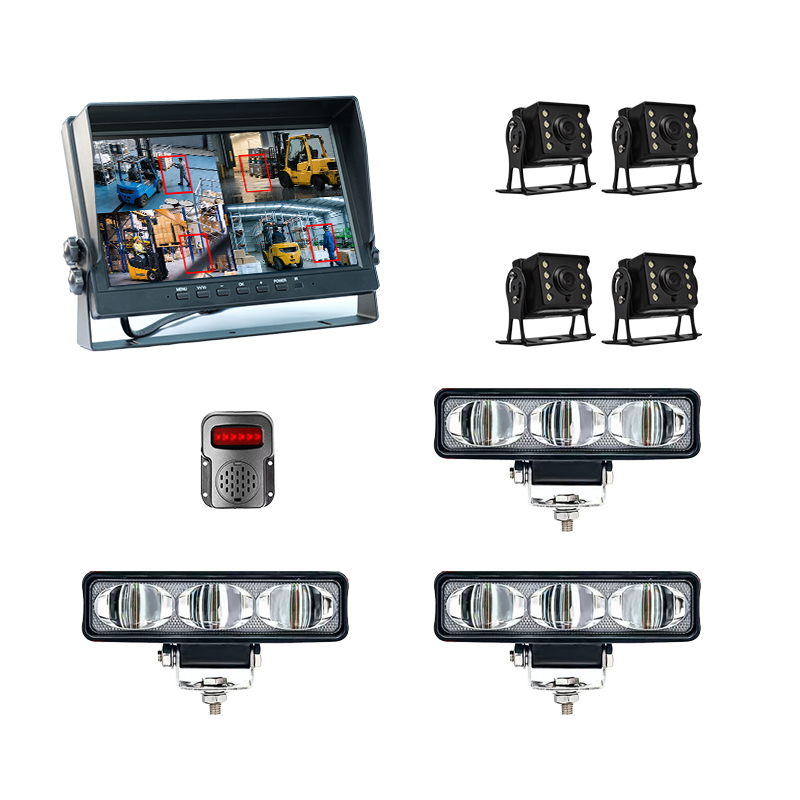
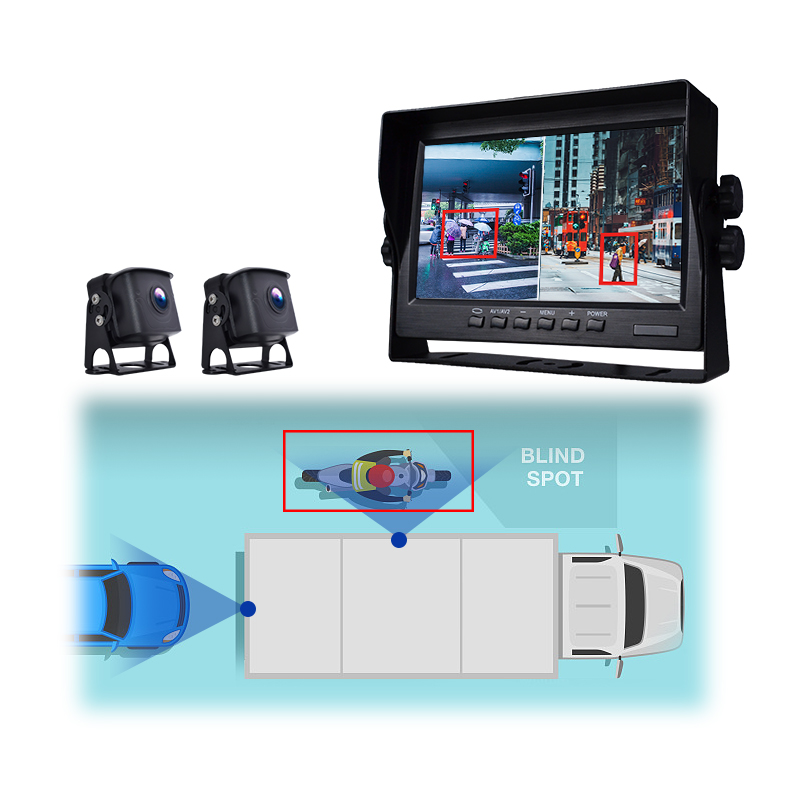
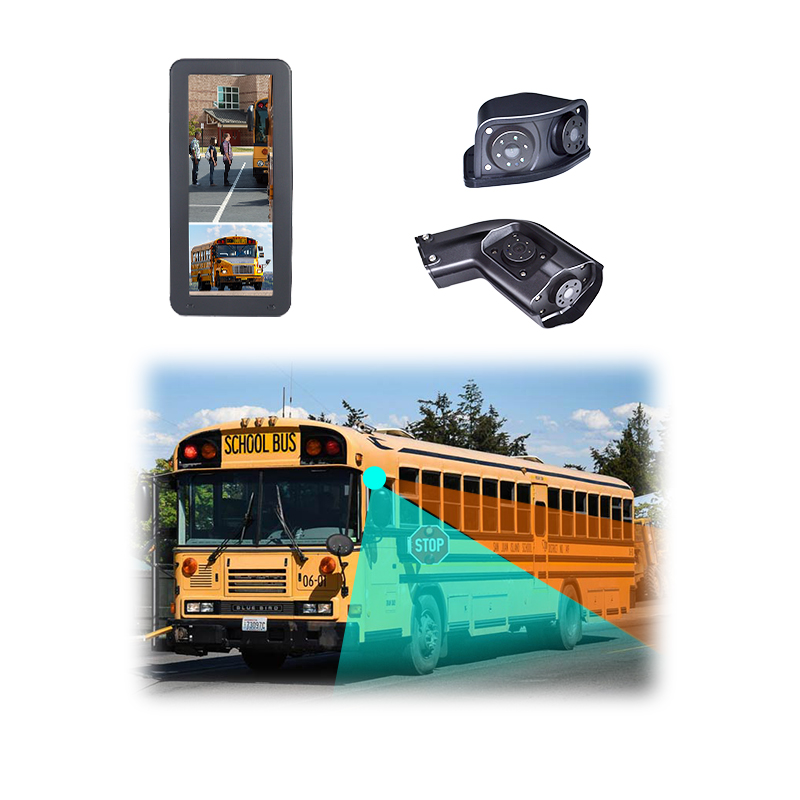
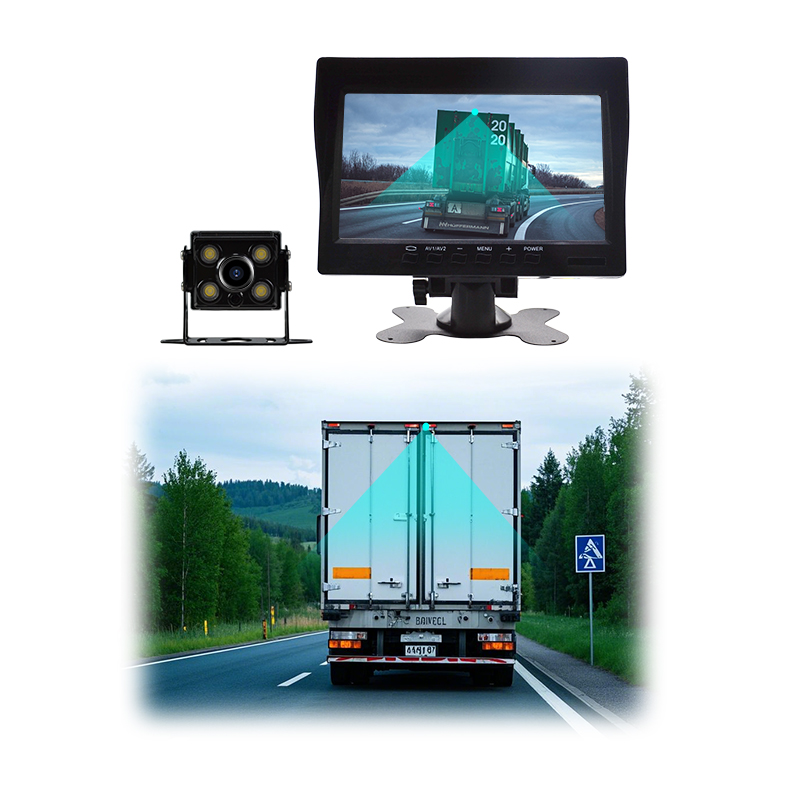
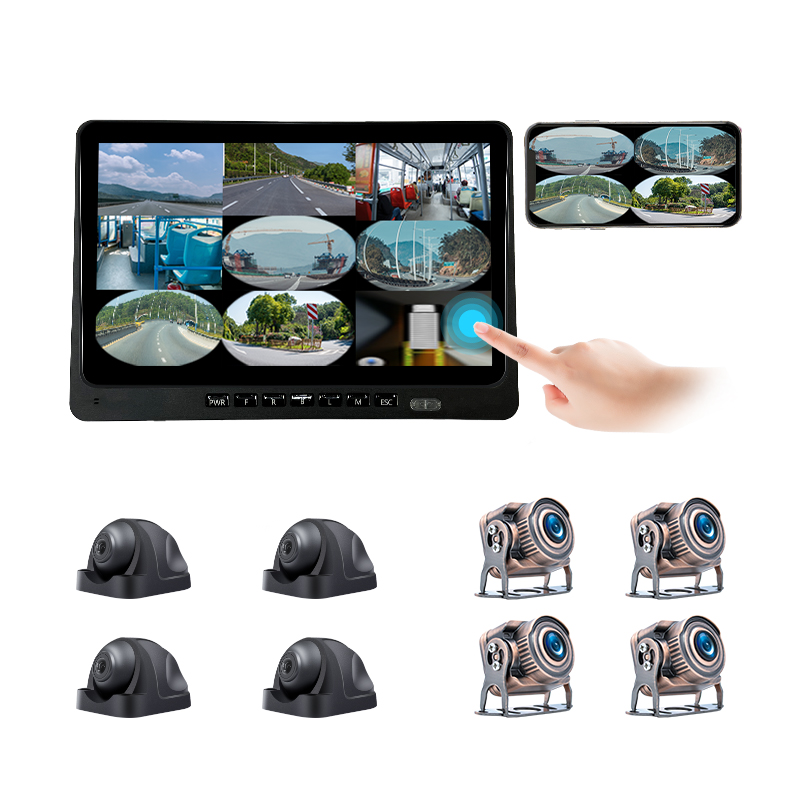
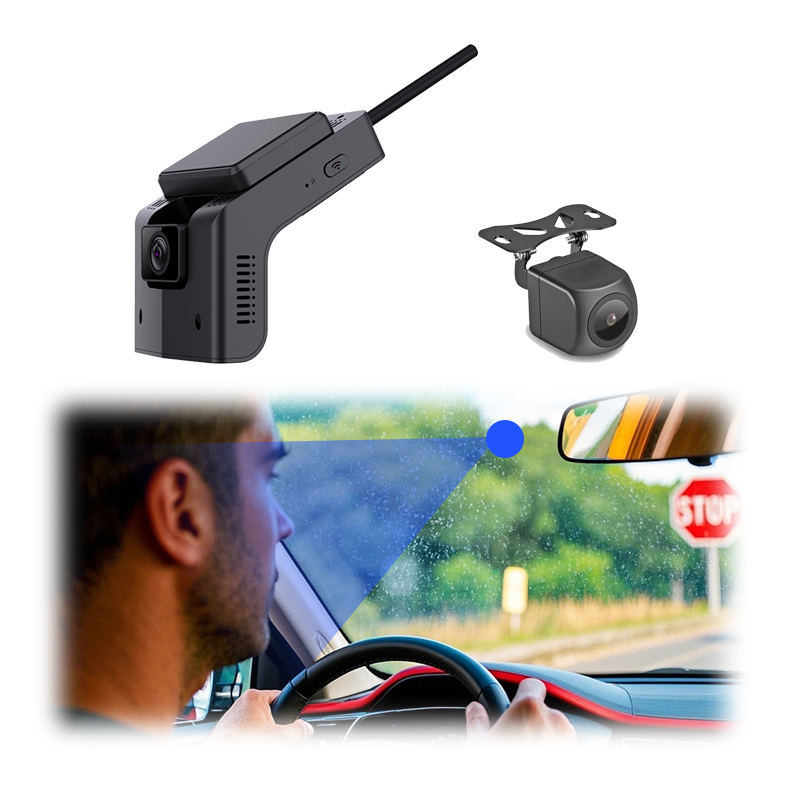
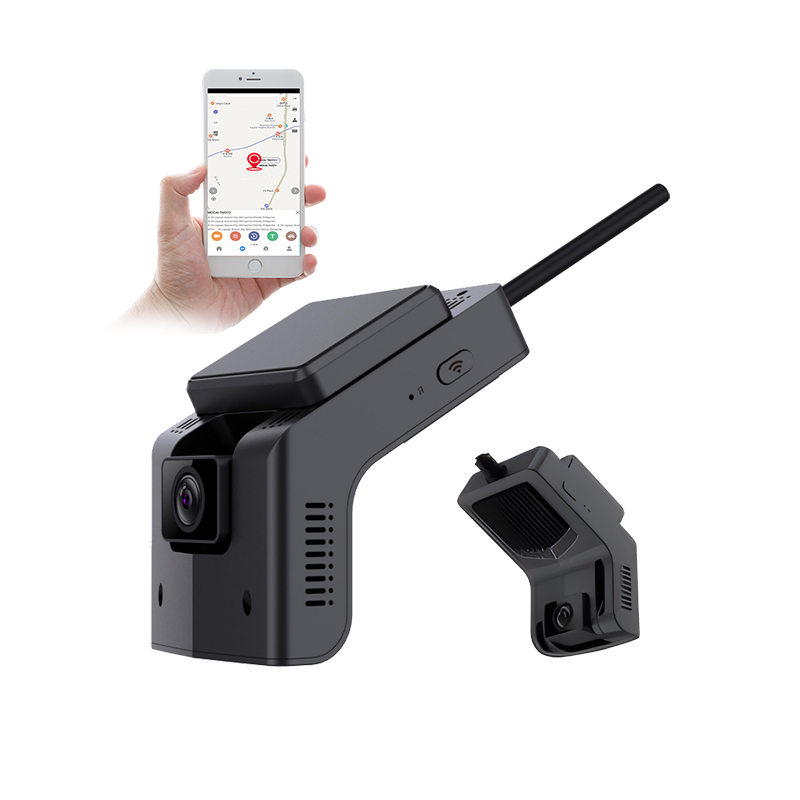
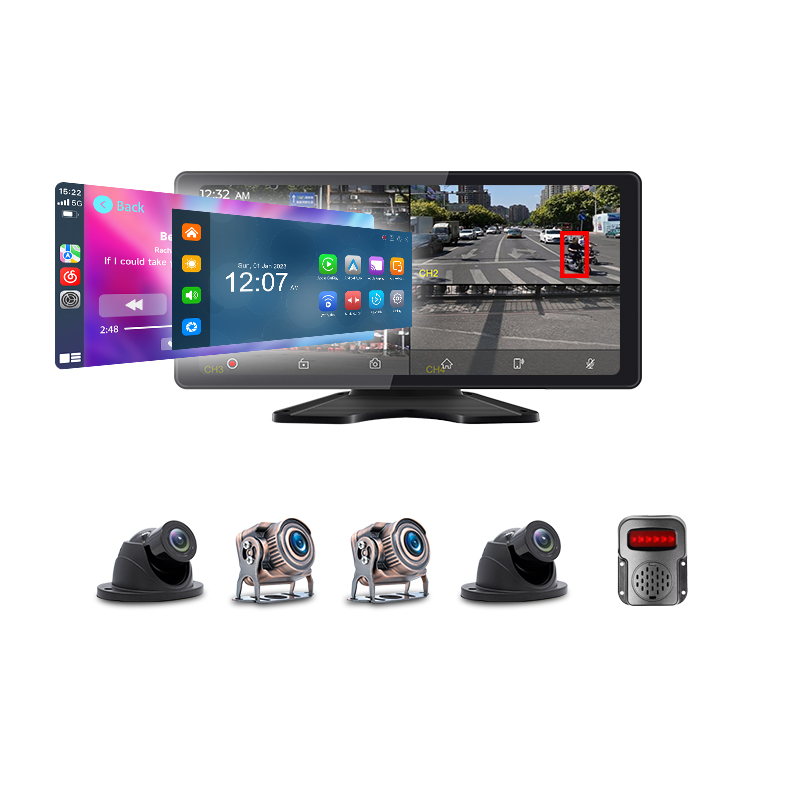
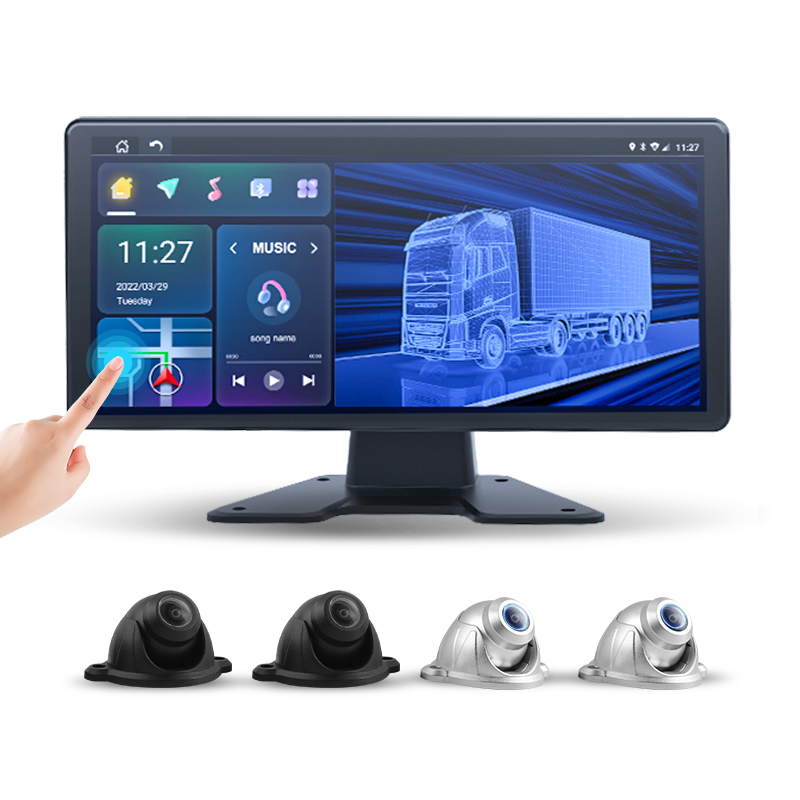
Four cameras around the body, one overhead picture on the screen. The driver sees the front, the rear and both sides of the truck or bus at once, with no mirror guesswork at the kerb or the wheels.
Model HP-K9AR
The HP-K9AR is built around the problem every large vehicle has: from the cab the driver cannot see the wheels, the kerb, or a person standing close to the body. Four wide-angle cameras mount at the front, rear and both sides, and the head unit warps and stitches their feeds into a single picture looking straight down on the vehicle and the ground around it.
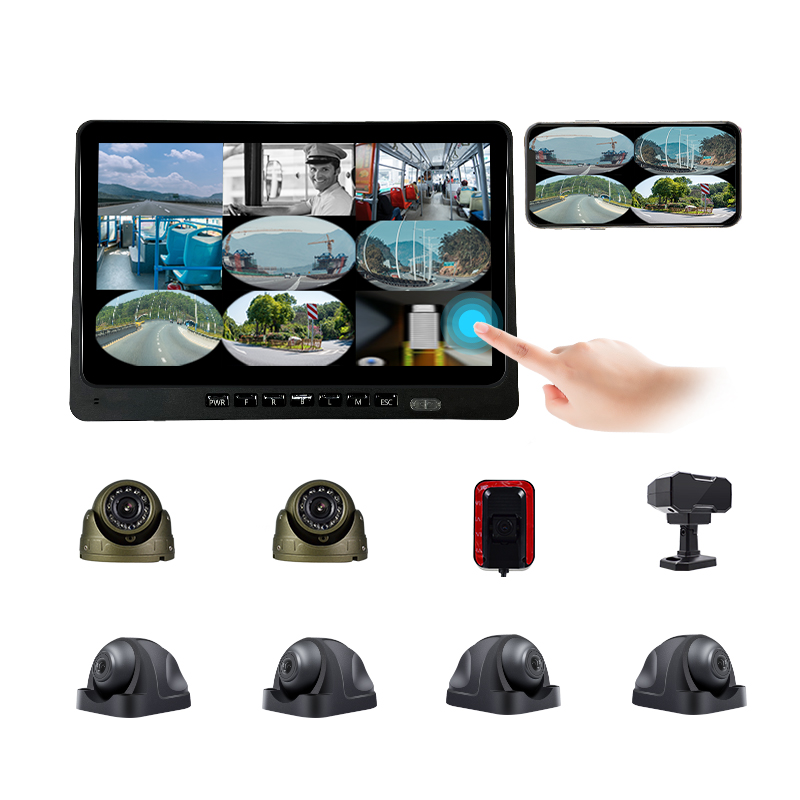
That view updates live as the vehicle moves. The driver can stay in a flat 2D overhead for parking and tight turns, or switch to a 3D model that tilts around the body to judge clearance along a trailer or the side of a coach. Four channels of 1080P record the whole time, so there is footage to pull whether or not anyone was watching the screen.

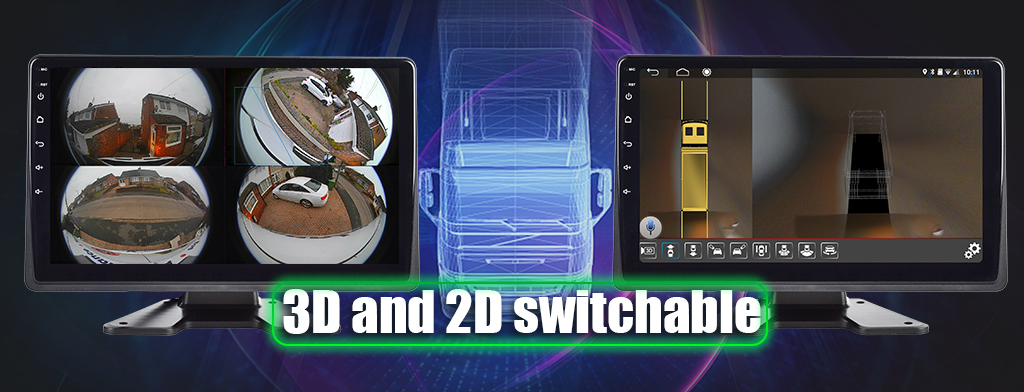
The overhead picture comes two ways. The 2D mode lays the four feeds flat into a clean top-down image, which is what you want for parking and squeezing through a gate. The 3D mode builds a model of the vehicle you can rotate, so the driver can look down the long side of a trailer or around the tail before swinging it out.
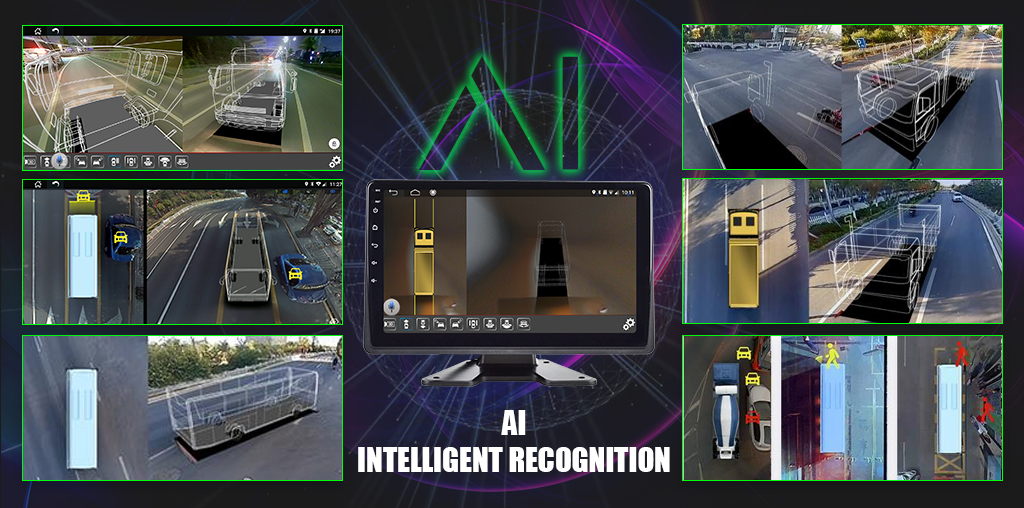
Built-in recognition watches the stitched view for pedestrians and vehicles moving into the danger zone around the body, and warns the driver before they would have caught it in a mirror. It is the layer that turns a camera system into an active alert rather than something the driver has to remember to glance at.
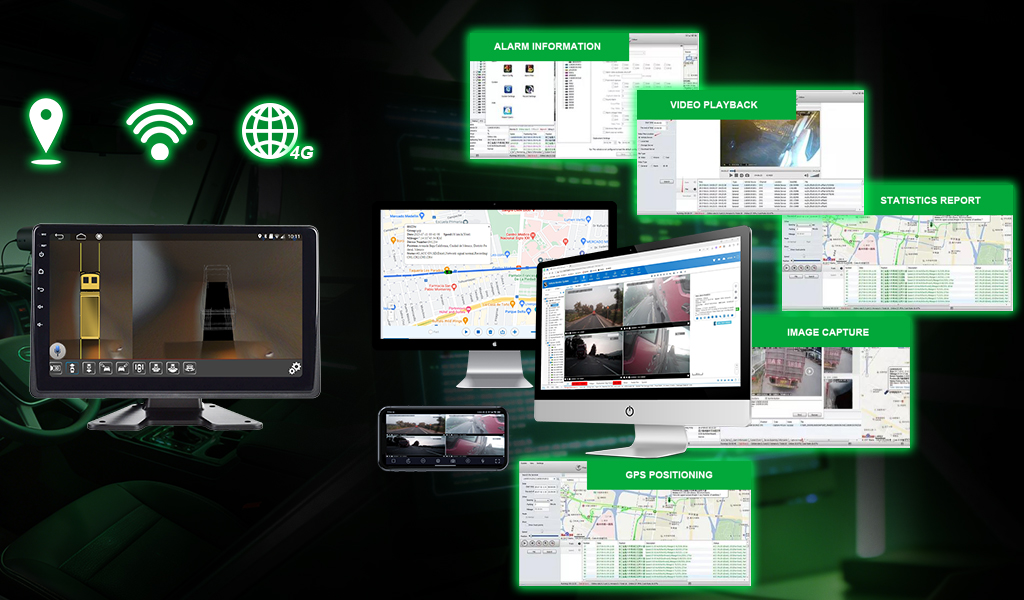
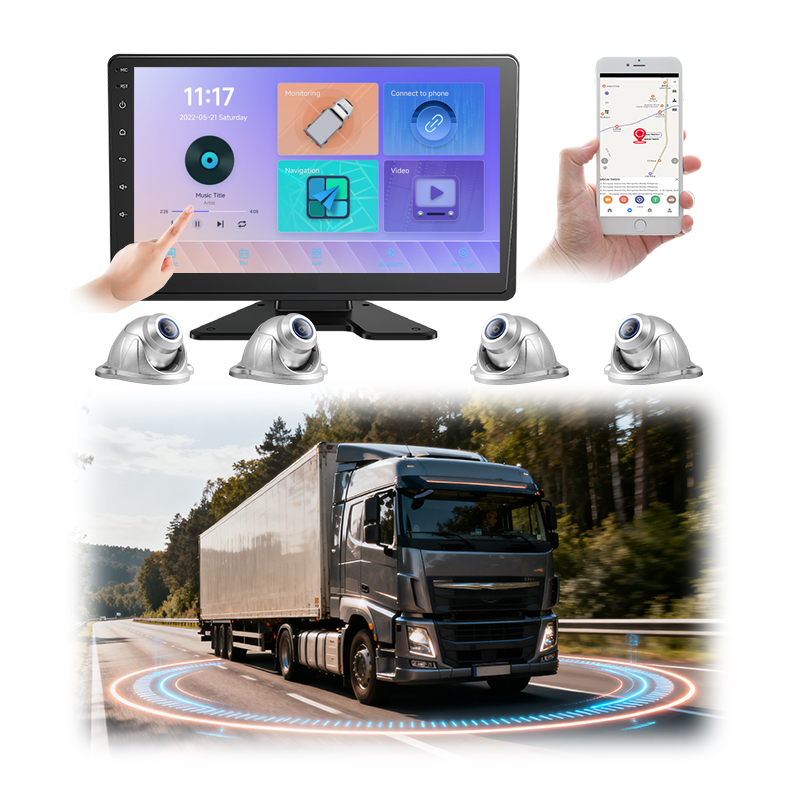
The unit speaks to the CMSV6 platform that fleets already run for tracking and evidence. From the office you get live video, recorded playback, GPS history, snapshot capture and alarm logs, on a desktop or a phone, over the unit’s own 4G or WiFi link. Calibration is the part that usually eats a working day on systems like this; here the alignment runs remotely and settles in about fifteen minutes, which matters when a whole fleet has to be fitted and kept aligned.
| System | Android 8.1 |
| Processor | MTK6763 Cortex-A53 octa-core |
| RAM / Storage | 2GB RAM / 32GB |
| Screen | 10.1″ IPS, 1024×600, 2.5D touch |
| Video resolution | AHD 1080P, four channels |
| Recording format | MP4, loop recording |
| Camera | 720P starlight night vision, 170° angle, waterproof |
| View modes | 360° AR bird-view, 2D / 3D switchable |
| Positioning | GPS + BeiDou + GLONASS + AGPS |
| Network | 4G full-netcom (external SIM) + WiFi |
| Platform | CMSV6 compatible |
| Storage media | TF card 16-256GB Class10 U1 (SSD up to 500GB) |
| Power input | 9-36V wide voltage |
| Operating temp. | -20°C to +70°C |
| Connectors | Aviation plug; SIM slot, TF slot, USB |
| Dimensions | 254 × 153 × 35 mm |
| Weight | 813 g |
| Brand / Origin | HOPE · Guangdong, China |
| Warranty | 1 year |
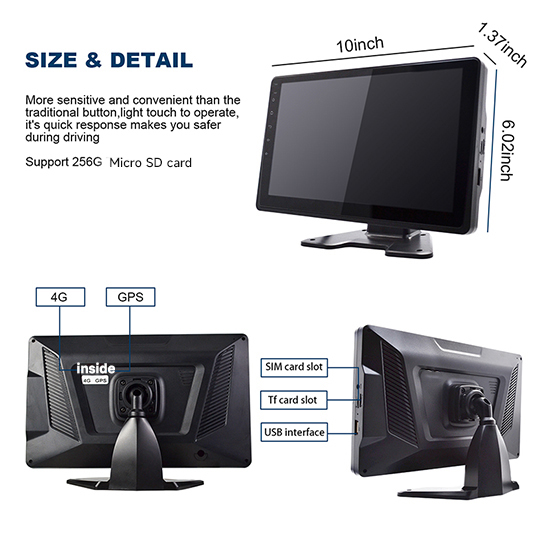
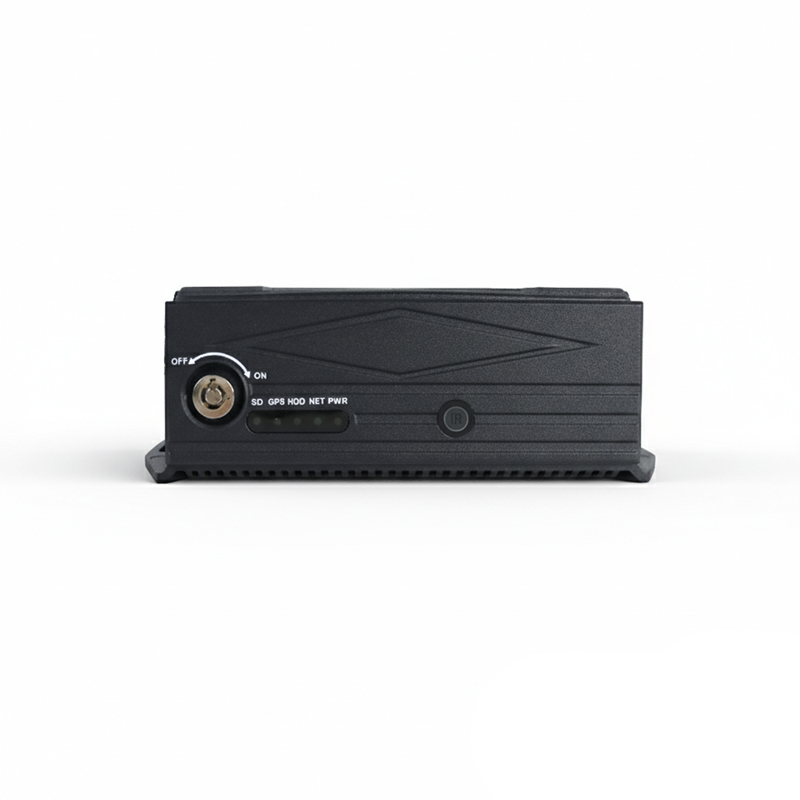
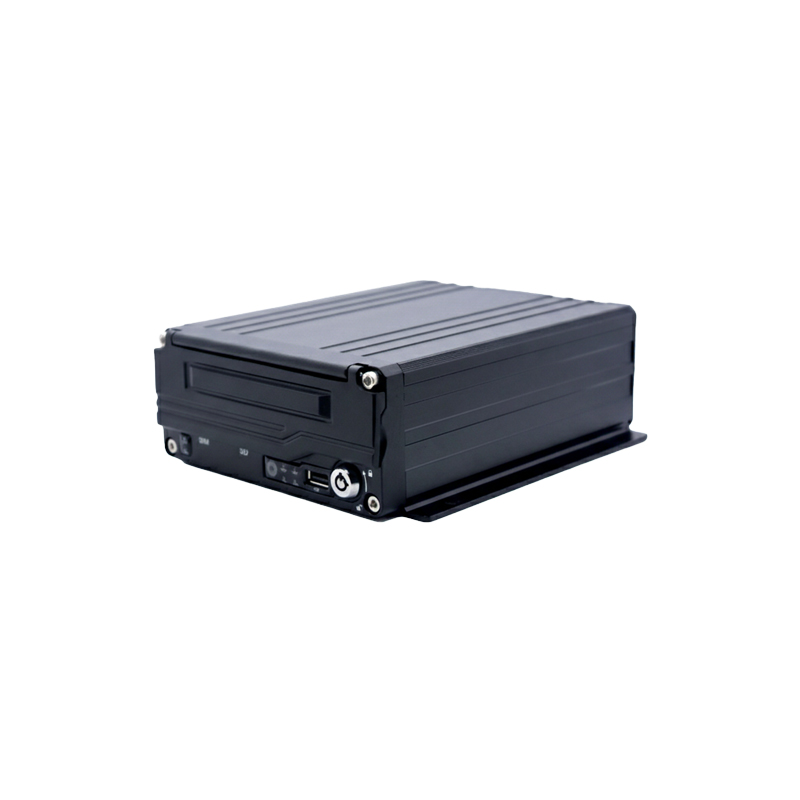
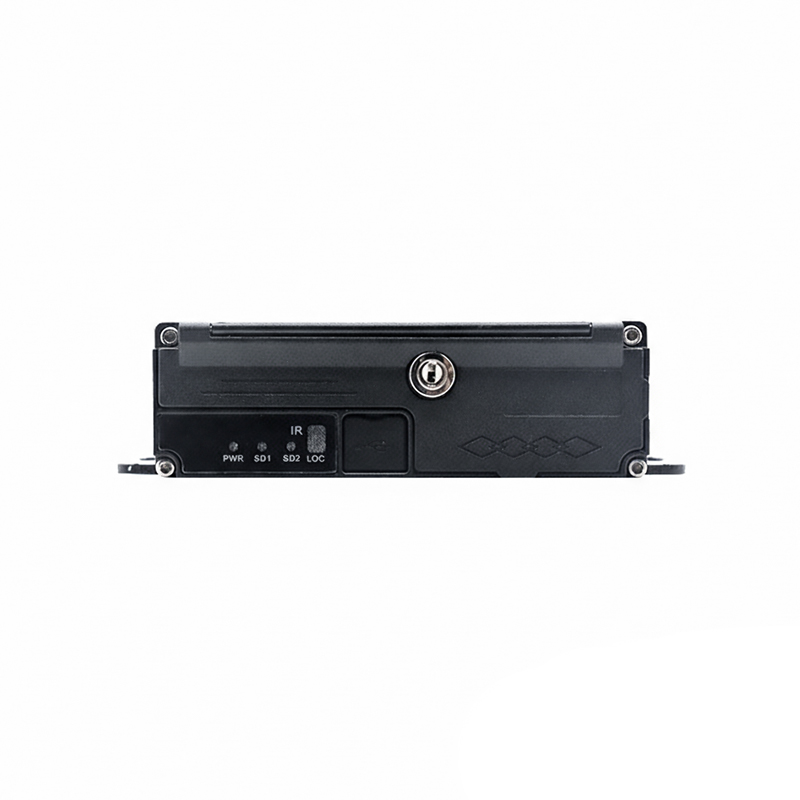
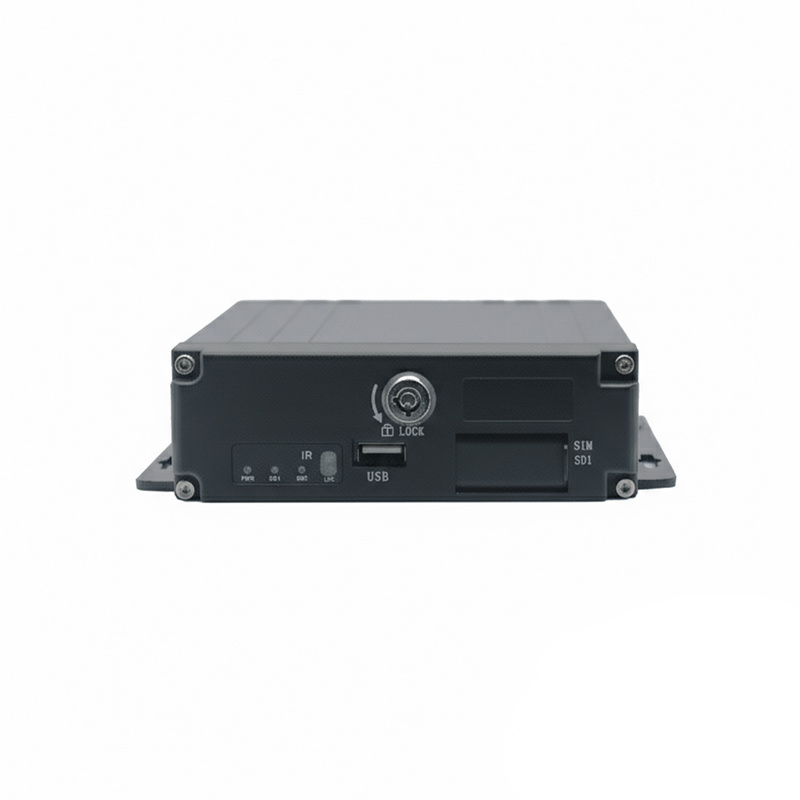
The head unit measures roughly 254 × 153 × 35 mm and carries its antennas inside. On the back are the SIM slot, a TF card slot reading up to 256GB (and SSD to 500GB), and a USB interface, with the cameras landing on a locking aviation connector so they hold up to road vibration.
The same head unit carries across vehicle types. Camera count and mounting change with the body; the screen and the recorder do not.
Tell us the vehicle type and how many units, and we will come back with camera layout, pricing and OEM/ODM options.